
Baidu’s Mobile Ecosystem Group has merged its Commerce Department and E‑Commerce Business Unit into a new “Big Commerce Business Unit” and promoted its Digital Human Innovation unit to a department. The change is part of a broader 2026 restructuring effort that aligns product groups with the company’s AI‑first strategy, especially its digital‑human platform Yijing.
What Baidu announced
Baidu’s Mobile Ecosystem Group (MEG) is consolidating its Commerce Department and E‑Commerce Business Unit into a newly named Big Commerce Business Unit. The unit will be led by Vice President Ping Xiaoli, who will also head the upgraded Digital Human Innovation Department. The announcement was made in a brief internal memo and covered by Chinese tech outlets on June 7, 2026.
Why the move matters
Baidu has been reshaping its corporate structure throughout 2026 to bring more of its products under a single AI‑centric management layer. Earlier in the year the company combined its document service (Wenku) and cloud‑drive (Wangpan) into a Personal Super Intelligent Group (PSIG), and in March it announced the integration of its large language models (LLMs) with search and recommendation pipelines. The latest MEG restructure continues that pattern by:
- Reducing siloed decision‑making – commerce, advertising, and content teams will now share a common AI roadmap, which should cut the time needed to roll out new recommendation or pricing algorithms.
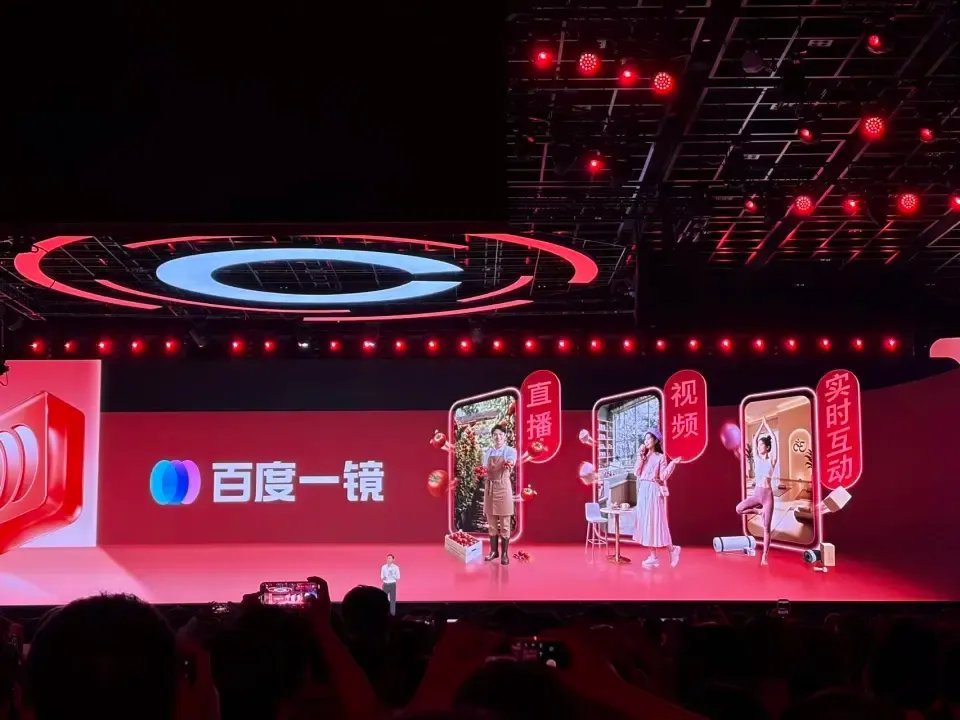
- Elevating digital‑human technology – the Digital Human Innovation unit, which powers Baidu’s Yijing platform (formerly Huiboxing), is now a department rather than a sub‑unit. Yijing claims more than 100 000 AI‑generated anchors across 30+ industries, a scale that requires dedicated product and engineering leadership.
- Aligning incentives with revenue – by bundling commerce and e‑commerce under one P&L, Baidu can apply unified metrics (e.g., conversion‑rate lift from AI‑driven personalization) and allocate resources based on cross‑segment performance.
What’s actually new
The reorganization does not introduce a new model or algorithm; it is primarily a management change. The technical stack that powers Baidu’s commerce services—real‑time bidding, recommendation engines built on the Ernie‑Bot family of LLMs, and the Yijing multi‑agent digital‑human framework—remains the same. What changes is the reporting line:
- The Big Commerce Business Unit will now own the end‑to‑end flow from product discovery to checkout, including the ad‑tech layer that previously lived in a separate advertising department.
- The Digital Human Innovation Department will receive its own budget and staff, allowing it to iterate on avatar generation, voice synthesis, and multi‑modal interaction without competing for resources with core search or cloud teams.
Practical implications
- Developers working on Baidu’s e‑commerce APIs should expect a single point of contact for integration queries, potentially simplifying onboarding for third‑party merchants.
- Advertisers may see new AI‑driven creative tools that blend digital‑human avatars with product placement, similar to the “live‑shopping” features already demonstrated on the Yijing platform.
- Product managers will need to coordinate AI model updates (e.g., Ernie‑Turbo‑2.0) across both commerce recommendation and digital‑human dialogue systems, which could increase the frequency of model rollout cycles.
Limitations and open questions
- Organizational risk – merging large teams can create temporary bottlenecks as processes are re‑aligned. Past Baidu restructurings have led to short‑term delays in feature delivery.
- Scalability of digital humans – while Yijing reports 100 k active avatars, the underlying inference cost for real‑time multi‑modal interaction is still high. It is unclear whether Baidu has optimized the serving pipeline to handle peak traffic without degrading latency.
- Competitive advantage – other Chinese platforms (e.g., Alibaba, ByteDance) already embed AI into commerce. Baidu’s advantage will hinge on how effectively it can monetize digital‑human content beyond novelty, such as by improving conversion rates or reducing customer acquisition cost.
- Data privacy – integrating commerce data with user‑profile signals from Baidu’s search and app ecosystem raises regulatory scrutiny. The memo did not detail any new compliance framework.
Contextual background
Baidu’s AI push began in earnest after the 2023 release of Ernie 4.0, a multimodal LLM that achieved state‑of‑the‑art scores on the CMMLU benchmark. Since then the company has been repackaging AI capabilities into existing products rather than launching standalone AI services. The MEG restructure is the latest step in that incremental integration strategy.
For more detail on Baidu’s AI roadmap, see the company’s 2025 AI Whitepaper (https://ai.baidu.com/whitepaper) and the public Baidu Model Committee charter (https://github.com/baidu/bmc).
Comments
Please log in or register to join the discussion