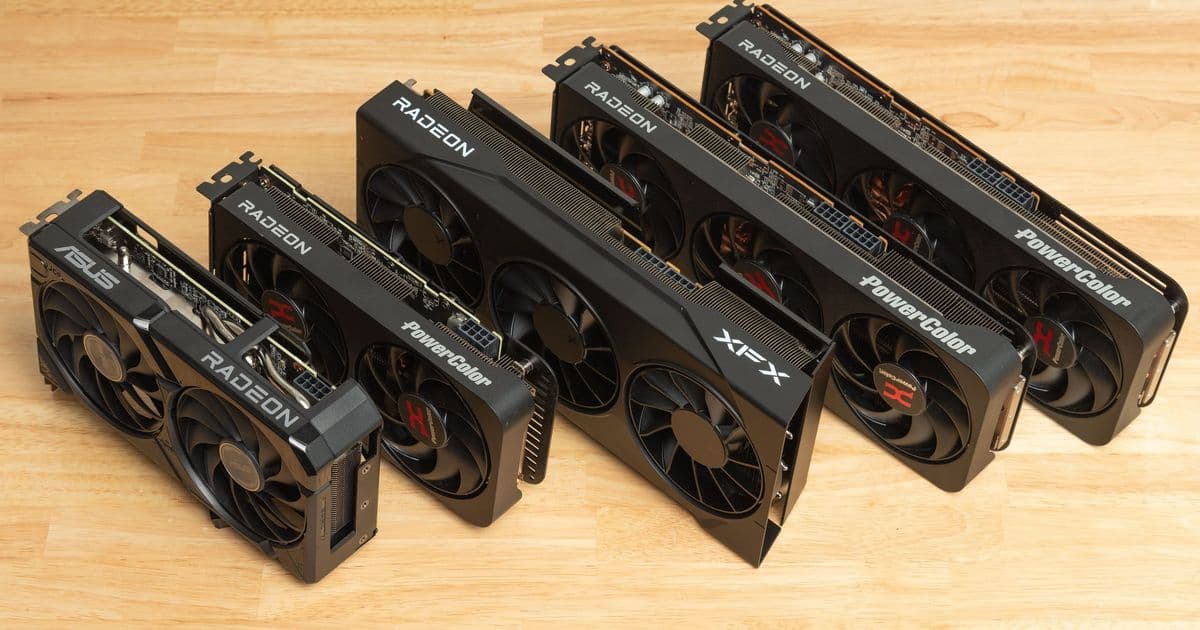
AIB partners at Computessuggest a second‑half‑2027 announcement for AMD’s RDNA 5 gaming GPUs, with shipments likely spilling into early 2028. The timeline mirrors Nvidia’s RTX 50/60 rollout and reflects tighter product‑readiness standards after the RDNA 4 launch.
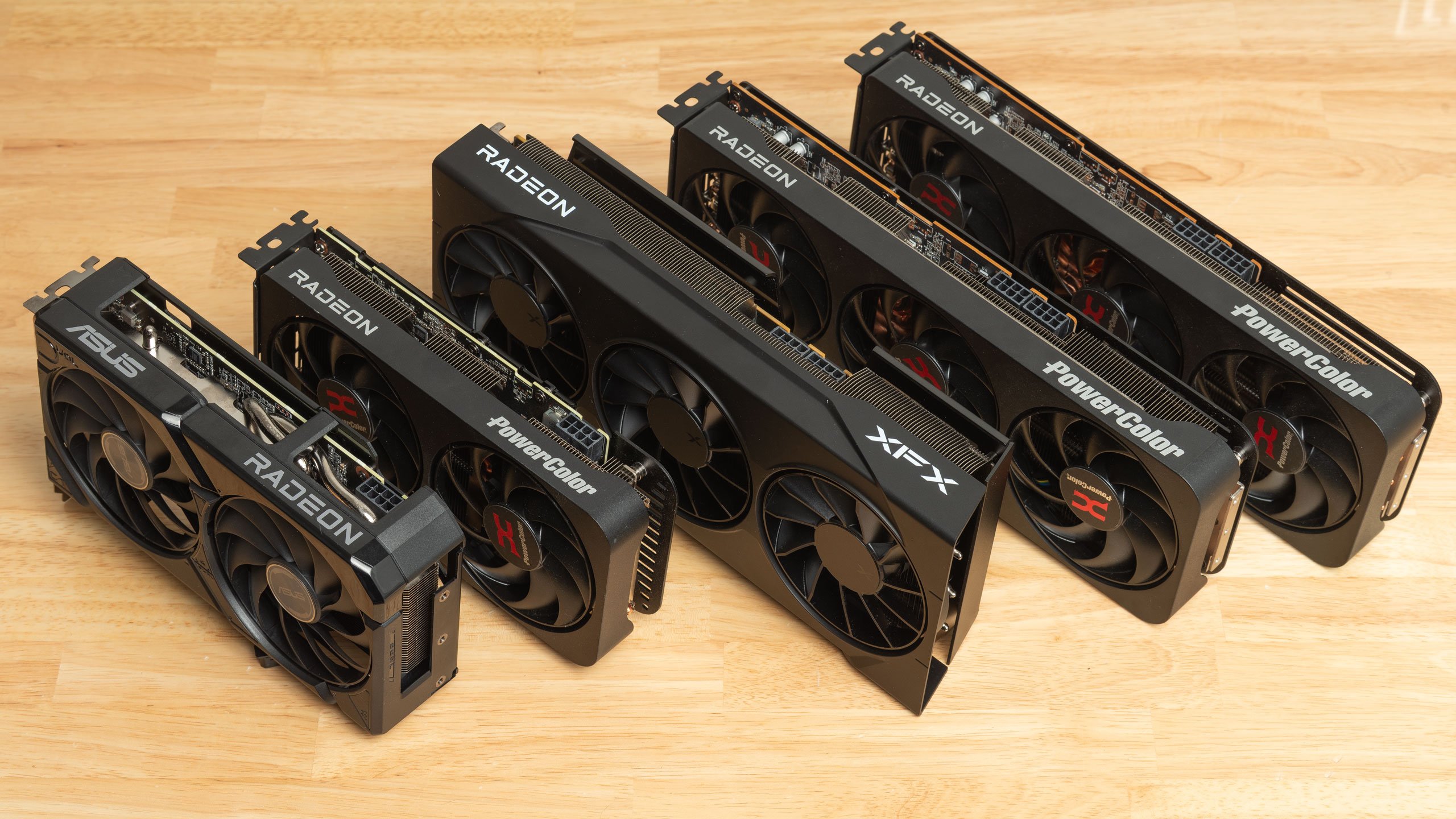 Image credit: Future
Announcement
At Computex 2026, several AMD‑approved board partners were asked about the next generation of Radeon graphics. The consensus points to an official unveiling in the second or third quarter of 2027, with volume production possibly slipping into early 2028. One partner warned that the schedule could be pushed beyond 2027 entirely, but most expect a late‑2027 window for the first public look.
The timing aligns with Nvidia’s own roadmap – the RTX 50 series was teased at CES 2025 and is rumored to reach the market in the same 2027‑2028 window. Intel’s Arc G3 handheld launch and upcoming console generations (Xbox Helix, PS 6) will also sit on AMD silicon, underscoring a broader industry synchronisation.
Technical specs and architectural expectations
| Feature | Expected for RDNA 5 | Comparison |
|---|---|---|
| Process node | 3 nm (TSMC N3) or 2 nm (early‑stage) | 4 nm for RDNA 4, 5 nm for Nvidia Ada Lovelace |
| Core count | 80‑90 compute units (CU) per flagship die | 96 CUs on RTX 4090 (Ada) |
| Clock speeds | 2.8‑3.0 GHz boost | 2.5 GHz on RTX 4090 |
| Memory | 24‑32 GB GDDR7, 384‑bit bus | 24 GB GDDR6X, 384‑bit on RTX 4090 |
| Bandwidth | 1.2 TB/s (estimated) | 1.0 TB/s on RTX 4090 |
| New ISA features | Dual‑issue execution, expanded wavefront size, hardware‑accelerated ray‑tracing (RT‑3) | RTX 50 series expected to launch with RT‑4 |
| Power envelope | 350‑400 W TDP for top model | 450 W for RTX 4090 |
Process node: AMD’s roadmap shows a transition from the 4 nm N5 process used for RDNA 4 to TSMC’s 3 nm N3 for RDNA 5. Early‑stage 2 nm risk production could appear in a “lite” variant aimed at the mid‑range market, but the flagship will likely stay on 3 nm to balance yield and performance.
Dual‑issue execution: Current RDNA 4 cores issue a single instruction per cycle. Dual‑issue would allow two independent micro‑ops to be dispatched, potentially lifting IPC (instructions per cycle) by 15‑20 % without raising clock speeds. This mirrors Nvidia’s “dual‑issue” strategy on the Ada Lovelace architecture, suggesting a converging performance‑per‑watt ceiling.
Ray‑tracing: RDNA 4 introduced RT‑2 hardware with a modest 2‑ray‑per‑clock capability. RDNA 5’s RT‑3 block is rumored to double that throughput and add dedicated variable‑rate shading (VRS) units, narrowing the gap with Nvidia’s RTX 50 series.
Memory: GDDR7, still in early production, promises 28‑30 Gbps data rates. A 384‑bit bus would push peak bandwidth past 1 TB/s, a 20 % uplift over the 960 GB/s of the RTX 4090.
Market implications
- Supply‑chain timing: The 2025‑2026 AI boom has strained wafer capacity, especially for high‑bandwidth memory. By targeting a 2027 launch, AMD gives TSMC and Micron a longer window to ramp 3 nm and GDDR7 production, reducing the risk of the “stock‑out” cycles seen with RDNA 4.
- Competitive positioning: Nvidia’s RTX 50 series is expected to debut with a similar performance envelope but at a higher power envelope (≈450 W). AMD’s lower‑TDP targets could make the RDNA 5 cards more attractive for pre‑built OEMs seeking 100‑150 W headroom for compact gaming rigs.
- Pricing outlook: Historical launch‑to‑launch price inflation for high‑end GPUs has been roughly 15 % per generation. If the RTX 50 flagship launches at $2,199, AMD may price its top RDNA 5 model around $1,999, positioning it as the “value‑performance” leader.
- Software ecosystem: AMD’s FidelityFX Super Resolution 3 (FSR 3) is already in beta, promising frame‑rate boosts comparable to Nvidia DLSS 3. A stable driver stack at launch will be critical; AMD’s recent cadence of monthly driver updates suggests they are prepared to support a smooth rollout.
- Console tie‑ins: Both Xbox Helix and PlayStation 6 are slated for 2027‑2028 releases and will use custom RDNA 5 silicon. Early access to the architecture for console partners could accelerate driver optimisation for PC titles, benefiting the broader ecosystem.
- Geopolitical risk: Ongoing export controls on advanced lithography equipment could affect TSMC’s capacity to meet AMD’s 3 nm demand. AMD’s diversification into 2 nm risk production may serve as a hedge, but any delay in node transition would push the high‑end launch further into 2028.
Outlook
The convergence of AMD’s RDNA 5 and Nvidia’s RTX 50/60 timelines suggests a dual‑peak in the high‑end gaming GPU market in late 2027. While the exact launch dates remain fluid, the technical direction—dual‑issue cores, expanded ray‑tracing, and GDDR7 memory—indicates that the next generation will focus on efficiency gains rather than raw clock‑speed increases.
Stakeholders should monitor:
- TSMC’s 3 nm volume ramp (Q1‑Q2 2027)
- Micron’s GDDR7 production yields (mid‑2027)
- AMD’s driver roadmap for FSR 3 and ray‑tracing support
- Nvidia’s RTX 50 specifications, which will set the performance ceiling for the period.
For OEMs and system integrators, planning a late‑2027 product refresh that incorporates RDNA 5 will likely align with the most favorable pricing and availability window. Consumers can expect a 15‑20 % uplift in rasterization performance over RDNA 4, with ray‑tracing capabilities closing the gap to Nvidia’s offerings.
Stay tuned for further updates as AMD’s silicon design details emerge from the upcoming Architecture Review Board meetings.
Comments
Please log in or register to join the discussion