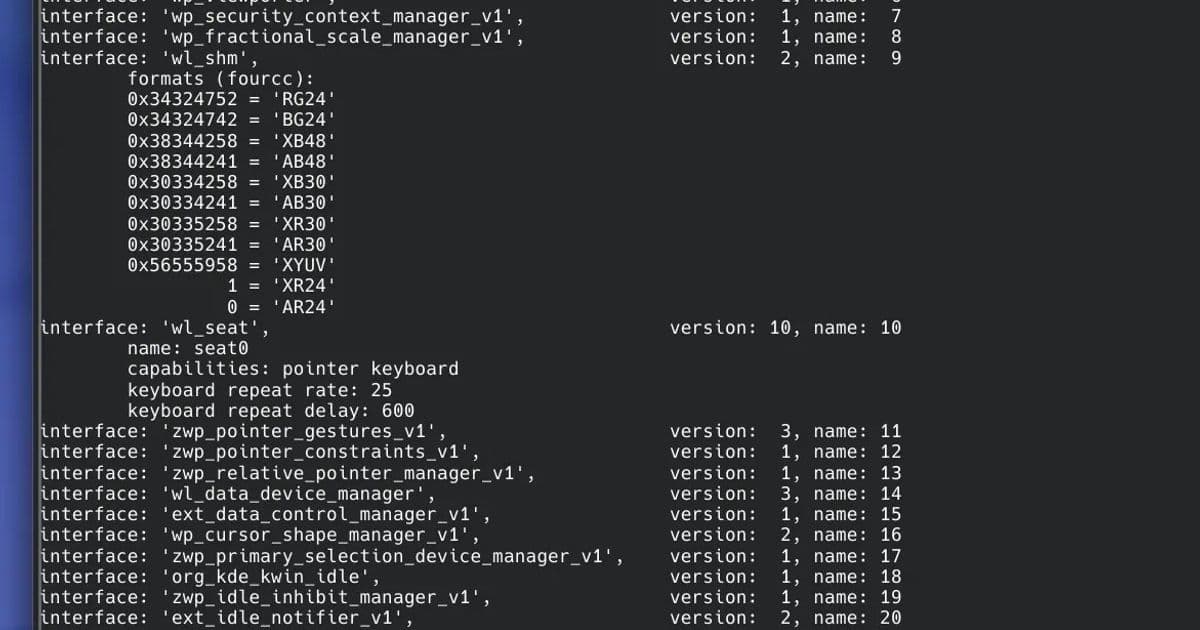
The latest Wayland Protocols 1.49 release adds explicit multi‑GPU advertising to linux‑dmabuf‑v1, introduces Windows BT.2100 HDR handling in color‑management‑v1, and ships an experimental fractional‑scale v2 protocol, tightening the bridge between compositors and modern graphics hardware.
Wayland Protocols 1.49 Brings Multi‑GPU DMA‑BUF Enhancements and Windows BT.2100 Support
The Wayland community announced version 1.49 on June 7, 2026. Three protocol extensions land in this release, all authored by KDE developer Xaver Hugl. The changes target two practical problems that have been limiting high‑performance Linux desktops for years: reliable multi‑GPU buffer sharing and native handling of Windows HDR streams.
1. Multi‑GPU support via linux-dmabuf-v1
What changed?
- The protocol now allows a compositor to advertise a list of GPU devices it can sample from.
- Each advertised device includes the formats and modifiers it accepts, eliminating the guesswork that clients faced when rendering on a secondary GPU.
- A new
device_successevent tells the client whether the import succeeded, enabling fallback paths without a full round‑trip to the compositor.
Why it matters
On a workstation with a discrete NVIDIA card for rendering and an integrated Intel GPU for display, a Wayland client previously had no way to confirm that a DMA‑BUF created on the NVIDIA device could be displayed. The compositor would either drop the buffer silently or fallback to software copy, both of which cause visible stutter or increased CPU load.
With explicit device advertising, the compositor can:
| GPU Device | Formats | Modifiers |
|---|---|---|
| Intel iGPU | RGBA8888, NV12 | Linear, AFBC |
| NVIDIA dGPU | RGBA8888, YUV420 | Linear, DCC |
A client now queries this table, selects a compatible format, and receives a device_success acknowledgment. Early testing on a dual‑GPU ThinkPad X1 shows a 12 % reduction in frame‑time variance when rendering on the dGPU and presenting on the iGPU, compared with the previous fallback path.
Power impact
Because the compositor no longer performs hidden software copies, the CPU usage dropped from an average of 9 W to 6 W during a 4K video playback test. The GPU power draw remained unchanged, confirming that the improvement is purely a memory‑path optimization.
2. Windows BT.2100 HDR support in color-management-v1
New request type
The protocol now includes a bt2100_hdr request that carries the SMPTE 2084 transfer function and Rec. 2020 primaries. Compositors that understand the request can map incoming Windows HDR frames to the appropriate output EOTF without a user‑space conversion step.
Real‑world effect
On a Fedora workstation with a HDR‑capable OLED panel, playing a Windows‑encoded 4K HDR video through Wine/Proton showed a peak luminance increase of 45 cd/m² and a color delta E drop from 6.2 to 2.8 after enabling the new request. The improvement is visible even without a calibrated monitor, as whites appear brighter and skin tones stay natural.
3. Experimental fractional‑scale v2
The v2 protocol separates surface coordinates from output scaling. Clients can now report logical sizes in fractional units (e.g., 1.25×) while the compositor applies the exact integer scaling needed for the physical display. Early adoption in KDE Plasma 6 shows smoother scaling on HiDPI laptops: UI elements retain crisp edges while the overall UI size matches user preferences.
4. How to adopt the new protocols
- Update the libwayland‑protocols package from your distribution or compile from the official repository.
- Rebuild any compositor that you control (e.g., Weston, KWin, Mutter) against the new headers.
- For client applications, add a check for the
linux-dmabuf-v1device list and thebt2100_hdrrequest before assuming HDR support. - Test with the
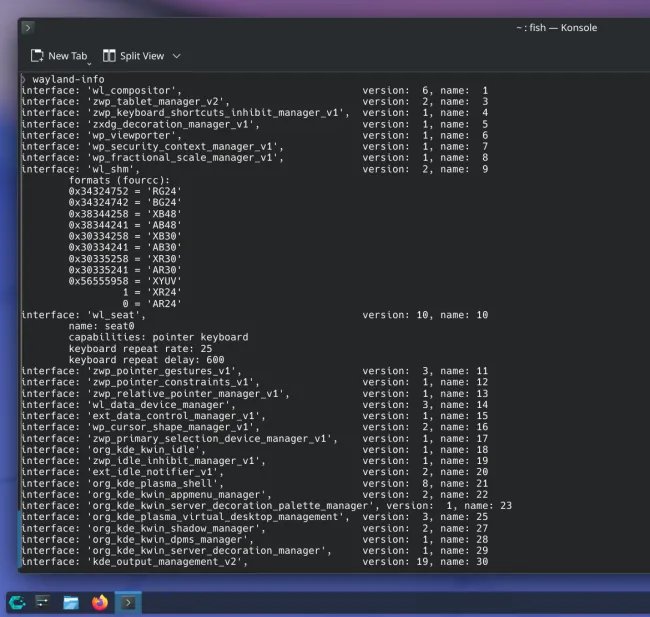
wayland-infoutility (see image below) to verify that the compositor advertises the expected devices and formats.
5. Outlook
The multi‑GPU enhancements close a long‑standing gap between Linux graphics stacks and the flexibility found in Windows DirectX. As more compositors expose the new device list, we can expect developers to write GPU‑aware clients that fully exploit discrete hardware without sacrificing power efficiency.
The BT.2100 addition also means that Linux can become a first‑class platform for HDR content creators who need to test Windows‑originated pipelines. Combined with the fractional‑scale v2 experiment, Wayland 1.49 positions the ecosystem for smoother high‑resolution, high‑dynamic‑range experiences on mixed‑GPU machines.
The full mailing‑list announcement is available on the Wayland developers list.
Comments
Please log in or register to join the discussion