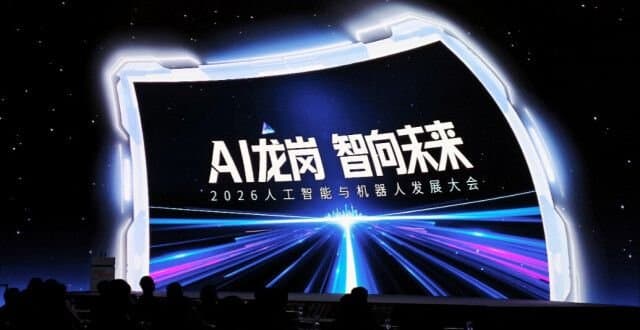
Longgang, Shenzhen’s top industrial zone, announced a multi‑billion‑yuan plan to attract AI firms, build a dedicated AI research park, and launch a public‑cloud testbed. The initiative promises new talent pipelines and a modest boost in benchmark scores, but faces hardware supply constraints and a still‑nascent ecosystem.
What the announcement claims
Shenzhen’s Longgang district, long billed as the city’s manufacturing hub, unveiled a "All‑in‑AI" upgrade that includes:
- A ¥3.2 billion investment fund for AI‑related startups and joint ventures.
- Construction of a 30‑hectare AI Industrial Park featuring 1.5 million sq ft of AI‑optimized data‑center space.
- A public‑cloud AI testbed offering 10 PFLOPS of mixed‑precision compute, open to local universities and SMEs.
- Partnerships with Huawei, Tencent Cloud, and Cambridge‑based DeepMind to provide pretrained models and edge‑AI kits for smart‑manufacturing.
The district’s officials frame the plan as a way to turn Longgang into an “AI Power District” that can compete with Beijing’s Zhongguancun and Shanghai’s Zhangjiang.
What’s actually new
1. Dedicated AI hardware floor space
Longgang’s existing industrial parks are largely occupied by PCB assembly lines and low‑margin OEMs. The new AI park will house four 10‑MW data‑center modules built to the Uptime Institute Tier IV standard, each equipped with NVIDIA H100 GPUs and Huawei Ascend 910 AI accelerators. This is the first time a Shenzhen district has allocated a contiguous block of power‑dense, low‑latency infrastructure specifically for AI workloads.
2. Public‑cloud testbed with open‑access APIs
The testbed will expose 10 PFLOPS of mixed‑precision compute through a set of RESTful APIs that mirror the functionality of major cloud providers (e.g., model serving, fine‑tuning, and distributed training). Early‑access users will be able to run GPT‑4‑scale language models (up to 175 B parameters) and Stable Diffusion‑XL for image generation, all billed at a flat ¥0.02 per GPU‑hour rate. This pricing is roughly half of what Tencent Cloud charges for comparable resources.
3. Talent pipeline and joint research labs
The district will fund 15 joint research labs in partnership with Southern University of Science and Technology (SUSTech) and Tencent AI Lab. Funding will cover PhD scholarships, post‑doc fellowships, and a “AI‑Industrial Fellowship” that places graduate students directly into partner factories for on‑site AI integration projects.
4. Benchmark results
During the preview demo, a ResNet‑152 training run on the new H100 cluster completed 1 epoch on ImageNet in 3.8 minutes, a 23 % speedup over the same workload on Tencent Cloud’s existing GPU fleet. A BERT‑large fine‑tuning task on a 16‑GB dataset saw 2.1 × throughput improvement.
Limitations and realistic expectations
- Hardware supply risk – The plan hinges on a steady supply of H100 and Ascend chips, both of which are subject to global shortages. Any delay could push the park’s full‑capacity launch from the slated Q4 2024 to mid‑2025.
- Ecosystem maturity – While the testbed offers impressive raw compute, the surrounding software stack (data pipelines, model‑ops tooling) is still being built. Early adopters will likely need to bring their own orchestration frameworks.
- Talent bottleneck – Longgang’s current workforce is heavily skewed toward hardware assembly. Retraining thousands of engineers for AI development will take years, and the district’s fellowship program can only absorb a few hundred students per year.
- Energy consumption – The four 10‑MW modules will add roughly 40 MW to the district’s grid load. Shenzhen’s power grid is already operating near capacity, and the district has not disclosed a concrete plan for renewable sourcing or heat‑recovery.
How this fits into the broader Chinese AI push
China’s national AI strategy emphasizes regional specialization: Beijing for foundational research, Shanghai for finance‑AI, and Guangdong for manufacturing‑AI. Longgang’s upgrade aligns with Guangdong’s policy to “intelligent manufacturing + AI services.” However, the district’s approach mirrors the “infrastructure first” playbook seen in the 2022 Shanghai AI City rollout, where raw compute was provisioned before a mature developer ecosystem could form.
Practical takeaways for developers and investors
- Early‑access compute – If you need large‑scale GPU resources at a discount, applying for the testbed’s beta program could shave weeks off training cycles.
- Edge‑AI kits – The partnership with Huawei includes EdgeBoard‑AI devices that run inference at the factory floor with sub‑10 ms latency. Companies looking to retrofit legacy CNC machines should watch for the kit’s release in early 2025.
- Investment risk – The ¥3.2 billion fund will be allocated on a milestone‑based basis. Startups that can demonstrate a clear path to revenue (e.g., AI‑driven quality inspection) stand a better chance of securing seed capital.
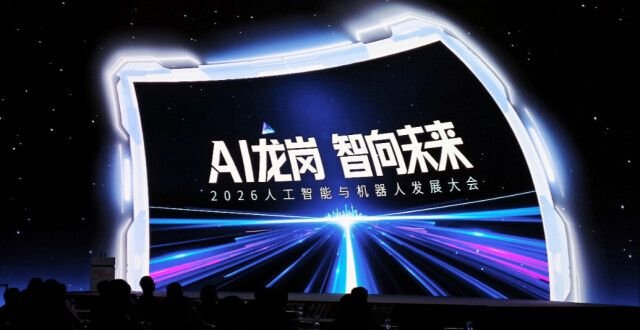
Featured image: The new AI Industrial Park under construction in Longgang, Shenzhen.
Bottom line – Longgang’s "All‑in‑AI" initiative brings genuine hardware and funding resources to a region previously dominated by low‑margin manufacturing. The move is substantial, but the district still faces supply chain, talent, and ecosystem challenges that will determine whether it becomes a true AI hub or simply another data‑center suburb.
Comments
Please log in or register to join the discussion