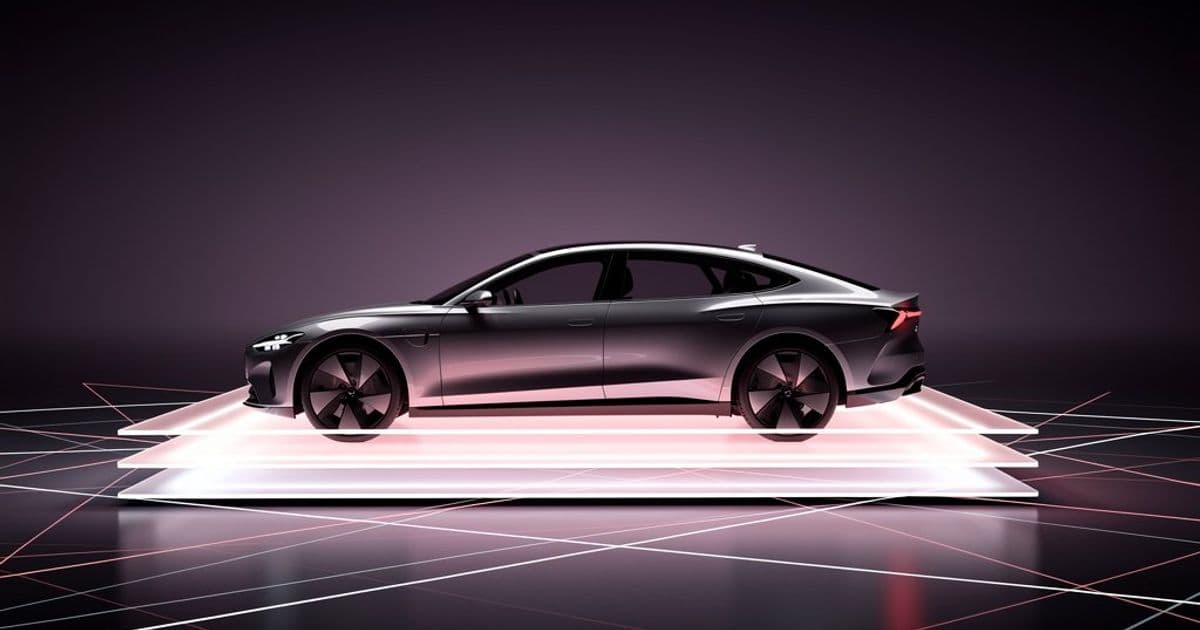
FAW-Volkswagen has announced a comprehensive 2026 product offensive featuring 13 new models across ICE, hybrid, and electric platforms, while simultaneously debuting a suite of in-house developed technologies. The move represents a strategic shift for the joint venture as it aims to defend its market leadership in China's increasingly competitive automotive landscape.
FAW-Volkswagen's Spring Festival media briefing on January 25 revealed a detailed 2026 roadmap that extends beyond mere model launches to encompass fundamental technological changes. The company's strategy of "parallel development of internal combustion, hybrid, and intelligent vehicles" reflects a pragmatic approach to China's complex market dynamics, where electrification continues to accelerate but legacy powertrains remain commercially significant.
The Product Portfolio: 13 New Models
The 13 new vehicles represent a balanced portfolio across three brands and multiple powertrain types. Six will be internal combustion engine (ICE) models and seven will be new energy vehicles (NEVs), indicating FAW-Volkswagen's commitment to maintaining its ICE leadership while aggressively expanding its electrified offerings.
ICE Segment Expansion
The Volkswagen brand will introduce the Sagitar S, Tayron S, and an all-new Talagon. Audi has already launched the new Q5L this month and plans to release the new A6L later this year, both featuring advanced intelligent cockpits and combined driver-assistance systems. Jetta will roll out the VS8 Black Warrior Edition.
On the import side, Audi plans to bring in the SQ8 and S5 Avant in 2026, followed by the all-new Q9 and next-generation Q7 in early 2027. This import strategy allows Audi to maintain its premium positioning while the joint venture focuses on localized production for volume models.
NEV Offensive
The seven new NEV models represent FAW-Volkswagen's most significant electrification push to date. The Volkswagen brand will release two plug-in hybrid models—the Magotan PHEV and Tayron L PHEV—as well as the Sagitar L HEV. It will also introduce two new pure-electric models under the ID.AURA series.
Audi will debut the A6L e-tron based on the PPE premium electric platform, while Jetta's first NEV model, the J01, will also go on sale this year. The J01 is particularly significant as it will be the first to feature FAW-Volkswagen's self-developed SOA electronic and electrical architecture.
In-House Technology Development: From Licensing to Self-Reliance
Perhaps more important than the model count is FAW-Volkswagen's move toward in-house technology development. The company has built a tiered R&D system spanning mass application, advanced development, and forward-looking research across key platforms such as powertrains and smart cockpits.
Hybrid Powertrain Innovations
FAW-Volkswagen has independently developed a hybrid-dedicated engine and the TQ200 dual-motor hybrid transmission. The TQ200 has undergone over 10 million kilometers of durability testing, including corrosion tests under extreme conditions including high heat, extreme cold, desert environments, and salt spray.
The company has also developed a high-integration, low-cost P1.5+P4 hybrid architecture with a power density of 2.56 kW/kg—leading its segment—and a 30 kg weight reduction compared with the P1+P3 setup. This architecture is being deployed on the CSP platform.
Battery and Electric Drive Systems
In battery safety, FAW-Volkswagen has expanded testing from the 53 national standard items to 436 test scenarios to reflect real-world travel conditions, including water immersion, fire exposure, and puncture tests.
For electric drive systems, the company has developed a highly integrated six-in-one e-drive solution delivering 170 kW of power and a CLTC efficiency of 90%, also best-in-class. This system will be installed on Volkswagen Group China's upcoming CMP and CSP platforms.
Thermal Management and Development Cycles
For thermal management, FAW-Volkswagen has applied high-integration modular design, low-temperature compressor technology, and comprehensive energy management systems. Heating performance improves temperature rise by 10 minutes compared with previous systems, achieving 11 kW heating output.
The company has also shortened development cycles for new vehicle body programs to 24 months while maintaining strict quality and safety standards—a significant improvement that could help it respond more quickly to market changes.
Strategic Context: Market Restructuring
FAW-Volkswagen's aggressive roadmap comes as China's auto industry enters what Wang Shengli describes as a "restructuring phase." Annual passenger vehicle retail sales are expected to stabilize at around 24 million units, with price wars becoming unsustainable and competition in the NEV market intensifying.
The ICE market is consolidating rapidly. ICE vehicle sales fell from 18.17 million units in 2020 to 10.94 million in 2025, while the combined market share of the top five brands rose from 29% to 37% over the same period. This consolidation enables leading brands to maintain investment and scale, reinforcing a positive feedback loop.
Regarding joint ventures, Wang noted that leading JV automakers are accelerating localization and maintaining a generally stable development trajectory. By deepening local investment, strengthening in-house R&D, and gaining greater control over supply chains, Volkswagen and Toyota joint ventures together still account for more than 4 million units in scale, firmly remaining industry leaders.
Technology Architecture Migration
Over the next three years, all Volkswagen and Jetta ICE models will migrate to the new CEA electronic and electrical architecture to enable full intelligent upgrades for fuel-powered vehicles. This represents a significant technological investment that could help legacy models remain competitive in an increasingly software-defined vehicle landscape.
Starting in the second half of this year, the company plans to launch three to four new NEV models every six months, or six to eight annually. This accelerated cadence reflects the company's target for NEVs to account for around 60% of total sales by 2030.
Overseas Expansion Strategy
FAW-Volkswagen also disclosed plans to accelerate overseas expansion. The company will adopt a CBU+SKD export model to gradually build overseas operating capabilities, introduce new importer partnerships, establish overseas marketing and after-sales systems, and pursue localized operations to improve regional coordination efficiency.
Market Performance and Outlook
In 2025, FAW-Volkswagen delivered 1.5871 million vehicles (including imports), with 902,066 units from the Volkswagen brand, 566,988 units from Audi (including imports), and 118,011 units from Jetta. It ranked first among joint-venture automakers and first in ICE vehicle sales, achieving a "double crown."
FAW-Volkswagen's ICE market share also rose by 0.9 percentage points year-on-year to a record high, with all three brands posting growth. Audi's ICE market share returned to first place in China's luxury segment for the first time in six years.
Wang described 2026 as a critical turning point for the auto industry's shift from scale-driven growth to high-quality development, adding that only continuous evolution will allow companies to survive the ongoing industry shakeout.
Analysis: What This Means for the Market
FAW-Volkswagen's roadmap represents a significant strategic evolution for one of China's largest automakers. The company is simultaneously defending its ICE leadership while accelerating its electrification transition, but with a crucial difference: it's developing core technologies in-house rather than relying solely on Volkswagen Group's global platforms.
The in-house development of hybrid systems, electric drives, and battery testing protocols suggests FAW-Volkswagen is building technological capabilities that could eventually be exported to other markets or used to differentiate its products from those of other joint ventures.
The company's focus on cost-effective "three-electric" technologies and high-integration designs reflects the intense price competition in China's NEV market. Rather than simply importing European EV technology, FAW-Volkswagen is developing solutions optimized for Chinese market conditions and cost expectations.
The 24-month development cycle for new vehicle body programs is particularly noteworthy. In an industry where traditional development cycles often exceed 36 months, this acceleration could provide FAW-Volkswagen with a significant competitive advantage in responding to market trends.
However, the company faces substantial challenges. The NEV market is dominated by domestic Chinese brands that have established strong positions in the 100,000-200,000 RMB segment. FAW-Volkswagen's ID.AURA series will need to compete with established players like BYD, NIO, and Xpeng, all of which have developed strong brand recognition and technological capabilities.
Additionally, the company's plan to launch six to eight NEV models annually starting in the second half of 2026 represents an aggressive timeline that will test its development and production capabilities. The success of these launches will depend not only on product quality but also on FAW-Volkswagen's ability to establish effective sales and service networks for electric vehicles.
The company's overseas expansion strategy through CBU+SKD exports may help diversify its revenue streams, but it also faces competition from Chinese domestic brands that are already expanding aggressively in international markets.
FAW-Volkswagen's 2026 roadmap demonstrates that even established joint ventures must fundamentally transform their technology strategies and development processes to remain competitive in China's rapidly evolving automotive market. The company's success will depend on its ability to execute this complex transformation while maintaining the quality and reliability that have defined its brand.
The coming year will be critical for FAW-Volkswagen as it begins to deploy its in-house technologies and launches its new model offensive. The market will be watching closely to see whether this strategic pivot can help the joint venture maintain its leadership position in what is becoming an increasingly challenging environment.
Comments
Please log in or register to join the discussion