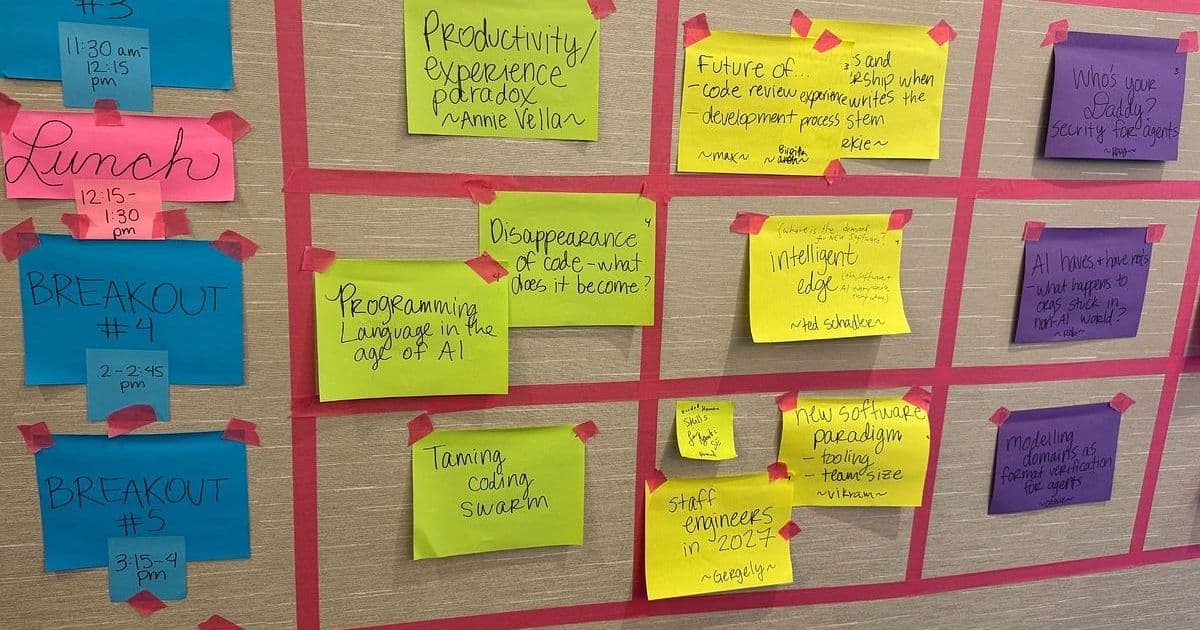
As AI reshapes software development, the Staff Engineer role is evolving from code production to strategic technical leadership, with experts predicting increased demand for these senior roles by 2027.
The Staff Engineer role has been a cornerstone of technical leadership for years, but with AI rapidly transforming how we build software, many are asking: what will this position look like in 2027 and beyond? Recent discussions at industry workshops suggest the role isn't disappearing—it's evolving into something more strategic and impactful.
The Current State of Staff Engineering
Traditionally, Staff Engineers have served as technical multipliers, bridging the gap between individual contributors and management. They own complex technical problems, guide architectural decisions, and help teams navigate challenging implementations. However, as AI tools become increasingly capable of generating production-ready code, the fundamental nature of this role is shifting.
At a recent two-day workshop in Utah organized by Martin Fowler, titled 'The Future of Software Development,' industry veterans gathered to discuss exactly this question. Among 50 attendees, the consensus was clear: the Staff Engineer of 2027 will look quite different from today's version.
The AI Impact: More Than Just Code Generation
While it's tempting to think AI will simply replace the coding aspects of Staff Engineering, the reality is more nuanced. As one engineering leader noted, "AI isn't eliminating the need for senior technical expertise—it's changing what that expertise looks like."
Consider the current landscape: Uber reports that 84% of developers are using agentic coding tools, with 65-72% of code being AI-generated in IDE-based tools. For command-line tools like Claude Code, that figure reaches 100%. Yet rather than reducing the need for senior engineers, this shift is creating new demands.
The Emerging Staff Engineer Profile
By 2027, successful Staff Engineers will likely excel in these areas:
Strategic Technical Decision-Making: With AI handling more implementation details, Staff Engineers will focus on higher-level decisions about system architecture, technology selection, and long-term technical strategy.
AI Integration Expertise: Understanding how to effectively incorporate AI tools into development workflows, evaluate their outputs, and maintain quality standards will become a core competency.
Cross-Team Technical Leadership: As systems grow more complex and AI accelerates development, coordinating across teams and ensuring architectural consistency will be crucial.
Ethical and Security Oversight: With AI-generated code becoming commonplace, Staff Engineers will need to ensure systems remain secure, maintainable, and aligned with organizational values.
The Economic Reality
Interestingly, some organizations are already seeing this trend. As AI token costs become a rising concern for CTOs, companies are discovering that human expertise is essential for optimizing AI usage and controlling costs. One engineering leader described how their team had to implement strict guidelines around AI tool usage after seeing costs spiral unexpectedly.
This economic pressure means Staff Engineers who can effectively balance AI capabilities with human oversight will be particularly valuable. They'll need to understand not just what's technically possible, but what makes sense from a cost-benefit perspective.
Preparing for the Transition
For current and aspiring Staff Engineers, the path forward involves developing skills that complement rather than compete with AI:
- Deepening understanding of system architecture and design patterns
- Building expertise in AI tool evaluation and integration
- Strengthening communication and cross-team collaboration abilities
- Developing a strategic mindset focused on business impact
The Human Element Remains Critical
Despite AI's rapid advancement, the human elements of engineering—creativity, ethical judgment, and understanding complex business contexts—remain irreplaceable. The Staff Engineers who thrive in 2027 will be those who can effectively orchestrate AI capabilities while providing the strategic vision and human judgment that machines cannot replicate.
As one workshop participant put it: "The best Staff Engineers of the future won't be those who can write the most code, but those who can make the best decisions about which code to write, when to use AI, and how to build systems that truly serve their users."
The role is evolving, not disappearing. And for those willing to adapt, the future of Staff Engineering looks more exciting than ever.
Comments
Please log in or register to join the discussion