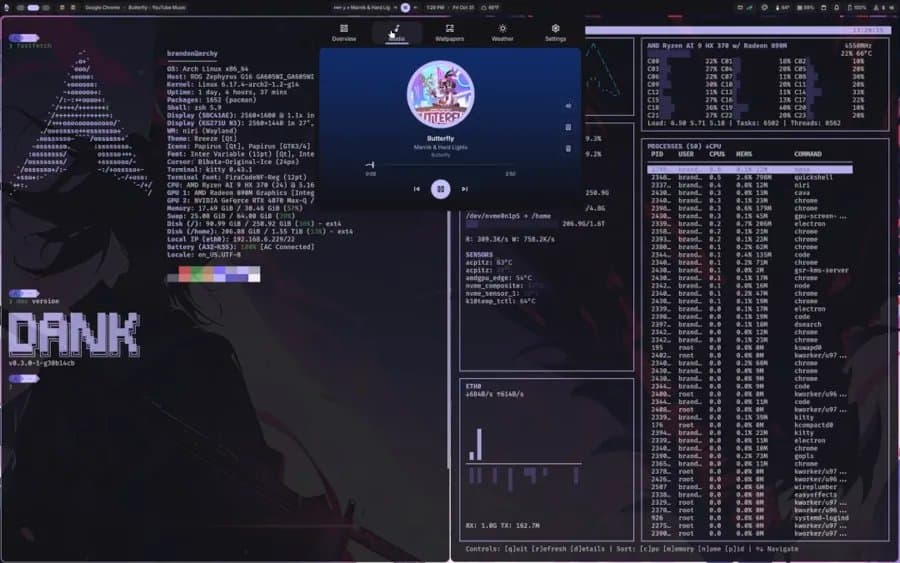
Fedora's latest FESCo approvals bring significant changes including Rust bindgen updates, MariaDB 11.8, Django 6, and a surprising switch to Dank Material Shell for the MiracleWM spin.
The Fedora Engineering and Steering Committee (FESCo) has approved a substantial batch of changes for Fedora 44 and early Fedora 45 development, marking another significant step toward the spring release cycle. These changes span across the entire distribution, from core development tools to desktop environments, showcasing Fedora's commitment to staying current with upstream developments while making strategic decisions about the distribution's future.
Rust Development Gets a Boost
One of the most impactful changes for developers is the bump in the minimum required version of Rust's bindgen tool to v0.72. This update ensures that Fedora's Rust ecosystem remains compatible with the latest developments in the language and its tooling ecosystem. Bindgen, which generates Rust FFI bindings to C and C++ libraries, is crucial for many Rust projects that interface with existing codebases.
The timing of this update is particularly noteworthy as it aligns with Rust's rapid evolution and the increasing adoption of the language in the Linux ecosystem. By keeping bindgen current, Fedora ensures that developers working on the distribution have access to the latest features and improvements in Rust tooling.
Qt6 Consolidation and KDE Integration
In a move that reflects Fedora's long-standing commitment to Qt6, the distribution is dropping the LibreOffice KDE Frameworks 5 sub-package that provided Qt5 integration. This change acknowledges that Fedora has been on Qt6 for several releases now, making the Qt5 integration package redundant. The decision streamlines the package set and reduces maintenance overhead while ensuring consistency across the Qt ecosystem in Fedora.
This consolidation is part of a broader trend in the Linux desktop space where distributions are increasingly standardizing on newer versions of core libraries and frameworks. For users of Fedora's KDE spin, this change should be largely transparent but represents the ongoing modernization of the distribution's underlying infrastructure.
Database and Web Framework Upgrades
Fedora 44 will see a significant database upgrade with the default version of MariaDB switching from 10.11 to 11.8. This major version bump brings numerous performance improvements, new features, and security enhancements to one of the most popular database systems in the Linux ecosystem. MariaDB 11.8 introduces improvements in query optimization, better replication capabilities, and enhanced JSON handling, making it an attractive upgrade for both developers and system administrators.
On the web development front, Fedora is upgrading from the Django 5 stack to Django 6. This upgrade brings the latest features and security improvements from the popular Python web framework to Fedora users. Django 6 includes performance optimizations, new template features, and improved admin interface capabilities that will benefit developers building web applications on Fedora.
Package Management Evolution
Perhaps one of the most technically significant changes is the switch of PackageKit to use the new DNF5 back-end built around the libdnf5 codebase. This represents a major architectural change in how package management is handled in Fedora, moving to a more modern and efficient backend.
DNF5 promises improved performance, better dependency resolution, and a more robust foundation for package management operations. The transition to libdnf5 as the underlying library for PackageKit operations should result in faster package installations, updates, and removals, while also providing a more reliable experience for users managing their systems.
Container Ecosystem Alignment
The Fedora Containers team is working to more closely align their labels with the OpenContainers Annotations specification. This change improves interoperability with other container ecosystems and ensures that Fedora-built containers adhere to industry standards. The alignment with OpenContainers Annotations means that Fedora containers will be more easily portable and compatible with other container runtimes and orchestration systems.
Atomic Desktop and Build System Changes
For Fedora 45, there's a significant change in how Fedora Atomic Desktop ISOs are built, with the switch from lorax to image-builder. This change modernizes the build process for Fedora's immutable desktop offering, potentially improving build reliability and enabling new features in the Atomic Desktop experience.
Image-builder provides a more flexible and extensible framework for creating system images, which could lead to more customization options and better integration with Fedora's broader ecosystem of tools and services.
Lua and Taglib Updates
Fedora 45 will update to the Lua 5.5 interpreter, bringing the popular scripting language to its latest stable version. Lua 5.5 introduces several new features including pattern matching enhancements, improved error handling, and better performance characteristics. This update ensures that Fedora remains current with Lua developments and provides users with access to the latest language features.
The Taglib library is also being updated from the 1 series to the 2 series, bringing improvements in audio metadata handling and support for newer audio formats. This change benefits applications that rely on Taglib for reading and writing audio file metadata, ensuring better compatibility with modern audio formats and improved performance.
Rust Coreutils Modernization
In a move that might confuse some users, Fedora is updating the available rust-coreutils from the aging 0.0.27 version to the 0.5 series, along with updating the rust-no package. It's important to note that this is NOT about making Rust Coreutils the default on Fedora - it's simply an update to the available packages for users who choose to use them.
This clarification is crucial because there was some confusion about whether Fedora was planning to replace GNU Coreutils with Rust implementations. The update simply ensures that users who want to experiment with or use Rust-based core utilities have access to more recent versions.
The Dank Miracle: A Surprising Desktop Choice
The most surprising change in this batch of approvals is the replacement of the nw-shell with the Dank Material Shell for the Fedora MiracleWM spin. The QuickShell-based Dank Material Shell will become the default shell for new installations of Fedora MiracleWM.
For those unfamiliar with this choice, Dank Material Shell is part of the broader Dank Linux ecosystem, which can be explored further at DankLinux.com. This decision represents a significant departure from more traditional desktop environments and shells, potentially bringing a unique user experience to Fedora's MiracleWM spin.
The choice of Dank Material Shell suggests that the Fedora MiracleWM team is looking to differentiate their offering with a more modern, potentially more visually distinctive desktop experience. Whether this choice will resonate with users remains to be seen, but it certainly represents an interesting experiment in desktop environment design.
Looking Forward
These changes collectively paint a picture of a distribution that's actively evolving to meet the needs of modern developers and users. From database upgrades to desktop environment choices, Fedora continues to balance stability with innovation.
The move to newer versions of core technologies like MariaDB, Django, and Lua ensures that Fedora users have access to the latest features and security improvements. At the same time, changes like the PackageKit backend switch and container label alignment show Fedora's commitment to technical excellence and industry standards.
The inclusion of the Dank Material Shell in MiracleWM, while surprising to some, demonstrates Fedora's willingness to experiment with new user experiences. Whether this particular choice becomes popular or not, it shows that the Fedora community isn't afraid to try new approaches to desktop computing.
As Fedora 44 development continues toward its spring release, these changes will begin making their way into rawhide and eventually into stable releases. Users and developers can look forward to a more modern, performant, and standards-compliant Fedora experience in the coming months.
Comments
Please log in or register to join the discussion