
A multi-year partnership between MIT's Leventhal Center for Advanced Urbanism, Mexico City's UNAM, and engineering firm Mota-Engil demonstrates that the most durable outcomes of international research collaborations aren't just technical solutions—they're the human networks that sustain innovation long after the projects end.
When MIT's Leventhal Center for Advanced Urbanism (LCAU) began its Mexico City Initiative, the goal was ambitious: develop scalable solutions for urban challenges in one of the world's largest metropolitan areas. But as the collaboration matured, its leaders discovered that the real impact wasn't just in the technical proposals being generated—it was in the relationships taking root across borders, disciplines, and institutions.
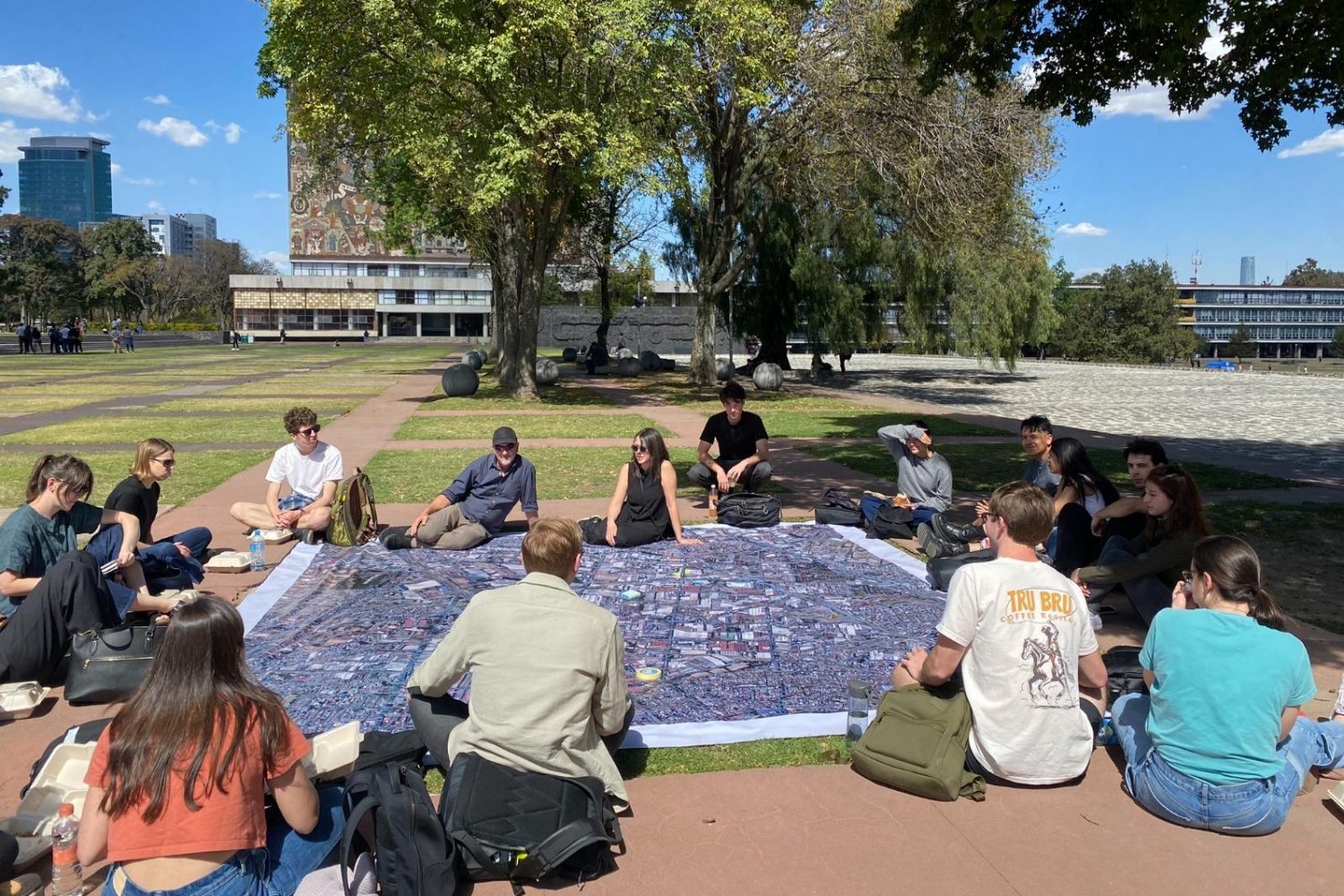
The initiative, now the LCAU's longest-standing City Initiative program, has produced an impressive portfolio of urban innovations. Graduate students and faculty have designed strategies to convert nearly 990 acres of Bordo Poniente—once Latin America's largest landfill—into a model for ecological restoration and clean energy production. They've modeled decarbonization pathways for municipal neighborhoods and reimagined industrial zones as engines for sustainable housing, water resilience, and energy generation.
But Sarah Williams, LCAU director and associate professor of technology and urban planning, argues that these technical outputs are secondary to the collaborative infrastructure the partnership has built. "To really create change in cities, we need to build relationships, friendships, and new networks," she says. "And through building them together, we can go so much further."
This philosophy reflects a deliberate shift in how LCAU approaches urban research. Established in 2013, the center operates on the principle that transforming future cities requires crossing disciplinary boundaries. Under Williams' leadership over the past four years, the center has formalized this approach through "City Initiatives"—long-term partnerships with municipalities including Boston, Sydney, Beirut, Bogotá, and Pristina.
Mexico City represents the deepest iteration of this model. The partnership centers on collaboration between MIT, Mexico's National Autonomous University (UNAM), the Mexico City government, and Mota-Engil Mexico, an engineering firm that has provided crucial financial backing. Onésimo Flores PhD '13, director general of Mota-Engil's transportation mobility division, credits the company's MIT alumnus connection with catalyzing the relationship.
Flores, who earned his doctorate in urban studies and planning with Mota-Engil scholarship support, says the company's investment aims to accomplish three goals: connect Mexican researchers with MIT, involve Mexican students in MIT programs, and stimulate MIT faculty interest in projects relevant to complex cities like Mexico City. "If you can find urban solutions for a city as complex as Mexico City, you can probably figure it out for any city in the world, particularly in the Global South," he notes.
The current focus of the initiative—Energy Intersections—emerged from this strategic thinking. The theme examines how design can accelerate transitions to cleaner energy infrastructure, addressing a critical barrier for Mexico's ambitions to participate in global manufacturing markets. Williams explains that while the team considered other themes including water, emergency planning, and housing, "as we started to think about energy, it just became so clearly important."
This past fall, the partnership convened a symposium in Mexico City to showcase three major projects that exemplify the initiative's approach:
Bordo Poniente: From Waste to Resource
Led by MIT professor Eran Ben-Joseph, the Bordo Poniente project represents perhaps the most ambitious transformation in the portfolio. Working with UNAM and Mota-Engil partners, 12 MIT graduate students from the School of Architecture and Planning tackled the site through four integrated objectives: converting waste into public value, advancing energy transition through methane and leachate capture, promoting equity for neighboring communities, and generating actionable policy recommendations.
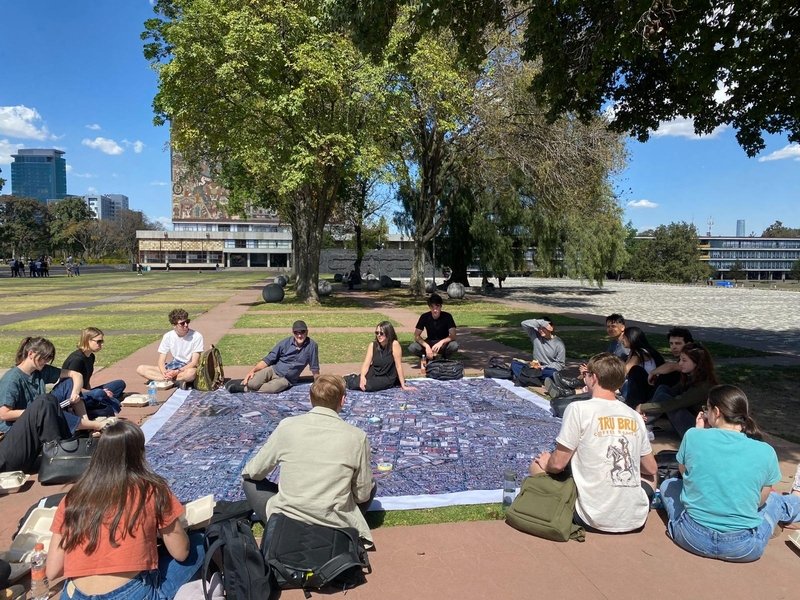
Ben-Joseph describes the effort as combining "rigorous fieldwork, interdisciplinary expertise, and community engagement to reimagine a toxic site as a model of urban regeneration and ecological repair." With over 100,000 landfills worldwide, the project aims to develop a replicable 'Bordo Model' that positions MIT as a leader in transforming waste landscapes into energy, ecological, and civic assets.
Vallejo-I: Industrial Zone as Clean Energy Hub
Moderated by UNAM associate professor Daniel Daou and led by MIT lecturer Roi Salgueiro Barrio, the Vallejo project reimagines Mexico City's Vallejo Industrial Zone as a revitalized hub for industry, transportation, and housing. The panel discussion at the symposium established an actionable framework for energy and industrial transition that could guide revival of other industrial areas.

The project's significance extends beyond its immediate design proposals. It demonstrates how international courses can translate local research into globally applicable frameworks. The work builds on earlier ideation events, including a 2023 Ideathon for Energy Transition that brought together MITdesignX, Mota-Engil México, and Mexico City's SECTEI agency.
Daniel Garza Neighborhood: Decarbonization at Community Scale
MIT professor Rafi Segal's team presented a case study of the Daniel Garza neighborhood, highlighting two replicable urban planning and community clean energy project designs. Daniela Martinez Chapa, a former MIT student and research assistant on the project, emphasizes that "the most impactful aspect is its ability to merge energy transition with urban regeneration at the neighborhood scale."

Martinez Chapa notes that the project operates at the intersection of energy, design, and social infrastructure rather than fitting neatly into a single disciplinary category. "The project exemplifies MIT's commitment to collaborative, context-specific innovation," she adds.
The Power of Cross-Pollination
What distinguishes this initiative is the depth of institutional integration. UNAM associate professor Elena Tudela points out that MIT brings "cutting-edge tools and methodologies in fields such as energy and urban data science," while UNAM contributes "deep local expertise, strong social perspectives, and long-standing engagement with communities."
This combination has produced what Tudela calls "highly creative, context-sensitive outcomes." More importantly, she notes that for local students, "the impact has been even more profound. It built bonds that transcend the workshop's objectives, contributing to a deeper understanding of design as a collaborative, multidisciplinary practice."
The human dimension of the partnership extends beyond academic collaboration. Tudela describes developing "a genuine friendship that I hope will continue long after this specific collaboration ends." Similarly, Flores emphasizes that "there have been a lot of personal connections created between MIT and UNAM, and I think research collaboration will result from these connections."

From Research to Reality
The symposium's purpose was to bridge the gap between research and implementation. By presenting findings to Mexico City's public and private sectors, the team aims to move projects from strategy to on-the-ground reality. Williams sees this as essential: "The conversations and ideas that were had in the room spark the kind of civic debate needed to transform our cities."
The initiative has already demonstrated this trajectory. The 2022 Mextropoli Architecture and City Festival featured "Sueños con Fiber/Timber, Earth/Concrete," an MIT project that repurposed a decommissioned roller coaster as a public forum space. Adjacent to this, MIT associate professor Caitlin Mueller built a structure using 3D printed bricks that capture traditional Mexican construction styles while reducing carbon footprint by 50 percent.
That project has since evolved into Forma Systems, a design and technology company co-founded by Mueller focused on expanding access to high-quality, low-carbon affordable housing. "Caitlin's project with the bricks is just such a good example of what the Cities Initiative can do," Williams says. "We seeded collaborative research, and now there's a startup based off the idea, and they are continuing to do the work."
This evolution from classroom project to commercial venture illustrates the initiative's theory of change. By funding research that combines deep local knowledge with MIT's innovation environment, the partnership helps inspire new ideas and technologies that can scale. The Mexico City Initiative's current projects—presented at the recent symposium—represent the next wave of this pipeline.
As the partnership moves forward, the emphasis remains on sustaining the relationships that make innovation possible. The technical challenges of urban decarbonization, waste management, and industrial transformation are substantial, but Williams believes the collaborative infrastructure being built will prove more valuable than any single project.
"The future is open," she says. For the Mexico City Initiative, that future depends as much on the friendships and networks forged over years of working together as on the technical brilliance of its designs.
Comments
Please log in or register to join the discussion