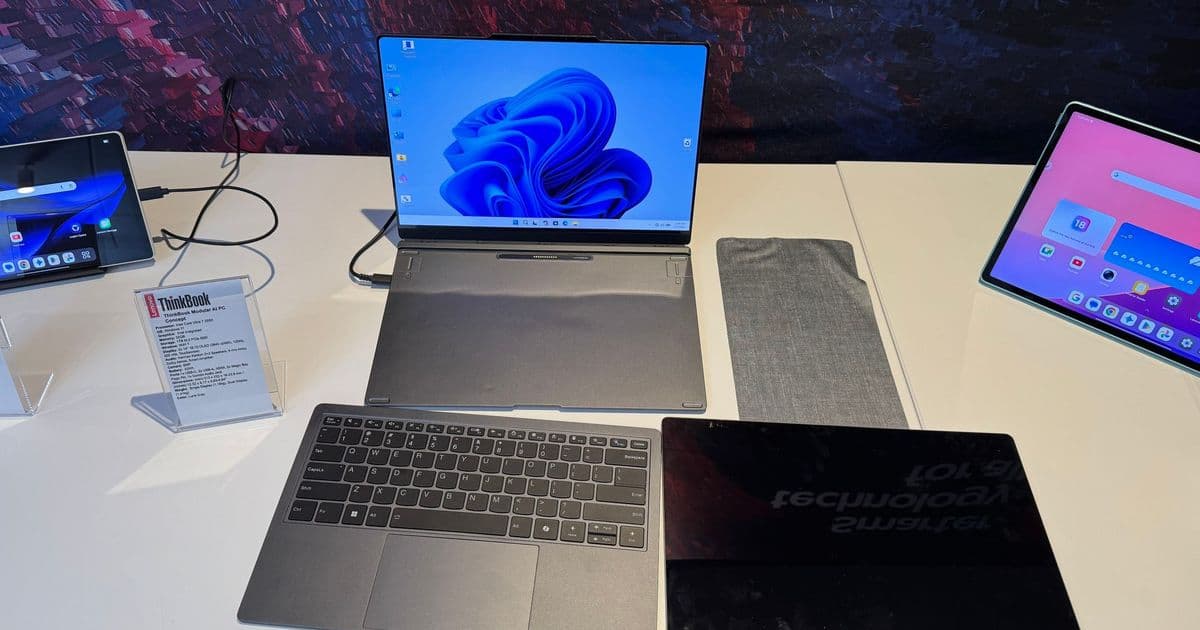
Lenovo's Magic Bay-based modular concept lets users swap between dual screens, keyboards, and ports on demand, offering unprecedented customization but raising questions about practicality and battery life.
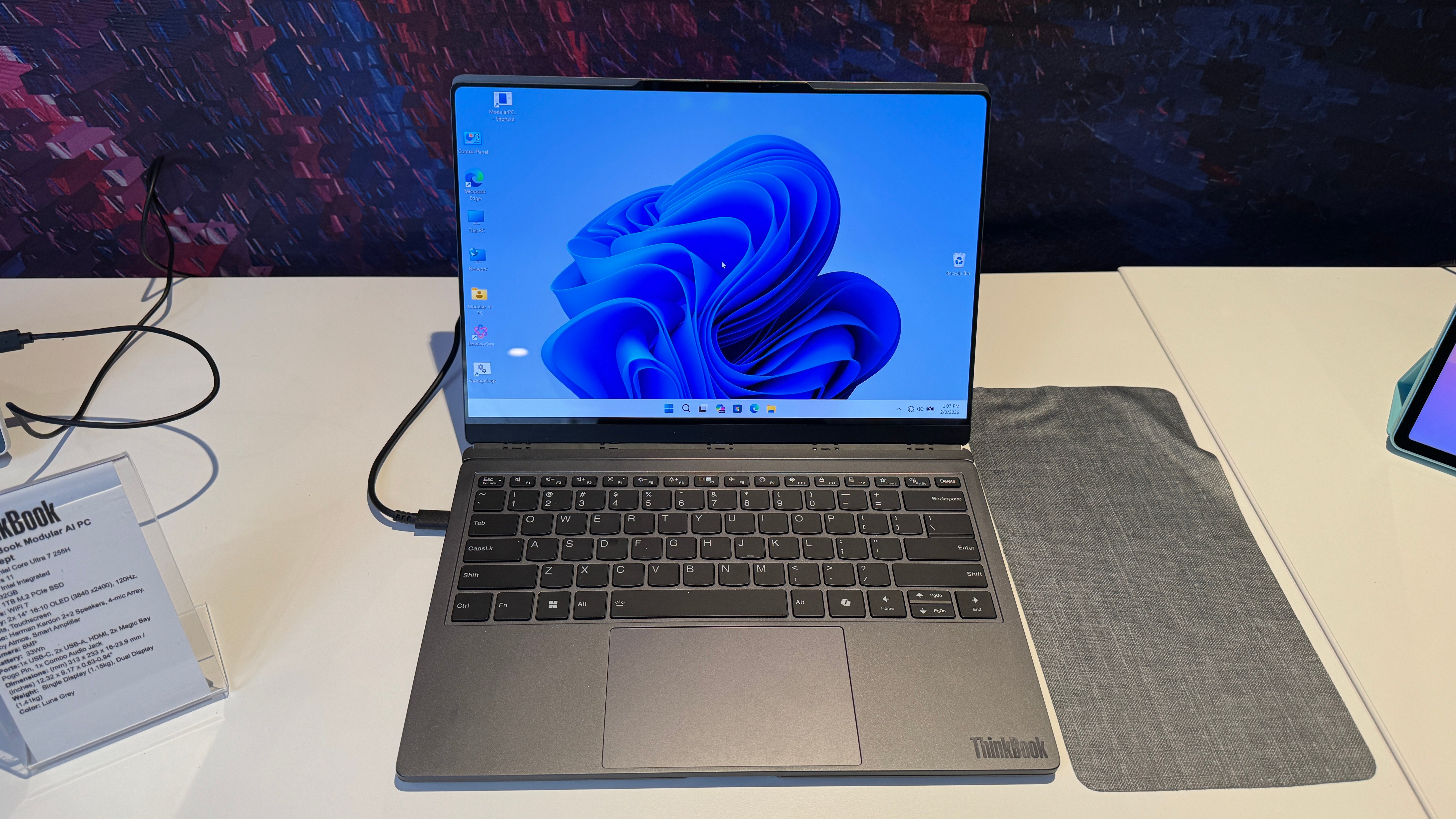
At Mobile World Congress 2026, Lenovo unveiled a concept PC that reimagines modularity in ways that go far beyond what Framework has offered. The Modular AI PC concept introduces a selectively modular system where users can swap between dual OLED touchscreens, detachable keyboards, and interchangeable ports using the company's Magic Bay magnetic connectors.
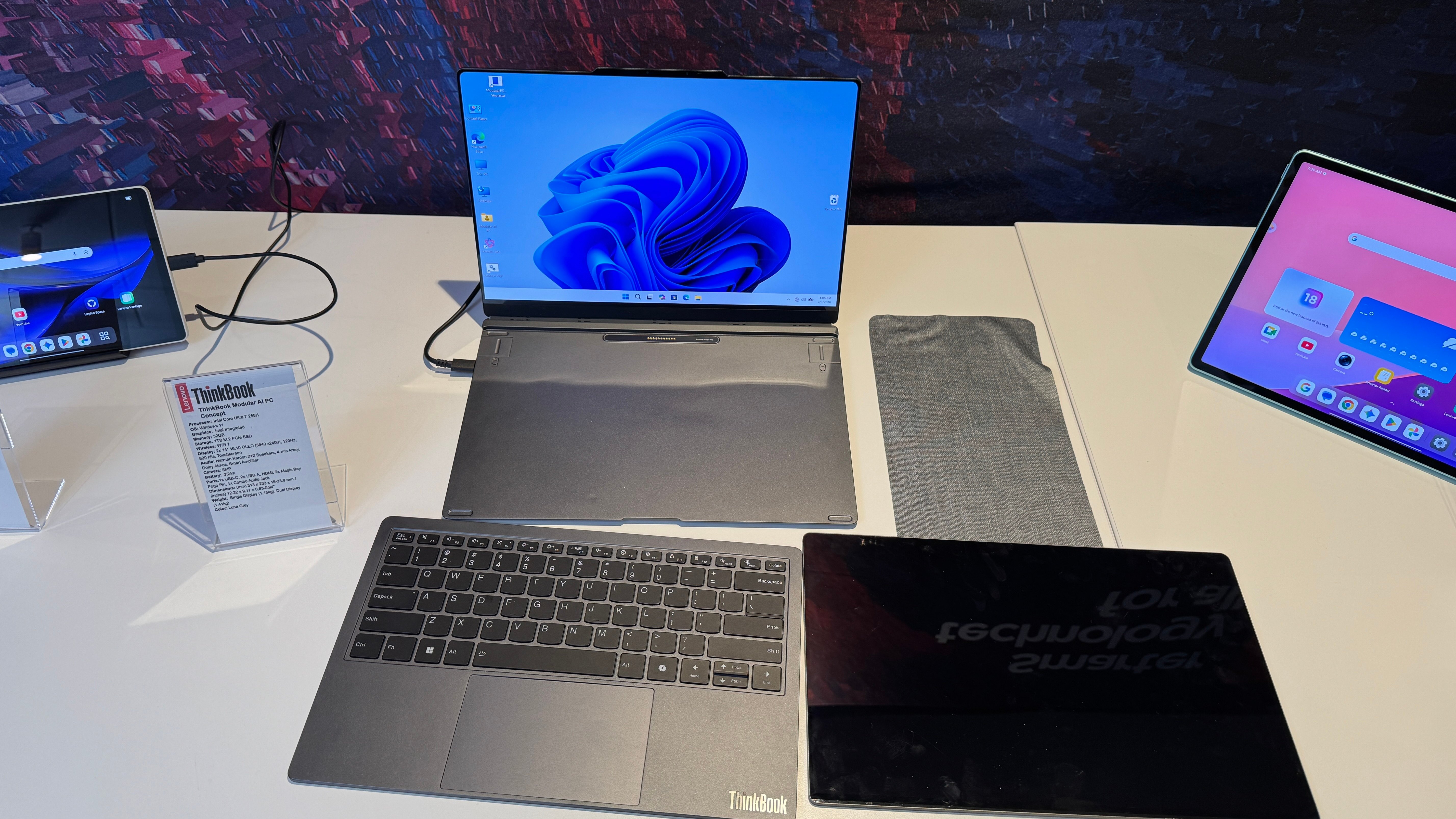
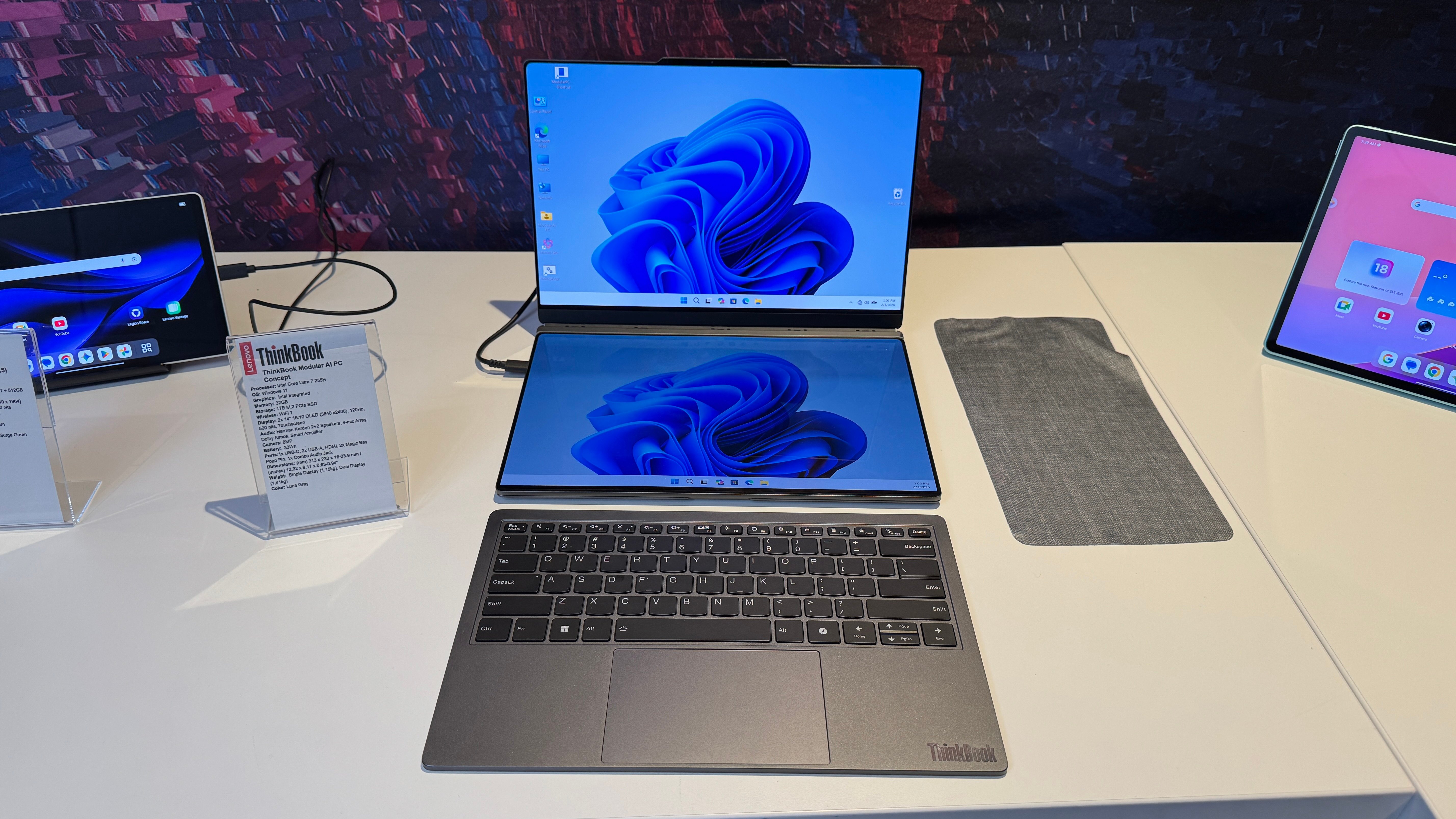
Unlike traditional modular laptops that focus on internal component upgrades, Lenovo's approach emphasizes external customization. The system centers around a metal base with a built-in primary display, complemented by Magic Bay connectors on both the keyboard deck and the back of the display. This configuration allows users to attach a second 14-inch, 3840 x 2400 OLED touchscreen with 120Hz refresh rate in multiple configurations.
Multiple Display Configurations
The concept's flexibility shines through its various screen arrangements. Users can position the second display on the keyboard deck for a Yoga Book 9i or Asus ZenBook Duo-like experience, perfect for multitasking or creative workflows. When a single-screen setup suffices, the second display can be swapped for a physical keyboard. Alternatively, mounting the display on the laptop's lid transforms the device into a presentation tool or allows closed-lid usage with an external monitor.
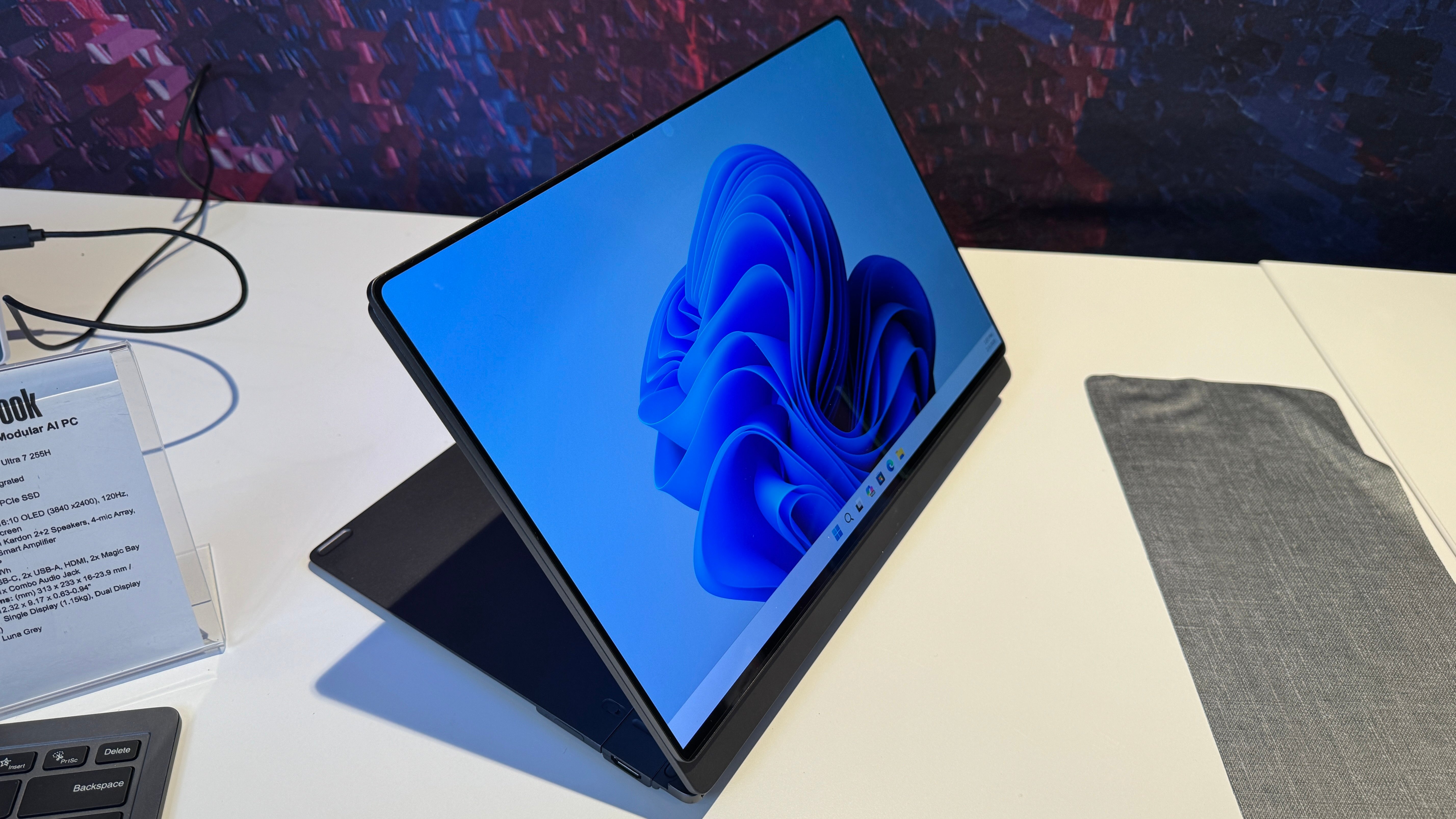
Lenovo also demonstrated using the second screen as a standalone portable monitor with a kickstand and USB-C connection. However, the magnetic stand provided during the demo proved flimsy and finicky, suggesting this aspect needs refinement before any potential commercial release.
Interchangeable Port System
The modular concept extends to connectivity with two swappable port modules flanking the notebook. Users can choose between USB-C, USB-A, and HDMI ports, which attach directly to the motherboard rather than using adapter-based systems like Framework's laptops. This direct connection approach could offer more reliable performance but might limit future upgrade options compared to USB-C-based modular systems.
A fixed USB-C port and 3.5mm headphone jack remain permanently installed, ensuring essential connectivity regardless of port module choices. The ability to swap ports on demand means users could configure the laptop for different environments—HDMI for presentations, USB-A for legacy peripherals, or USB-C for modern accessories.
Technical Specifications and Concerns
Lenovo's prototype packs respectable internals for a concept device: Intel Core Ultra 7 255H processor, 32GB RAM, and 1TB M.2 PCIe SSD. However, the 33Whr battery raises significant concerns, particularly given the power demands of dual OLED touch displays. This capacity falls well below what's typical in premium ultrabooks, potentially limiting battery life to just a few hours under heavy use.
The weight also varies considerably based on configuration—2.54 pounds (1.15 kg) with a single display versus 3.11 pounds (1.41 kg) with two displays. While still relatively portable, the weight difference highlights how quickly modularity can impact portability.
Practical Considerations
During hands-on testing, several practical limitations emerged. Attempting to mount the keyboard on the laptop's lid proved unsuccessful—while it fit physically, typing was impossible due to the lack of proper support and key travel. This suggests Lenovo's design team carefully considered which components make sense in each configuration.
The concept's overwhelming number of parts also raises questions about everyday usability. While Framework users might upgrade internals annually, Lenovo's system encourages daily or even hourly configuration changes. This constant swapping could become tedious for users who prefer simplicity over customization.
Market Position and Future Potential
Lenovo positions this concept as an exploration of AI PC possibilities, though the prototype doesn't showcase specific AI features beyond the capable Intel Core Ultra processor. The company hasn't announced pricing or release plans, leaving ample room for refinement based on feedback.
This approach directly challenges Framework's dominance in the modular laptop space by expanding modularity beyond internal components to the entire user experience. Where Framework focuses on longevity through upgradable internals, Lenovo emphasizes adaptability through swappable externals.
The Bottom Line
The Modular AI PC concept represents an ambitious rethinking of what laptop customization can mean. By allowing users to transform their device's form factor and functionality on demand, Lenovo addresses the reality that different tasks demand different tools. However, the concept's success hinges on solving practical issues around weight distribution, battery life, and the convenience of constant reconfiguration.
Whether this modular vision becomes reality or remains a thought experiment, it pushes the industry to consider new possibilities for personal computing. As AI capabilities become increasingly important in laptops, the ability to physically adapt devices to different use cases could become a valuable differentiator in an increasingly competitive market.
Comments
Please log in or register to join the discussion