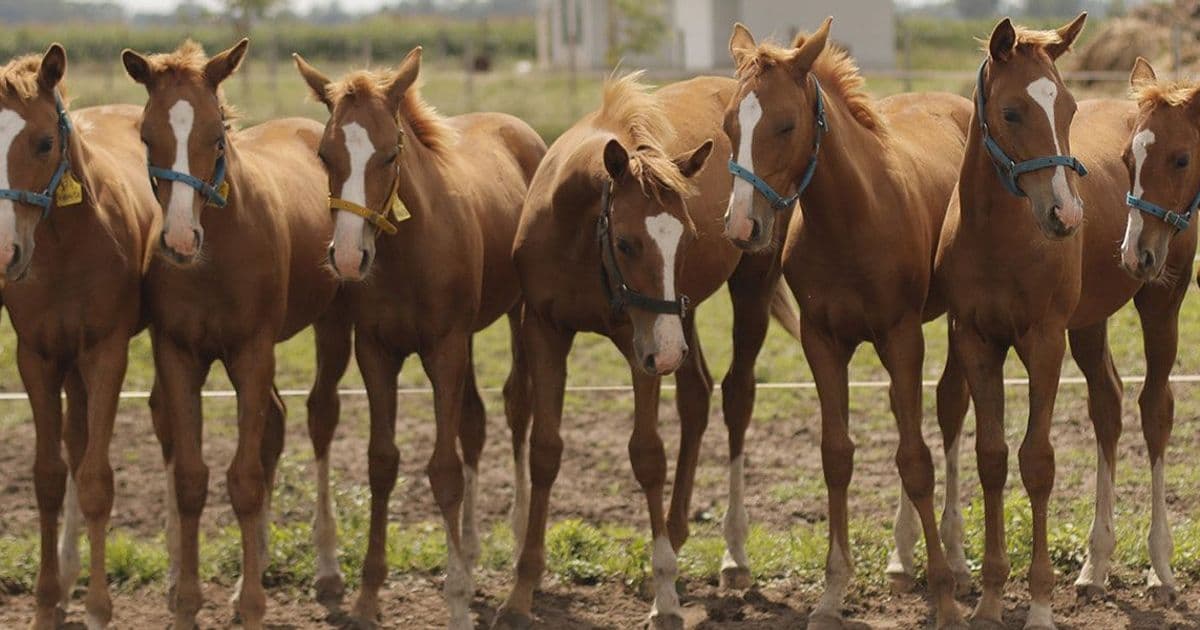
Argentina has emerged as the global epicenter of horse cloning, transforming polo through genetic preservation while raising ethical questions about animal welfare and the future of equine sports.
At the slightest touch of the reins, he felt a familiarity that shook him. It was 2016, and polo player Adolfo Cambiaso — considered the best in the world — was riding for the first time on a genetic clone of Cuartetera, his flagship mare. The same explosive start, the same agility in the curves, the same sustained stride in the long sprints. "It was the same," he recalls. "Same movements, same head.... I couldn't believe it."
That moment marked a turning point in polo, where genetic replicas have become so commonplace that they now dominate the sport. Argentina has become the world center for horse cloning, far ahead of the United States and Europe, with laboratories refining the procedure and improving success rates, though the process remains technically challenging and expensive.
The Technology Behind Equine Cloning
The cloning process, known as somatic cell nuclear transfer (SCNT), follows a precise sequence. First, a somatic cell — a non-reproductive cell such as a skin cell — is taken from the animal to be cloned, and its nucleus, containing the genetic information, is extracted. Simultaneously, scientists take an egg cell from the same species and remove its nuclear DNA in a process called enucleation. The extracted nucleus is then inserted into this "empty" egg cell.
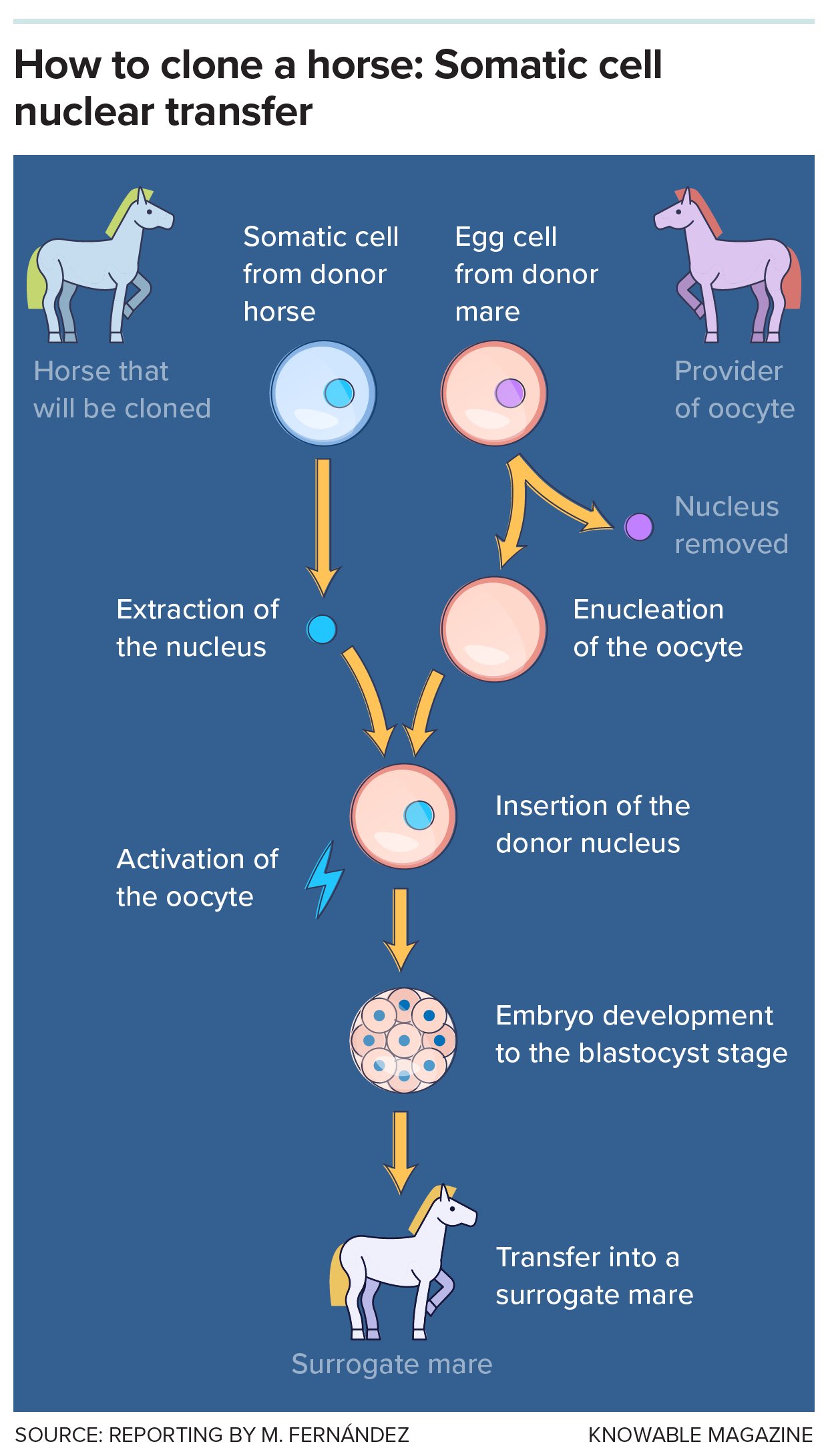
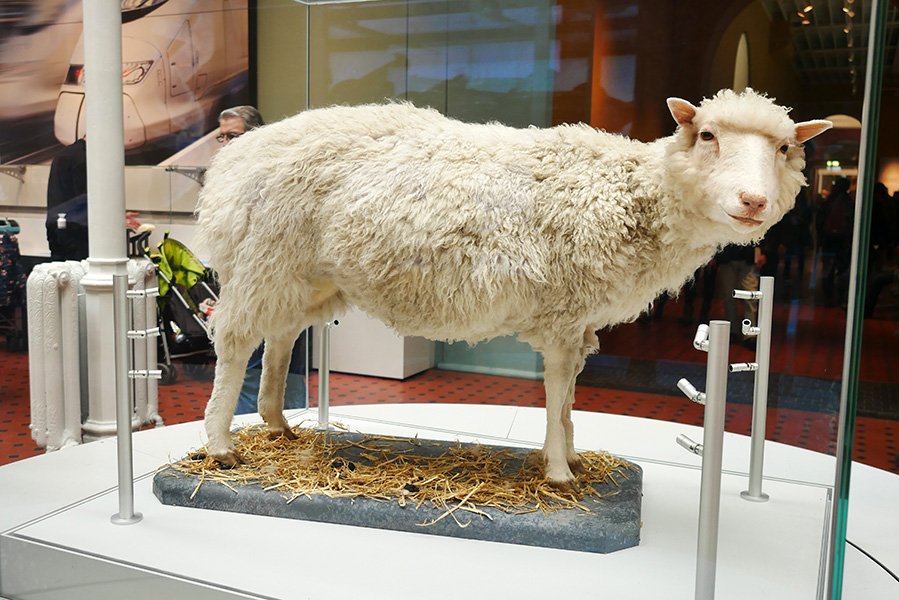
The egg with its new nucleus is stimulated chemically or by electrical impulses to begin dividing and form an embryo. The embryo is cultured in vitro for seven or eight days until it reaches the blastocyst stage, at which point it is implanted in a female who will carry the pregnancy to term. This same technique was used to create Dolly the sheep in 1996, a milestone that proved it was possible to "reset" an animal's DNA and bring it to an embryonic state capable of development.
"The main limitations of cloning lie in the fact that the transferred nucleus does not always manage to reprogram itself completely, and that the mitochondria of the recipient egg and the genome of the transferred nucleus may have incompatibilities," explains Andrés Gambini, a veterinarian specializing in animal reproduction at the University of Queensland in Australia.
Despite these challenges, cloning has opened doors to numerous applications, from species conservation to livestock breeding and now, elite sports like polo. The success rates have improved significantly over time, particularly with the shift from using adult skin cells to stem cells from bone marrow.
Argentina's Cloning Industry Dominance
In 2010, biotechnologist Gabriel Vichera read about Adolfo Cambiaso auctioning off one of the clones of his star mare, Cuartetera, for an eye-watering $800,000. The sale made it clear that there was substantial money to be made in horse cloning. Vichera wondered if he could bring the technique to Argentina and scale it up.

"Planning to clone these exceptional horses represented a huge business opportunity," says Vichera. He founded Kheiron Biotech, which has since become a leader in the field. "At first, the results were not encouraging," Vichera admits. "The first clones by Kheiron Biotech, between 2012 and 2016, were made from adult skin cells, and almost half of the foals from the 38 live births had abnormalities of the umbilical cord or placenta, or limbs that were abnormally bent."
The turning point came when the company started working with stem cells from bone marrow. "This technology changed everything. Today, almost 100 percent of births are as healthy as those obtained through natural breeding," says Vichera. To date, Kheiron Biotech reports having produced a thousand cloned horses.
With polo as its flagship application, Argentina overwhelmingly dominates the global equine cloning industry, followed — at a considerable distance — by the United States and some European countries. The industry has evolved from experimental to mature, with standardized protocols that make cloning a reliable, if expensive, tool for professional polo teams.
The Economics of Cloning
Cloning a horse remains a luxury: It costs around $40,000 per born animal. This high price reflects the significant losses that occur at each stage of the process. It is estimated that, out of every 100 embryos, only 20 reach the blastocyst stage and are transferred. Of these, 10 are successfully implanted in surrogate mares, and of those 10, only five reach full term.
"Even with everything optimized, the birth rate per transferred embryo is low in large mammals, ranging from 3 to 10 percent," says Flávio Vieira Meirelles, a reproductive biotechnologist at the University of São Paulo, Brazil. "Several advances have improved horse cloning in recent years, mainly involving methods for activation of the egg after inserting the nucleus, and cultivation conditions for the embryo."
Despite the costs, the return on investment can be substantial. Polo horses can be worth anywhere from $50,000 to nearly $1 million for extraordinary specimens, and the genetic consistency offered by cloning provides a competitive edge that traditional breeding cannot match.
Cambiaso's Cloning Revolution
Adolfo Cambiaso's journey into horse cloning began in 2006, during the Palermo Open final — the ultimate temple of polo. His horse Aiken Cura suffered a devastating fracture and had to be put down. But before saying goodbye, Cambiaso made an unusual request to the veterinarians. "Just in case, before they put him to sleep, I said, 'Let's save some cells.'"
That intuition led to the founding of Crestview Genetics, which partnered with the firm ViaGen to begin cloning work. In August 2010, the first clones of Aiken Cura and Cuartetera were born. "It was a strange feeling," Cambiaso recalls. "We spent two hours looking at them, unable to believe it."

The final of the 2016 Palermo Open would leave an unforgettable image. The original Cuartetera had retired a year earlier, but on the field, lined up by Cambiaso, were six identical mares — all clones of Cuartetera — who would bring victory to La Dolfina. Their names: Cuartetera B01, Cuartetera B02, Cuartetera B03, Cuartetera B04, Cuartetera B05, and Cuartetera B06. For the first time, clones were playing polo at the highest level.
Today, La Dolfina has more than 150 cloned horses, establishing unprecedented dominance in the sport. This success has inspired other teams to follow suit, creating an industry where genetic preservation has become as important as training and skill.
Ethical Considerations
As equine cloning has become more common, ethical questions have intensified. "We can talk about identity in any individual, even cloned horses," says Finnish philosopher Häyry Matti, who specializes in ethics. "Improving the athletic performance of a nonhuman for human entertainment is repugnant. It intensifies objectification, manipulation and hegemonic imposition."
In the daily practice of cloning, dilemmas about animal welfare translate into procedures and risks that are rarely visible to the public. According to equine geneticist Sebastián Demyda Peyrás, "many clones are not born in the field, but in specialized veterinary hospitals or in the companies' own neonatal units due to frequent complications during birth. These, he adds, are rare in traditional horse breeding."
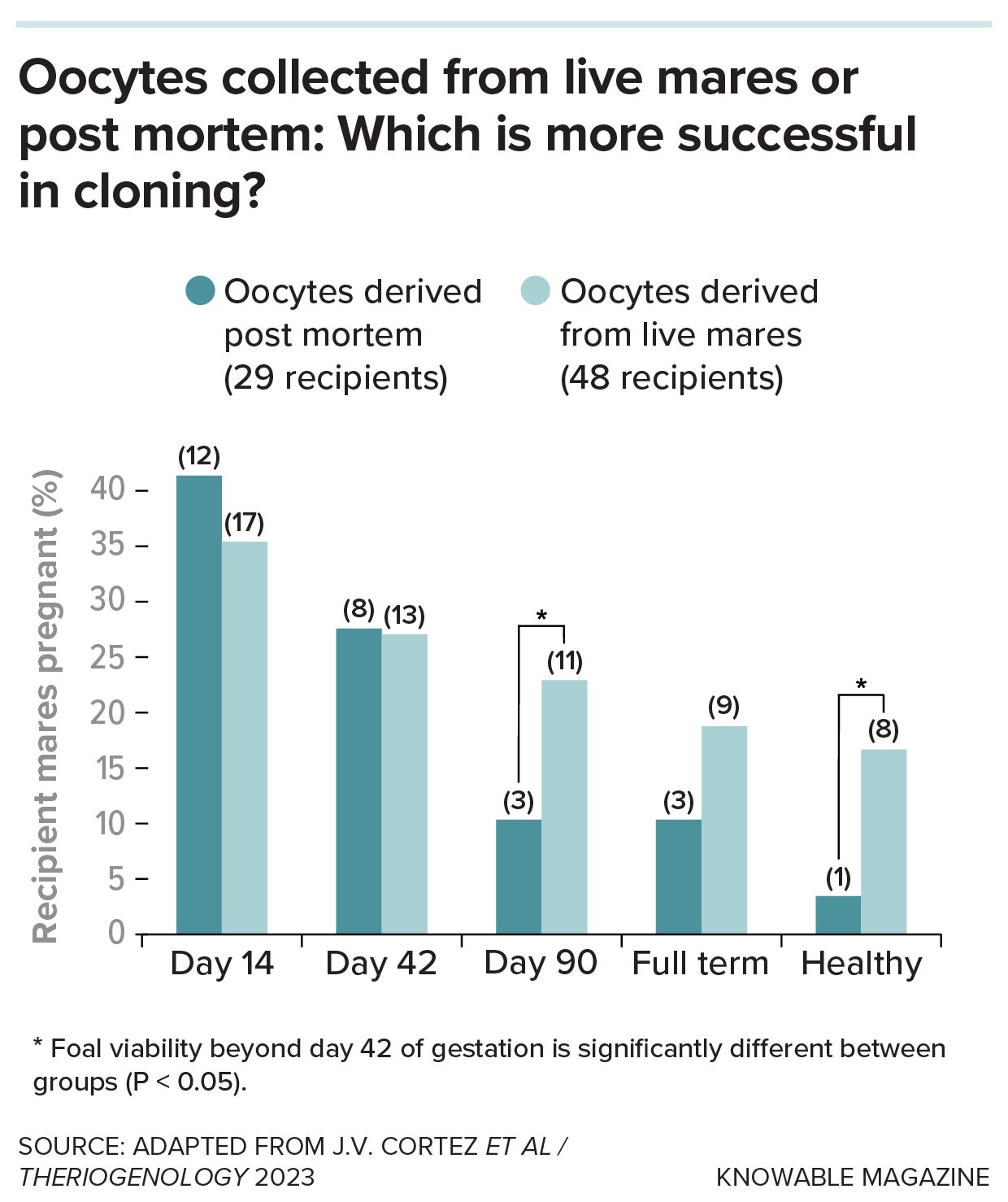
The source of oocytes also presents ethical considerations. One alternative is to obtain them from the ovaries of dead mares collected at slaughterhouses, although they can also be extracted from live females by transvaginal aspiration, a more invasive procedure but with better success rates. "With oocytes obtained using transvaginal aspiration, the proportion of embryos that reach the blastocyst stage is around 35 percent, compared to just 26 percent in oocytes obtained from slaughterhouses," explains Demyda Peyrás.
The ethical debate has evolved over time. "In the beginning, the main concern revolved around the health of the clones: malformations and potential suffering during gestation and adulthood," says Demyda Peyrás. "With technical advances and the standardization of protocols, these objections lost their centrality and, at least in the field of polo, the practice began to enjoy relative acceptance."
However, concerns remain about the actual rate of miscarriages, health problems in foals born, and the lack of transparency and public data to assess the biological impacts of the process. There's also the risk of inbreeding depression, the loss of genetic variability when crossing individuals that are too closely related.
Future Directions: Genetic Editing
With the cloning technique now mastered, companies like Kheiron Biotech are venturing into even more ambitious territory. In December 2024, the company announced the birth of five foals that had been genetically edited using the CRISPR-Cas9 technique, a global milestone in equine breeding.
"The intervention consisted of inserting a DNA sequence known as SINE into the control sequences of the creatures' myostatin gene," explains Vichera. "This is a genetic variant that already exists naturally in some breeds and influences muscle development. The main goal, however, was to demonstrate that precision genetic editing in horses is technically feasible, and compatible with cloning."
Vichera presented the achievement as proof of concept and a preview of a scenario in which it will be possible not only to copy the best horses, but also to introduce specific modifications to their genomes. "Editing the myostatin gene has known effects on muscle fiber composition and performance during short, intense efforts, and there is ongoing research into other genes and possible applications," he adds.
The combination of cloning and gene editing opens up new dilemmas, says Gambini. "It is one thing to use such tools to prevent disease or improve production efficiency — which could be justified on welfare grounds — and quite another to use them to enhance athletic performance for human entertainment."
Conclusion
Argentina's horse cloning industry has transformed polo, allowing teams like La Dolfina to maintain unprecedented dominance through genetic preservation. While technical advances have improved success rates and reduced health complications, the practice continues to raise ethical questions about animal welfare and the extent to which biology should be manipulated for sporting purposes.
For now, the industry operates with minimal regulation and transparency, with Cambiaso and other pioneers focused on sporting glory and business opportunities. As genetic editing technologies advance, the ethical debates are likely to intensify, potentially leading to new regulations or industry standards.
What remains clear is that the field of clones has permanently changed polo, creating a new paradigm where genetic consistency has become as valuable as athletic talent and training skill.
Comments
Please log in or register to join the discussion