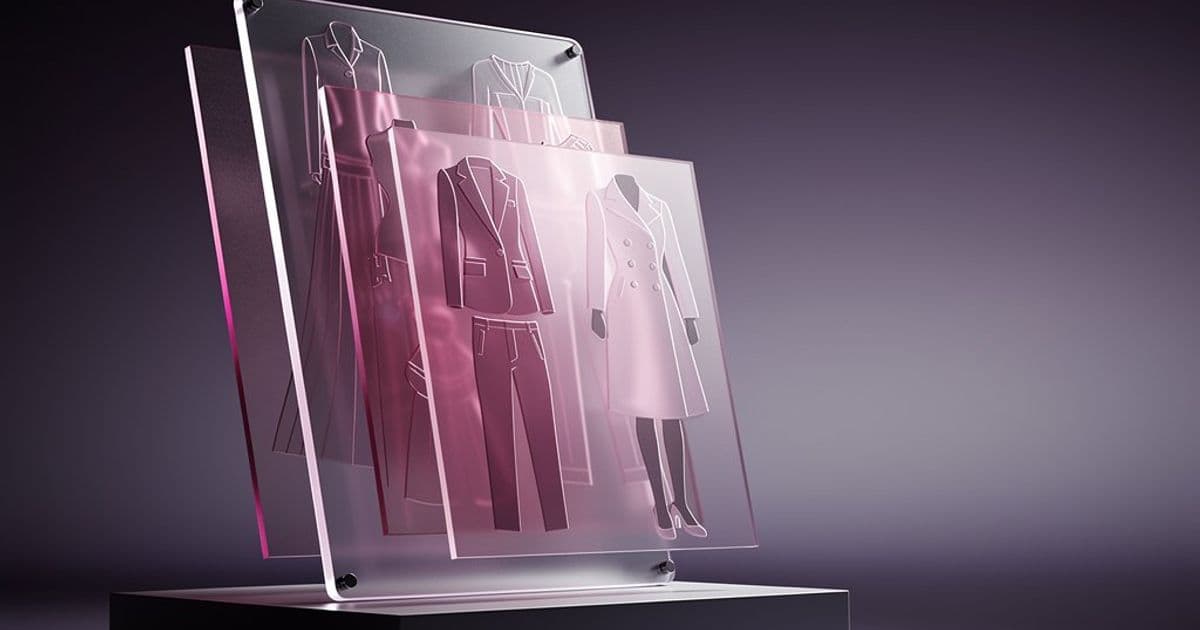
A digital exploration of fashion's shifting silhouettes and cultural signifiers, presented as an interactive archive where users can drag, sort, and restart their own visual timeline of style.
FitDrop presents fashion not as a linear progression but as a layered, personal archive. The project, which spans from 1980 to 2025, invites users to physically engage with garments from different eras, dragging them across a digital canvas to build their own narrative of style. It's less a museum and more a tactile workspace, where the user's own curiosity dictates the arrangement.
The interface is deliberately minimal. A central area holds a pile of clothing items, each tagged with a year. The instruction is simple: "If you want to know more about an outfit drag it to the corner." This action triggers a deeper dive into the garment's context—its materials, the cultural moment it emerged from, the technology that made it possible, or the social shift it represented. The pile can become "too messy," a state that mirrors the overwhelming nature of fashion history itself. Users are given two options: "restart the drop" to begin a new, clean arrangement, or "just chuck things around," embracing the chaos of a personal, uncurated collection.
This project operates at the intersection of data visualization and personal curation. It challenges the typical fashion timeline—often presented as a series of definitive "looks"—by making the user an active participant in the sorting process. The value isn't in a pre-determined narrative, but in the connections a user makes when they place a 1985 power suit next to a 2020 techwear jacket, or when they isolate a single garment from a crowded pile to understand its specific significance.
FitDrop’s approach mirrors a growing trend in digital archiving: moving away from static databases toward interactive, user-driven exploration. By allowing users to restart or rearrange, it acknowledges that history is not a fixed story but a collection of artifacts that gain meaning through the lens of the observer. The project doesn't provide answers; it provides the tools for personal discovery.
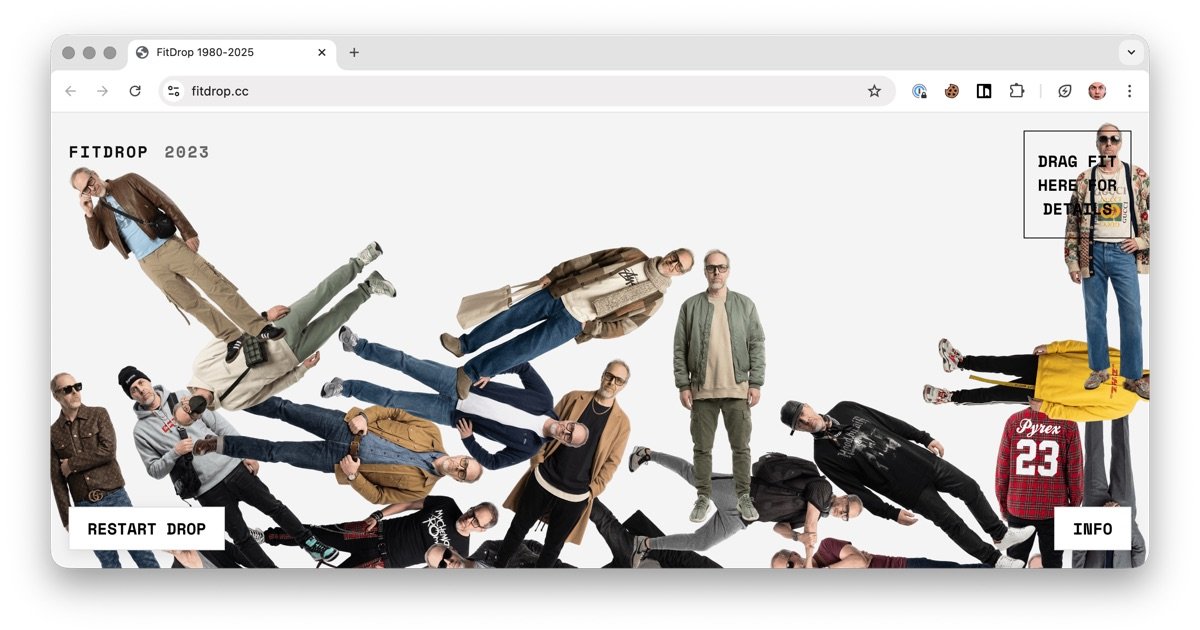
The timeframe itself—1980 to 2025—is telling. It covers the rise of fast fashion, the digital revolution's impact on textile design, the sustainability movement, and the blurring of lines between streetwear and high fashion. Each garment in the archive serves as a node in this complex network. A user might drag a 1990s oversized flannel shirt and, in the corner, discover its roots in grunge music and anti-consumerist sentiment. They might then drag a 2025 biodegradable sneaker and learn about advances in material science and circular economy models.
The "restart" function is particularly insightful. In traditional archives, the curation is permanent. Here, the ability to wipe the board clean and start over reflects the subjective nature of memory and taste. It suggests that our understanding of the past is always provisional, always subject to re-evaluation. The "chuck things around" option is the digital equivalent of flipping through a thrift store bin—a process of discovery through serendipity and tactile engagement.
FitDrop is a personal project, but its methodology has broader implications for how we engage with cultural history. It demonstrates that interactivity can be more powerful than passive consumption. By giving users agency over the arrangement of historical artifacts, it fosters a deeper, more personal connection to the material. The project is a reminder that fashion is not just about what we wear, but about the stories we choose to tell with the clothes we collect, discard, and rediscover.
For those interested in exploring the archive or understanding the project's underlying philosophy, the interface itself is the primary source of information. The act of dragging and dropping is the research method. The pile is the database. The corner is the library. FitDrop doesn't just show you fashion history; it asks you to build it yourself.
Comments
Please log in or register to join the discussion