AWS's strategic investment in Open VSX and declining VS Code usage in the Rust community signal shifting dynamics in the IDE market as AI-driven development tools gain traction.
The IDE landscape is experiencing significant shifts as AWS announces strategic backing for Open VSX while a new Rust developer survey reveals declining VS Code usage. These developments highlight the intensifying competition in development tools as AI-driven workflows reshape how developers interact with their coding environments.
AWS's Strategic Investment in Open VSX
Amazon Web Services has made a "strategic investment" in the Open VSX registry, which will now run on AWS infrastructure in Europe. This move represents a significant endorsement of the vendor-neutral extension marketplace that serves as an alternative to Microsoft's VS Code marketplace.
The Open VSX project, operated by the Eclipse Foundation, addresses a critical limitation in the VS Code ecosystem. Microsoft restricts access to its Visual Studio Marketplace for "alternative products including those built on a fork of the Code-OSS Repository," citing security and compatibility concerns. The company has stated there's no business case to "run a full-scale global service for everyone to use."
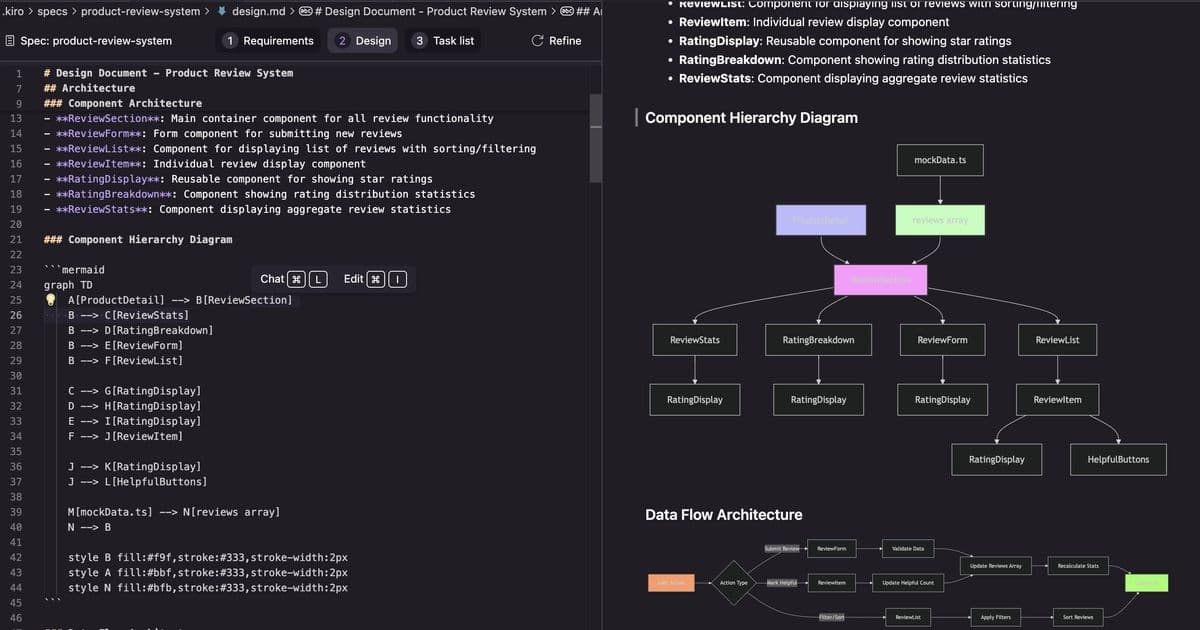
Open VSX emerged in early 2020 as a solution created by GitPod (now Ona) to provide extension support for Code-OSS forks. The registry has become increasingly important as the number of VS Code alternatives has grown, particularly with the rise of AI-powered development tools. Today's ecosystem includes Google Antigravity, Cursor, Windsurf, and AWS Kiro.
Despite its importance, Open VSX has historically struggled with a smaller extension library compared to the official VS Code marketplace. While it contains many popular extensions, it notably lacks those from Microsoft itself. In early 2023, the project faced potential shutdown until a working group formed from interested companies provided necessary funding.
Infrastructure and Security Enhancements
The registry now appears on solid footing, with over 300 million monthly downloads and new sponsorship from both AWS and Cursor. The project has announced plans to transition to hybrid infrastructure, with primary AWS deployment in Europe and secondary on-premises environments in Canada. A dedicated fallback storage cluster will ensure reliability.
Security improvements are also underway, with a new verification framework being developed to block malicious and impersonated extensions. This addresses one of the key concerns that led Microsoft to restrict marketplace access in the first place.
However, the project has introduced usage tiers in January, requiring subscriptions for organizations generating more than 75 requests per second. This monetization approach marks a shift from the previously free model and reflects the growing operational costs of maintaining such a critical infrastructure component.
VS Code's Dominance Faces Challenges
Microsoft's VS Code has long dominated the IDE market, boasting 93,862 extensions at the time of writing and monthly feature releases. The 2024 Stack Overflow survey showed VS Code usage at 76.2 percent among professional developers, more than double the 29.7 percent for second-place Visual Studio.
Yet signs of potential peaking are emerging. The AI revolution has stimulated competition, with companies like OpenAI arguing that traditional IDEs are sub-optimal for agent-driven development. Microsoft's response has been to integrate extensive AI features into VS Code, but this rapid evolution has alienated some developers who find these features intrusive or distracting.
Rust Community Signals Broader Trend
The 2025 State of Rust survey provides compelling evidence of shifting preferences. VS Code usage among Rust developers has declined from 61.7 percent to 51.6 percent over three years. Meanwhile, Zed, a Rust-powered editor, has grown from near-zero to 18.6 percent usage. JetBrains' Rust Rover IDE has seen a slight decline from 16.4 percent to 14.4 percent.
This trend in the Rust community may foreshadow broader shifts across the developer ecosystem. The Rust community tends to be early adopters of new tools and technologies, making their preferences particularly noteworthy for predicting future trends.
The AI-Driven IDE Competition
The current IDE market reflects a fundamental tension between traditional development workflows and emerging AI-driven approaches. Microsoft's strategy of embedding AI deeply into VS Code represents one approach, while competitors are building entirely new paradigms optimized for agent-driven development.
Tools like Cursor and Windsurf represent a new generation of AI-first editors that rethink the development experience from the ground up. These tools often integrate AI assistance more seamlessly than traditional IDEs that have had AI features bolted on.
AWS's investment in Open VSX also positions the company strategically in this evolving landscape. By supporting the extension ecosystem for VS Code alternatives, AWS ensures its cloud services remain accessible regardless of which development tools gain prominence.
Market Implications
The combination of AWS's backing for Open VSX and declining VS Code usage in key developer communities suggests a more fragmented IDE market ahead. While VS Code's massive user base and extensive extension ecosystem provide significant inertia, the pace of innovation in AI-driven tools could accelerate this fragmentation.
For developers, this evolving landscape means more choices but also more complexity in toolchain selection. Organizations will need to carefully evaluate whether traditional IDEs with AI add-ons or purpose-built AI-first tools better serve their development workflows.
For Microsoft, maintaining VS Code's dominance will require balancing innovation with the stability and simplicity that made it popular in the first place. The company's challenge is to evolve the tool for an AI-driven future without alienating the developer base that built its current market position.
The next few years will likely see continued experimentation in IDE design as the industry determines the optimal balance between human-driven and AI-assisted development workflows. AWS's investment in Open VSX ensures that whatever direction the market takes, developers will have robust infrastructure supporting their choice of tools.
Comments
Please log in or register to join the discussion