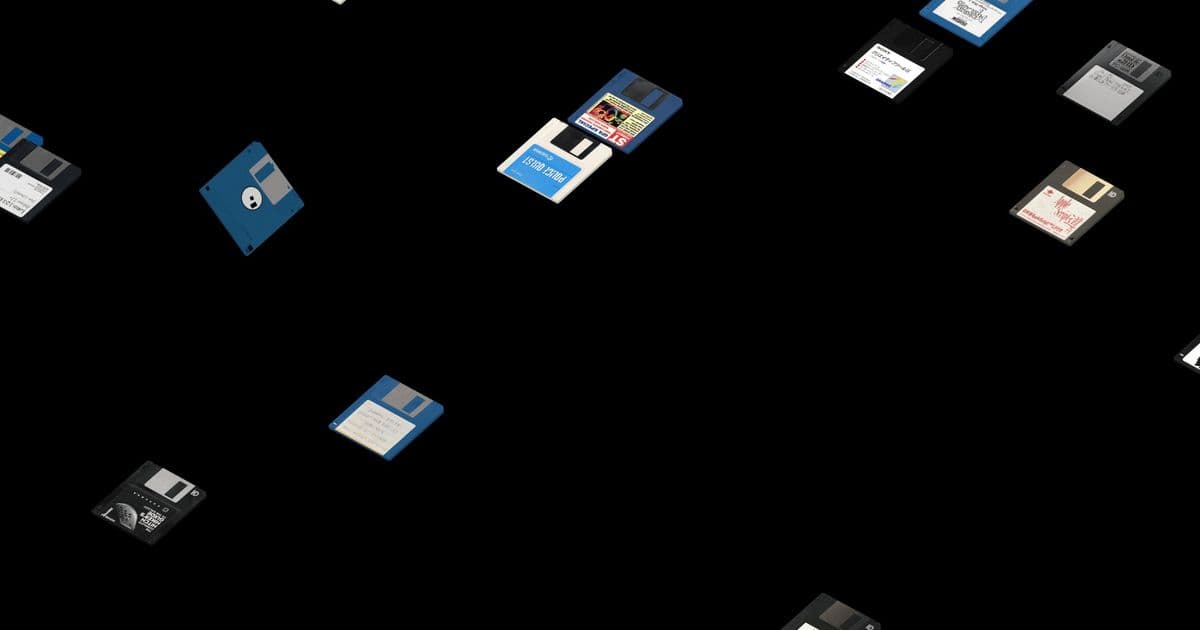
A reflective call to return to disciplined, lightweight software development, using the 1.44 MB floppy disk as a concrete benchmark for size, speed, and longevity.
Fits on a Floppy – A Manifesto for Small Software

Software has lost its way. The applications that once fit on a single 1.44 MB floppy now demand gigabytes of storage, minutes of download time, and a patience reserve most users no longer possess. We have accepted this gradual bloat as inevitable, but that acceptance is a surrender, not progress. The floppy disk, with its hard‑wired limit, offers a simple, unambiguous measuring stick: 1.44 MB. If the monolithic programs that once ran entire enterprises could be compressed into that space, then a modern, focused, single‑purpose tool can certainly achieve the same.
Why It Matters
- Instantaneous downloads – A 1 MB binary traverses most broadband connections in a handful of seconds, eliminating progress bars and the anxiety of “waiting for the install.”
- Immediate launch – With no heavyweight runtime or unnecessary assets, the program starts as soon as the user clicks, reinforcing the notion that software should be ready when the user is.
- Resource frugality – Low memory and CPU footprints translate directly into longer battery life on laptops and phones, and they keep older hardware viable.
- Native purity – By avoiding bundled runtimes, large frameworks, or transitive dependencies, each line of code earns its place, and the resulting binary is easier to audit, secure, and maintain.
- Single‑purpose clarity – When a tool does one thing well, its feature set remains small, its bug surface area shrinks, and its relevance endures.
- Legacy friendliness – Older operating systems and devices often receive little attention from mainstream developers; a 1.44 MB app can run on a machine that would otherwise be abandoned, extending its useful life.
How It’s Measured
An application qualifies for the floppy badge when its universal binary size, as reported by the distribution platform, does not exceed 1.44 MB. This figure reflects the raw size of the compiled executable before platform‑specific thinning. In practice, the actual download may be smaller because modern stores deliver only the slice required for the user’s hardware configuration.
Developers who earn the badge should display it prominently, signaling to users that the software respects the discipline of size. The badge becomes a promise: you will not be asked to sacrifice storage, bandwidth, or patience.
The Underlying Mindset
I do not miss the physical floppy disk; I miss the mindset it enforced. When every byte counted, designers were forced to ask:
- Is this feature essential?
- Can this algorithm be simplified?
- What is the smallest representation that still works?
Constraints, rather than stifling creativity, act as a crucible. They compel developers to strip away cruft, to favor composability over monoliths, and to prioritize elegance over excess. The result is software that not only runs faster but also ages better, because there is less hidden complexity to decay over time.
Implications for the Industry
If a significant fraction of the ecosystem embraced the floppy benchmark, several ripple effects would follow:
- Package managers would evolve to surface size as a first‑class metric, perhaps even ranking alternatives by bytes.
- Continuous integration pipelines could enforce size caps, turning the floppy limit into an automated quality gate.
- User expectations would shift; instant gratification would become the norm rather than the exception, reducing churn caused by slow installations.
- Environmental impact would diminish modestly, as the aggregate data transferred across the internet shrinks, and devices consume less power during startup.
These outcomes do not require a wholesale abandonment of rich, feature‑heavy applications. Rather, they invite a parallel track of tools that honor the principle of “as small as it can be.”
Counter‑Perspectives
Critics may argue that the 1.44 MB ceiling is anachronistic, that modern user interfaces, accessibility features, and security mechanisms simply cannot fit within such a tight envelope. While it is true that certain domains—high‑resolution graphics editing, machine‑learning inference, or real‑time video streaming—require substantial resources, the manifesto does not claim universal applicability. Its purpose is to re‑introduce restraint where it is feasible, not to dictate a one‑size‑fits‑all rule.
Another objection points to the convenience of shared runtimes (e.g., the Java Virtual Machine, .NET Core) that amortize cost across many applications. The floppy philosophy counters that this convenience can become a hidden dependency, inflating the effective footprint of each program. A disciplined developer can still choose a lightweight runtime or embed only the necessary components, preserving the spirit of the badge while benefiting from modern language features.
A Call to Action
The manifesto is not a manifesto of nostalgia; it is a call for discipline. Developers, platform curators, and users alike can champion the floppy badge by:
- Publishing size metrics alongside feature lists.
- Adding automated size checks to CI pipelines.
- Highlighting small‑size tools in app stores and newsletters.
- Encouraging educational curricula to include “size budgeting” as a core skill.
When the community collectively values the principle that every byte matters, we create a feedback loop that rewards simplicity, speeds up adoption, and ultimately yields software that endures.
Fits on a Floppy is more than a slogan; it is a reminder that constraints can be a source of elegance rather than a burden. By measuring ourselves against the humble 1.44 MB limit, we reclaim the joy of building tools that are instantly accessible, responsibly efficient, and lovingly crafted for both modern and legacy hardware.
Matt Sephton, April 2026
fitsonafloppy.com
✨💾✨
Comments
Please log in or register to join the discussion