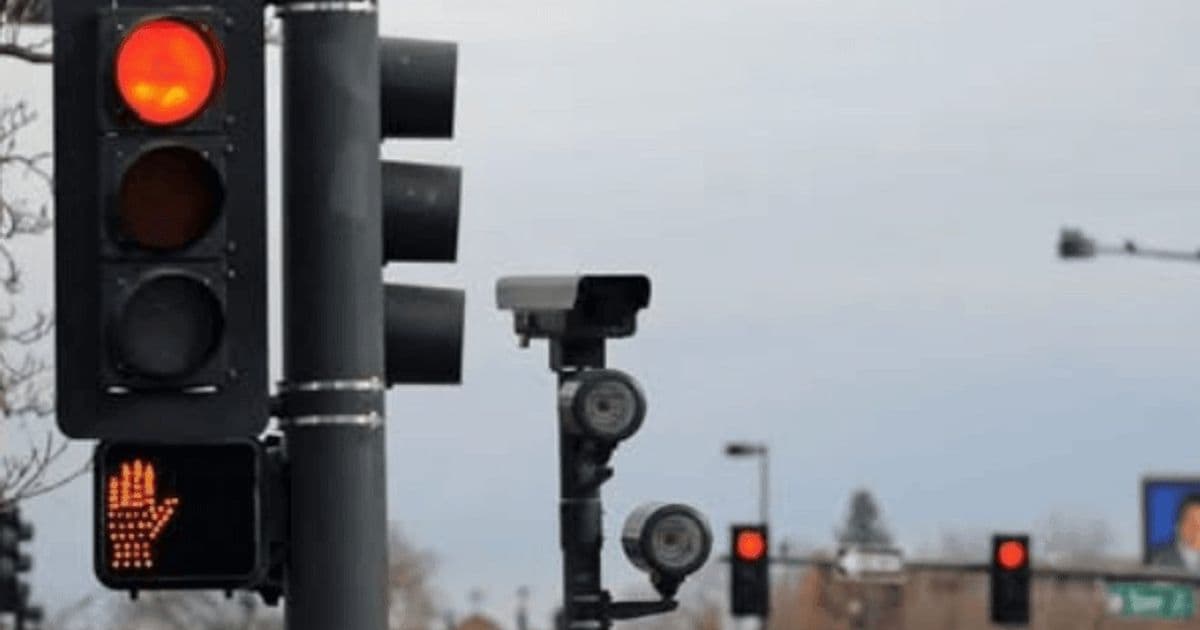
A Broward County judge has dismissed a red-light camera ticket, ruling that Florida's automated enforcement law unconstitutionally shifts the burden of proof onto vehicle owners rather than requiring the state to prove who was driving.
A Broward County judge has dismissed a red-light camera ticket, ruling that the state law used to issue the citation improperly shifts the burden of proof onto vehicle owners. In a 21-page order signed March 3, Judge Steven P. DeLuca granted a defendant's motion to dismiss a photo-enforced traffic citation issued under Florida's red-light camera law.
The case involved a Sunrise red-light camera citation issued to a registered vehicle owner after automated cameras captured a vehicle entering an intersection against a red signal. The defendant argued the statute unconstitutionally requires the registered owner to prove they were not driving — instead of requiring the government to prove who was behind the wheel.
Judge DeLuca agreed. In the order, the court found that red-light camera cases, although labeled as civil infractions, function as "quasi-criminal" proceedings because they can result in monetary penalties, a formal finding of guilt, and consequences tied to a driver's record.
Under Florida Statute 316.0083, once a camera captures a violation, the registered owner is presumed responsible unless they submit an affidavit identifying another driver. The court ruled that the framework improperly shifts the burden of proof away from the state. Because traffic infractions that move to county court must be proven "beyond a reasonable doubt," the judge wrote that the statute's presumption violates constitutional due process protections.
As a result, the citation in this case was formally dismissed.
Joel Mumford, an attorney with The Ticket Clinic, explained the significance of the ruling. "If the case is quasi-criminal, which means almost criminal or criminal-like, the state has to follow procedural due process," Mumford said. "The state or the agencies that issue the tickets, it's their burden to prove all the elements of the crime beyond and to the extent of each and every reasonable doubt. And the first element, which should be, who's driving the car."
Mumford noted that the statute in Florida presumes that the registered owner is the driver of the car. While the court order only applies in Broward County, he said it could open the door for challenges in other parts of the state.
"What could probably happen is they the court could then get an appeal, and then if it goes up to the district court of appeal level and then make a decision on it, depending on what that says, that could then be applied to the entire state, if there's no similar appellate cases throughout the state. So that could make it statewide," he said.
Drivers in Boynton Beach expressed frustration with the current system. Fifteen red-light camera systems are already running at seven intersections in Boynton Beach alone, including the intersection of Congress Avenue and Gateway Boulevard.
One driver, who asked not to be identified, shared his experience: "I've been ticketed here twice, and it's ridiculous because they it's just not fair. The person that does the determination when you ran the light, it's just random. Whoever they want to pick, pick you to say, okay, you're gonna pay the ticket."
The driver had to pay his $158 ticket but remains hopeful that Palm Beach County can soon follow suit. "I think they need to outlaw it and get rid of it," he said.
Advocacy group StopTheCams, which has long opposed automated traffic enforcement, called the ruling a major victory. In a press release, the group said the decision confirms what critics have argued for years — that red-light camera laws punish vehicle owners without requiring proof they committed the violation.
Supporters of red-light cameras argue the systems improve safety by deterring dangerous driving at intersections. Florida's red-light camera law, known as the Mark Wandall Traffic Safety Act, allows local governments to use automated enforcement systems.
It remains unclear whether the ruling will be appealed or how broadly it could affect similar cases statewide. For now, the decision applies to this specific case in Broward County, but legal observers say it could fuel renewed challenges to Florida's red-light camera enforcement system.
The ruling raises fundamental questions about due process and the presumption of innocence in automated enforcement systems. By requiring vehicle owners to prove their innocence rather than requiring the state to prove guilt, the current framework may indeed violate constitutional protections that have been fundamental to American jurisprudence for centuries.
This case could potentially set a precedent that affects not just red-light cameras but other forms of automated enforcement, including speed cameras and toll violations. As technology continues to advance and governments seek new ways to enforce traffic laws, the balance between public safety and individual rights remains a critical legal and ethical question.
For now, drivers in Broward County have received a temporary reprieve, but the ultimate fate of Florida's red-light camera program may depend on how higher courts interpret this ruling and whether the state legislature chooses to modify the existing law to address the constitutional concerns raised by Judge DeLuca.
Comments
Please log in or register to join the discussion