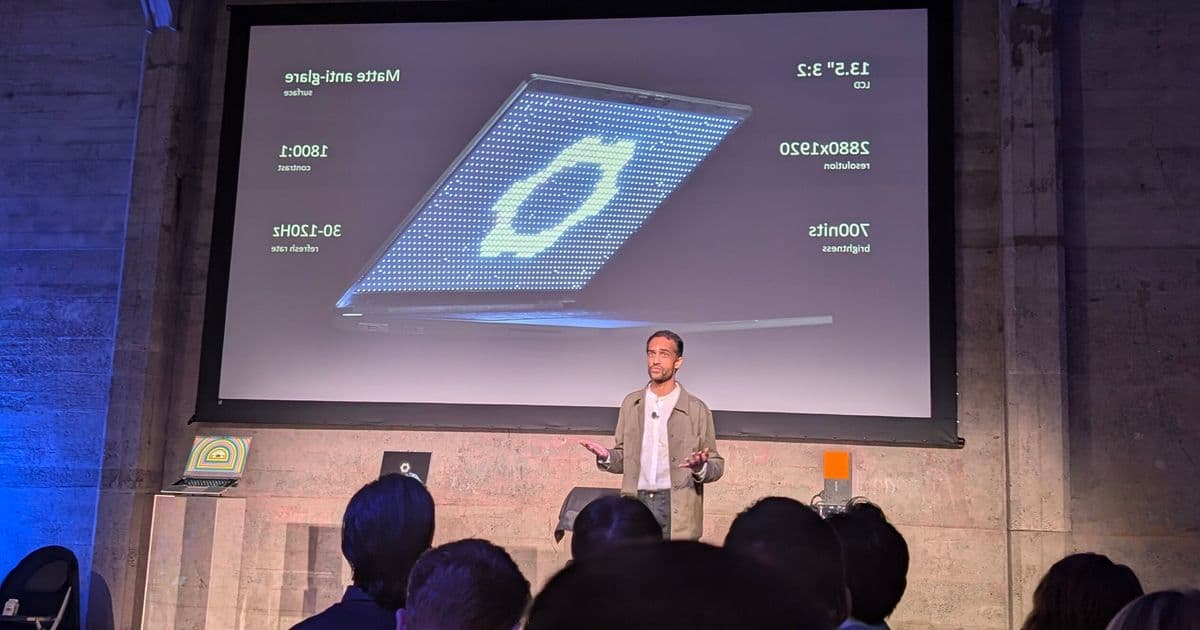
Framework's new Laptop 13 Pro combines significant hardware improvements with the company's signature right-to-repair philosophy, offering a compelling alternative to traditional laptops in the premium ultraportable category.
Framework Laptop 13 Pro Review: A Major Upgrade with Unmatched Repairability
Framework's message about sustainability and right-to-repair has arguably become even more relevant today than when the company launched its original Laptop 13.5 model back in 2021. With component prices inflating at an alarming rate and growing concerns about electronic waste, the ability to upgrade even a 2021 laptop with the latest CPUs from Intel or AMD presents an attractive alternative to the typical upgrade cycle. Framework's recent Laptop 13 Pro announcement seeks to blend the best of both worlds: introducing new hardware features that would have been impossible on the original design while maintaining backward compatibility with the vast majority of components.
What's New in the Framework 13 Pro
When Framework CEO Nirav Patel revealed the 13 Pro during the San Francisco press event, initial reactions might have been skeptical. After all, "Pro" models are already commonplace in the industry, with many manufacturers simply adding more power or premium materials to justify higher price points. However, hands-on experience reveals that Framework's approach differs significantly from typical refresh cycles.
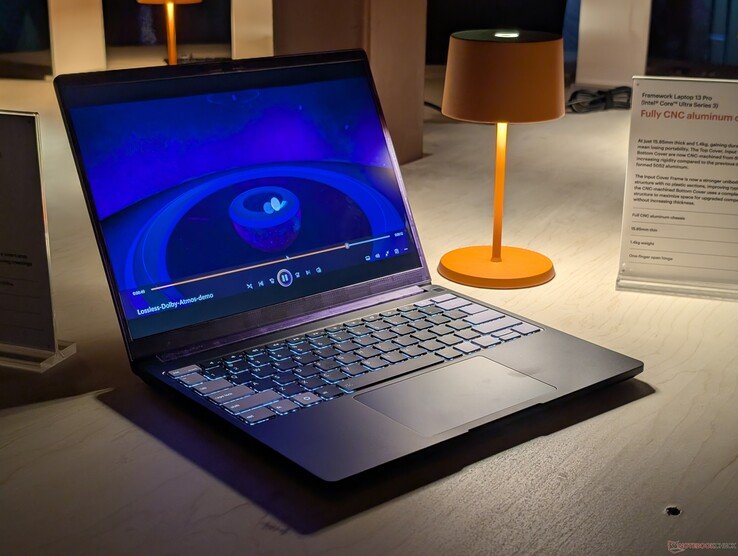 The most noticeable improvement is the new 5052 aluminum alloy chassis, which represents a substantial upgrade over the original Laptop 13.5. The new CNC aluminum frame addresses one of the main complaints about the earlier model: chassis rigidity. While the original Framework was highly modular, its surfaces would flex and creak more readily compared to laptops from traditional manufacturers like Dell, Lenovo, or HP. The new frame provides a more premium feel that matches the laptop's positioning in the ultraportable market.
At 15.85 mm thickness and 1.4 kg weight, the 13 Pro isn't the lightest subnotebook available. In fact, it's significantly heavier than competitors like the Lenovo Yoga 7 Ultra 14, which comes in at under 1 kg. This trade-off is necessary for the improved structural integrity and larger battery capacity, but it does place the Framework at a disadvantage for users prioritizing portability above all else.
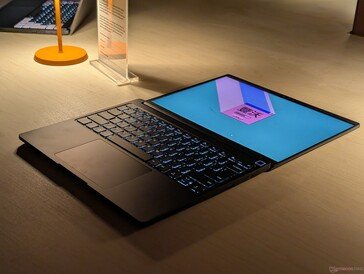 Thankfully, Framework has maintained one of the most appreciated features from the original model: the ability to open the hinges a full 180 degrees. This design choice remains valuable for collaborative work presentations and when using the laptop in unconventional positions. The familiar square power button also returns, maintaining consistency with the previous generation's design language.
 The keyboard represents another significant improvement. The new design features a firmer CNC aluminum frame, additional color options beyond the standard gray and silver of the outer lid, and increased 1.5 mm key travel for more comfortable typing. The clickpad has also been updated with crisper feedback and MacBook-like haptics, providing a higher-end user experience. Framework specifically mentions paying special attention to the clickpad, as this component is often overlooked by other manufacturers despite being a primary interaction point for users.
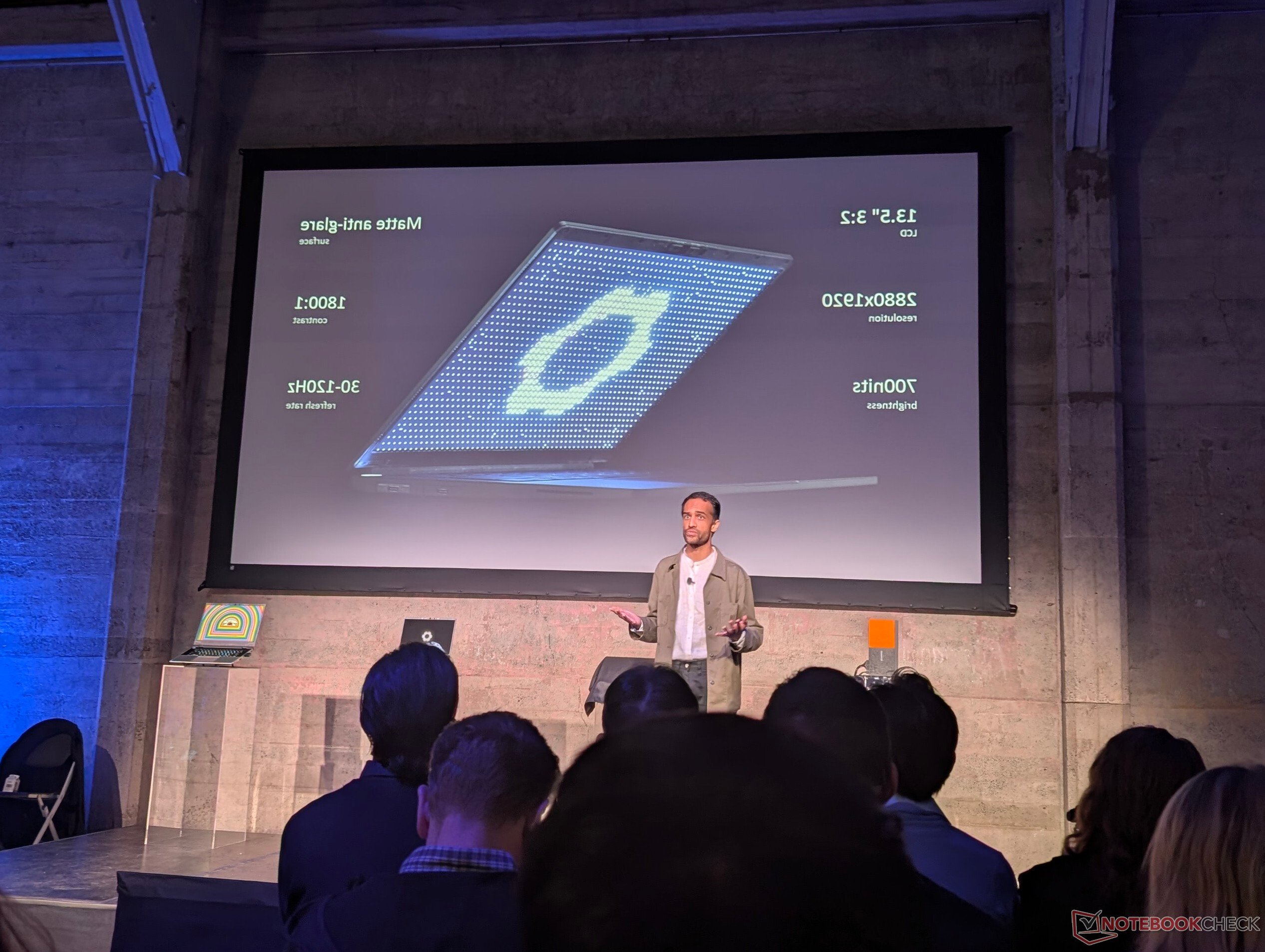
Display specifications remain largely consistent with the previous generation, maintaining the 2880 x 1920 resolution and 120 Hz refresh rate. However, the new model adds support for touchscreen functionality and an extra-bright 700-nit setting. The continued omission of OLED display technology is likely due to battery life concerns and potentially low demand from Framework's target audience of developers and power users who prioritize battery longevity over absolute color accuracy.
Performance and Compatibility Improvements
The most significant internal upgrades come in the form of support for Intel's upcoming Panther Lake processors and AMD's Ryzen AI 300 series. These new CPU families promise substantial performance gains over the previous generations. As shown in preliminary testing, the Panther Lake X7 can run demanding games at performance levels approaching an RTX 3050 discrete GPU while extending battery life to double digits during typical browsing or streaming activities.
 Framework has embraced the newer LPCAMM2 memory standard, which offers improved efficiency over traditional SODIMM modules. This transition is particularly noteworthy as the Framework 13 Pro is one of the few Panther Lake laptops shipping with removable LPCAMM2 memory. While this standard provides better power efficiency, it's likely to make memory upgrades more expensive than traditional SODIMM alternatives.
Perhaps most impressively for existing Framework owners, the motherboard in the 13 Pro is fully swappable with the one from the original Laptop 13.5. This means owners of the 2021 model can upgrade to the latest Panther Lake or Ryzen processors simply by swapping motherboards, extending the usable life of their investment significantly. While not all components are interchangeable between the 13 Pro and original 13.5, the mainboards and expansion cards remain compatible, preserving the modularity that defines the Framework experience.
 The bottom of the new model shows full backward compatibility with the same Expansion Cards found on the Laptop 13.5 and Framework Desktop, maintaining the ecosystem approach that allows users to customize their ports and connectivity options based on their specific needs.
Trade-offs and Considerations
Despite the numerous improvements, the Framework 13 Pro isn't without its drawbacks. The move to a more substantial chassis necessarily results in increased weight and thickness compared to other 13-inch or 14-inch laptops running similar processors. This trade-off is inherent to Framework's design philosophy—maximizing serviceability and upgradeability inevitably means accepting a denser and heavier system.
The cooling solution, while adequate for the processor's thermal requirements, has raised some concerns about potential fan noise, which was a sticking point on the original Laptop 13.5. Framework's team has certainly grown since the 2021 model, but thermal management remains a challenge for thin-and-light laptops with powerful components.
Additionally, while the new keyboard and battery are exclusive to the Laptop 13 Pro, they're incompatible with the original Laptop 13.5. This fragmentation means users upgrading from the first generation won't be able to bring over all their components, potentially increasing the total cost of ownership for those making the transition.
Who Is the Framework 13 Pro For?
The Framework Laptop 13 Pro is clearly aimed at a specific audience: developers, tinkerers, and environmentally conscious users who value longevity and repairability above all else. It's an excellent choice for those who want to reduce their electronic waste footprint while maintaining access to modern performance.
For users who frequently upgrade their laptops rather than replacing them entirely, the Framework's modularity represents a significant advantage. The ability to swap out just the motherboard for a newer processor generation extends the laptop's useful life far beyond what's typical in the industry.
The 13 Pro also makes sense for users who prioritize customization. The expansion card system allows for a level of port flexibility that most manufacturers don't offer, making it easy to adapt the laptop to different workflows and environments.
Pricing and Availability
Framework is currently accepting pre-orders for the Laptop 13 Pro, with pricing starting at $1200 for the barebones Core Ultra 5 325 configuration. The price can reach $1600 or more for the Core Ultra X7 358H model. Adding 16 GB of RAM costs an additional $240, while storage starts at $115 for a 500 GB configuration. Initial shipments are expected to begin this June.
Conclusion
The Framework Laptop 13 Pro represents a significant evolution of the company's original concept while maintaining its core principles of sustainability and user control. The improved chassis, better keyboard, and updated internal hardware make it a compelling option for its target audience, despite some trade-offs in weight and thickness. For those who value longevity, repairability, and the ability to upgrade their laptop over time, the Framework 13 Pro offers a unique proposition in an increasingly disposable electronics market.
The real test will come in our full review once we've had time to thoroughly evaluate the performance, battery life, and thermal characteristics of the production models. But based on our hands-on experience, Framework has successfully created a premium ultraportable that doesn't compromise on its modularity principles while delivering a substantial improvement over the original model.
Comments
Please log in or register to join the discussion