
Garmin's latest lineup showcases strategic engineering trade-offs between battery life, display technology, and specialized athletic tracking. With models spanning rugged multisport tools to sleek health companions, these wearables reveal how sensor fusion and power management shape the future of quantified self.
For athletes, engineers, and quantified-self enthusiasts, Garmin's wearable ecosystem represents more than just wrist-based gadgets—it's a masterclass in sensor integration and specialized computing. The newly crowned flagship Venu X1 (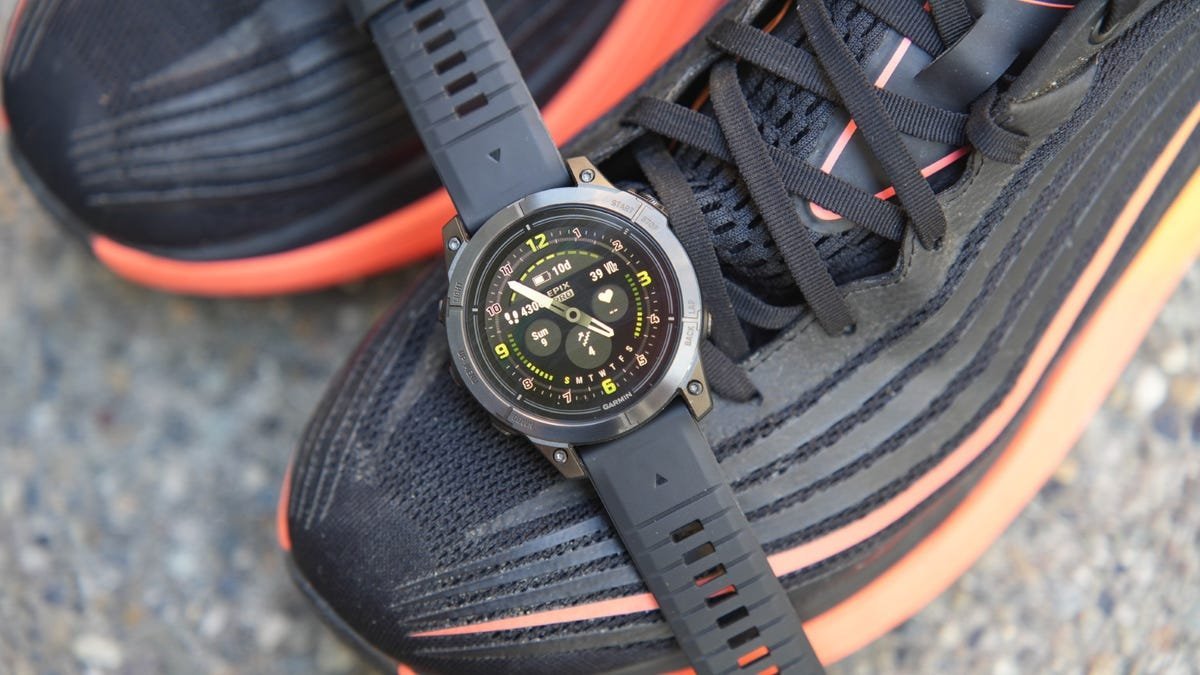 ) exemplifies this with its 2-inch AMOLED display—Garmin's largest ever—packed into a remarkably thin 7.9mm chassis. Yet beneath its smartwatch aesthetics lies serious tech: multi-system GNSS positioning, an integrated LED flashlight for nighttime safety, and microphone/speaker arrays enabling voice commands. This positions it as a legitimate alternative to Apple Watch Ultra 2, tripling Apple's battery longevity while maintaining robust health tracking.
Engineering Trade-Offs in Display and Power
Garmin's strategic bifurcation in display technology reveals core engineering priorities:
- AMOLED models (Venu X1, Fenix 8, Forerunner 970): Prioritize touch interaction and data visualization with vibrant displays, sacrificing some battery efficiency
- Solar MIP displays (Instinct 3 Solar): Leverage transflective technology for always-on visibility and near-unlimited runtime via photovoltaic charging
"The Instinct 3 Solar achieves what others can't—true energy independence through optical engineering," notes ZDNET's testing. Its Power Glass lens harvests sufficient ambient light to deliver 60+ hours of GPS tracking and theoretically infinite smartwatch mode operation (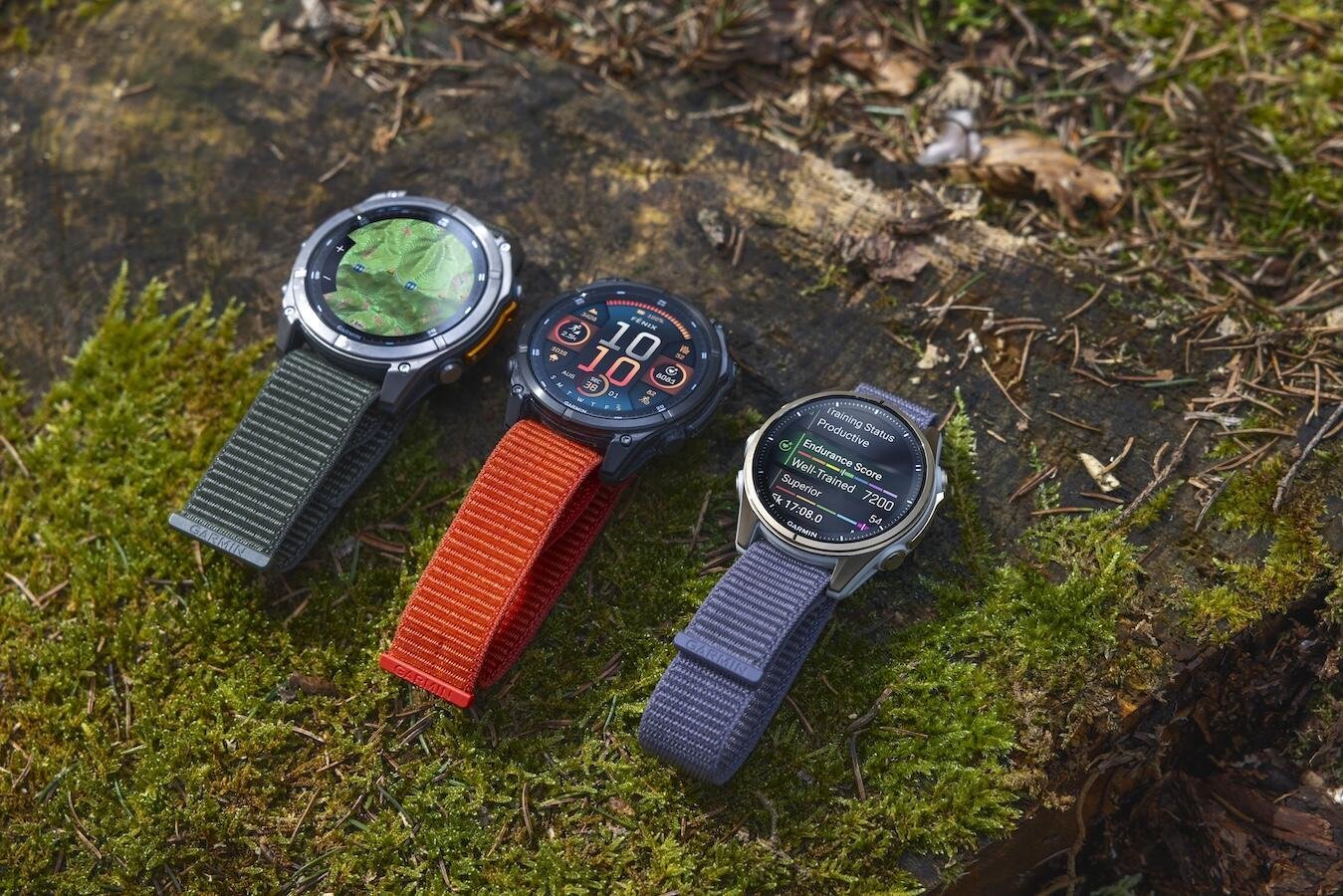 ).
).
Specialized Silicon for Athletic Performance
Garmin's differentiation emerges in sport-specific processing:
- Forerunner 970: Incorporates running economy algorithms requiring paired HRM-Pro hardware, analyzing biomechanics like ground contact time and stride length
- Approach S70: Features shot dispersion modeling using historical swing data to predict ball placement—golf analytics previously requiring launch monitors
- Fenix 8 AMOLED: Implements SatIQ technology dynamically switching between GPS/Galileo/GLONASS to balance accuracy with power consumption
The Subscription Dilemma
Garmin's new Connect Plus ($6.99/month) introduces AI-driven "Active Intelligence," provoking debate about hardware/software boundaries. While offering personalized training insights and enhanced data dashboards, it tests users' tolerance for recurring fees on premium devices. Technical teams should note its reliance on on-device processing before cloud-based analysis—a privacy-conscious architecture.
Why Developers Should Care
Beyond consumer appeal, Garmin's ecosystem presents integration opportunities:
- Connect IQ SDK: Enables third-party app development for specialized metrics
- Sensor Fusion API: Accesses raw data from accelerometer, gyroscope, and optical heart rate sensors
- Ant+ & Bluetooth LE: Facilitates interoperability with cycling power meters, swimming pods, and medical devices
As Matthew Miller observes: "I wear both Garmin and Apple Watch simultaneously—not for redundancy, but because their sensor arrays capture complementary biometric streams." This layered approach to health telemetry highlights wearables' evolution into modular diagnostic platforms. With solar charging advancing and LTE connectivity rumored for future Fenix models, Garmin proves that in the wearables arena, specialized silicon often outperforms generalized compute.
Comments
Please log in or register to join the discussion