Google's new Gemini Personal Intelligence beta demonstrates exactly how Apple's upcoming AI-powered Siri will function, pulling personalized data from your apps to provide context-aware assistance while addressing the critical hallucination problem through source verification and user correction.
The long-awaited launch of Apple's AI-powered Siri now looks significantly closer, thanks to the company's confirmed partnership with Google. This week, reports were confirmed that many of the new Siri's features will be powered by Google's Gemini models. While we already had some expectations from WWDC 2024 announcements and a now-deleted iPhone 16 ad, the launch of Gemini Personal Intelligence has effectively provided a working preview of what Apple's next-generation assistant will actually be capable of.
The Core Innovation: Personal Intelligence
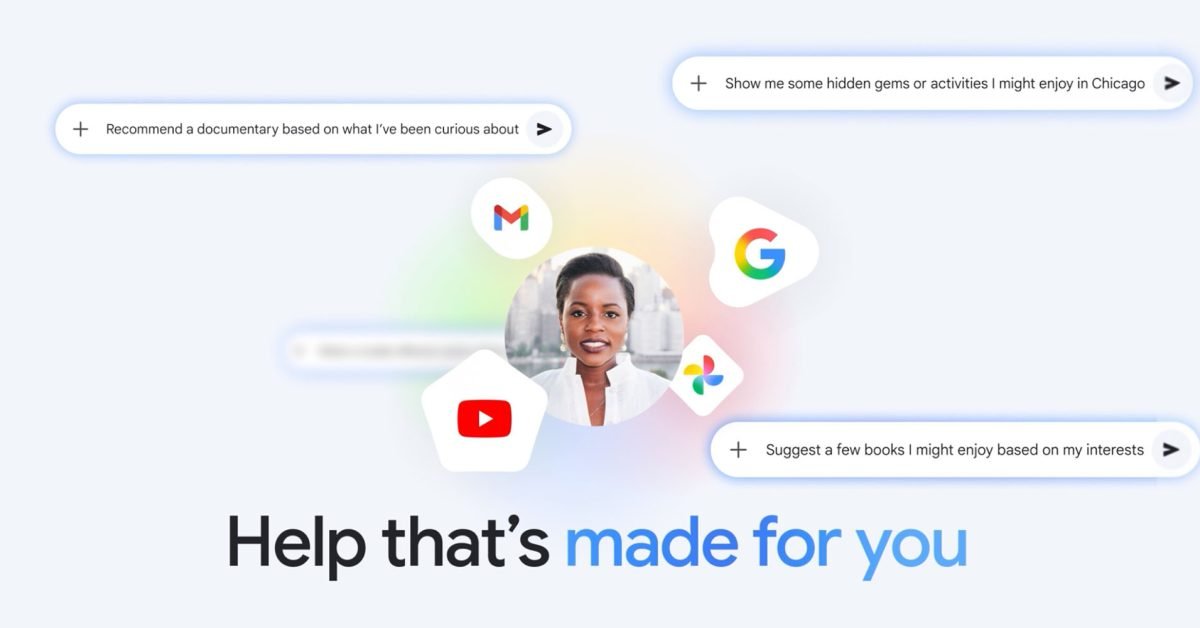
Google's Gemini team launched a beta version of what they call Personal Intelligence this week. The headline feature is Gemini's ability to generate responses using a complex mix of sources, including personalized information pulled from a wide array of Google apps and services people use daily. This represents a fundamental shift from general AI assistants that only know public information to systems that understand your personal context.
Personal Intelligence can retrieve specific details from text, photos, or videos across your Google apps to customize responses. The system connects to Google Workspace (Gmail, Calendar, Drive, Docs, Sheets), Google Photos, your YouTube watch history, and all the various Google search services you've used, including Search, Shopping, News, Maps, Google Flights, and Hotels. The Apple version will naturally pull information from Apple apps like Mail, Calendar, Photos, Notes, and potentially Messages and Safari history.
A Real-World Example: The Tire Problem
Google's Gemini head, Josh Woodward, provided a concrete demonstration of how Personal Intelligence works in practice. "We needed new tires for our 2019 Honda minivan two weeks ago," he explained. "Standing in line at the shop, I realized I didn't know the tire size. I asked Gemini."
Here's where the system shows its depth. While any basic chatbot could find tire specifications for a 2019 Honda minivan, Gemini went much further. It suggested different options: one for daily driving and another for all-weather conditions, specifically referencing family road trips to Oklahoma found in Google Photos. The system then pulled ratings and prices for each option.
As Woodward approached the counter, he needed his license plate number. Instead of searching for it or leaving his spot in line to walk back to the parking lot, he asked Gemini. The system pulled the seven-digit number from a picture in Photos and also helped identify the van's specific trim by searching Gmail. This demonstrates the system's ability to connect disparate pieces of information across different apps to solve a practical problem.
Addressing the Hallucination Problem
Hallucinations represent one of the greatest dangers with AI systems, and the risks increase exponentially when these systems attempt to extrapolate from personal data. Google's approach with Personal Intelligence directly addresses this by making the system's reasoning transparent.
The new feature allows users to see exactly what assumptions the AI is making and offers the opportunity to verify or correct those assumptions. Users won't have to guess where an answer comes from: Gemini will reference or explain the information it used from connected sources, enabling verification. If the system doesn't provide this automatically, users can ask for more information.
If a response feels incorrect, users can correct it on the spot. For example, if the system assumes you prefer aisle seats when you actually prefer window seats, you can simply tell it to remember your preference. Users also have the option to request a new answer without personalization, essentially asking the system to provide a generic response based only on public information.
Privacy and Data Control
Google emphasizes that Personal Intelligence requires explicit opt-in, and users decide exactly which apps to include. Connecting apps is off by default: users must choose to turn it on, select which specific apps to connect, and can disable the feature at any time. The company states that data never leaves the Google ecosystem during processing.
For Apple's implementation, this will translate to data only accessing information sitting within Apple apps and inside iCloud accounts. Apple's approach will likely leverage their Private Cloud Compute architecture, which processes sensitive data on secure servers rather than sending it to third parties. This aligns with Apple's privacy-first philosophy while enabling the same personalized assistance capabilities.

What This Means for Apple's Siri
The Gemini Personal Intelligence beta provides Apple with a working blueprint for its next-generation Siri. When Apple's AI-powered Siri launches, it will likely:
- Access your Apple apps - Pulling data from Mail, Calendar, Photos, Notes, Messages, and potentially Safari history
- Use your iCloud data - Leveraging the information stored in your Apple ecosystem
- Run on-device or on Apple's Private Cloud Compute servers - Maintaining Apple's privacy standards while enabling complex AI processing
- Provide source verification - Showing where information comes from and allowing corrections
- Offer personalization controls - Letting users choose which data sources to include and when to use generic responses
The partnership with Google represents a pragmatic approach by Apple. Rather than building a competing large language model from scratch, Apple is leveraging Google's proven Gemini technology while maintaining control over the user interface, privacy implementation, and integration with Apple's ecosystem. This allows Apple to focus on what it does best: hardware-software integration and user experience design.
The Broader Context
This development comes as Apple faces increasing pressure to deliver compelling AI features. Competitors like Samsung and Google have already integrated AI assistants deeply into their devices, while Apple's Siri has remained relatively basic compared to modern expectations. The WWDC 2024 announcements hinted at significant Siri improvements, but concrete details have been scarce.
The Gemini partnership suggests Apple is taking a measured, practical approach. Instead of rushing to market with unproven technology, they're leveraging Google's mature AI models while ensuring the implementation meets Apple's standards for privacy, security, and integration. This mirrors Apple's historical approach to new technologies: wait until the technology is mature, then implement it in a way that serves Apple's users specifically.
Looking Ahead
The launch of Gemini Personal Intelligence in beta form indicates that the underlying technology is ready for real-world use. For Apple users, this means the long-awaited AI-powered Siri is likely months, not years, away. The system will fundamentally change how we interact with our devices, moving from simple command-and-response interactions to conversations that understand our personal context and history.
The key will be Apple's execution: how well they integrate Google's Gemini models with their own ecosystem, how transparent they make the AI's reasoning, and how effectively they maintain user privacy while delivering personalized assistance. Based on Google's working example, the technical foundation appears solid. Apple's challenge will be making it feel like an Apple product—intuitive, private, and seamlessly integrated into the daily workflow of iPhone, iPad, and Mac users.
The preview provided by Gemini Personal Intelligence suggests we're not just getting a smarter Siri. We're getting an assistant that understands our digital lives across apps, remembers our preferences, and can connect disparate pieces of information to solve real problems. For Apple users who have watched Siri stagnate while competitors advanced, this represents the most significant upgrade to Apple's personal assistant in over a decade.
Comments
Please log in or register to join the discussion