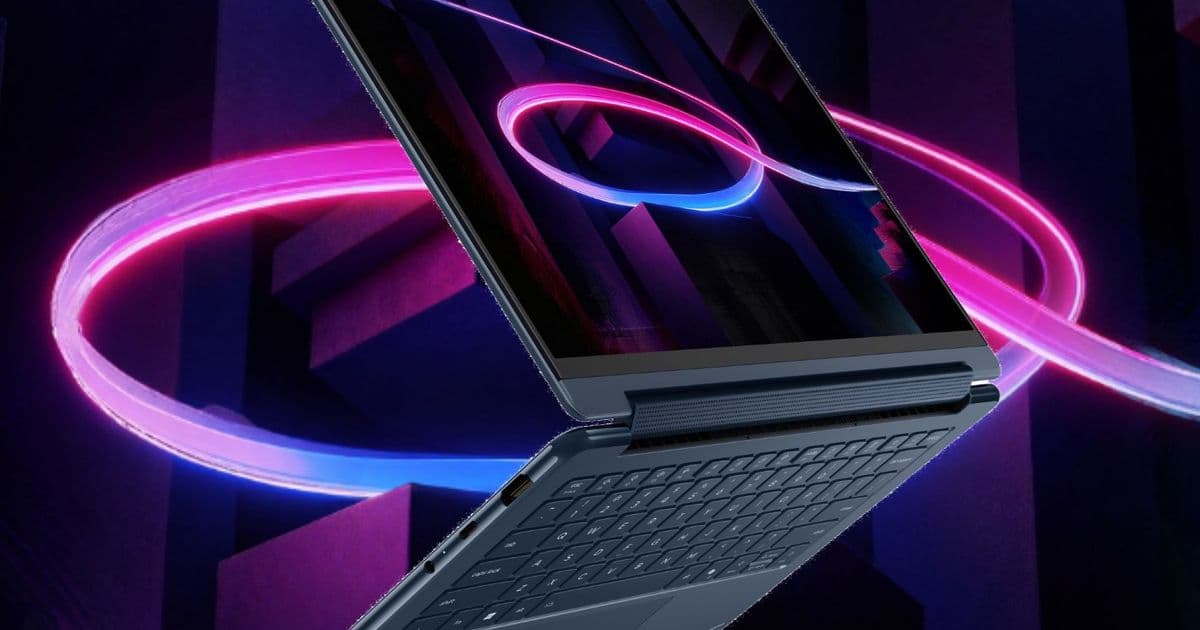
Lenovo refreshes its premium convertible with Intel's latest chips, slimming down the design while making controversial battery capacity cuts.
Lenovo has unveiled the 11th generation Yoga 9i 2-in-1 Aura Edition, bringing Intel's latest Panther Lake platform to its premium convertible lineup. The new model maintains the Yoga's signature convertible design while introducing several notable changes that may influence purchasing decisions for those considering an upgrade.
Design Evolution: Familiar Yet Refined
The 2025 Yoga 9i 2-in-1 Aura Edition retains many design elements that have defined the series. The glossy side panels remain, as does the slightly smaller display cover compared to the keyboard deck. Lenovo also keeps the side-mounted power button, a distinctive feature that sets the Yoga apart from competitors.
However, the keyboard layout sees a significant change. Lenovo has replaced the function row that previously occupied the right-hand side with a conventional layout. This shift should appeal to users who found the previous arrangement awkward for everyday typing and productivity tasks.
Display Options: Sticking With What Works
Lenovo continues with the same 14-inch, 2.8K OLED display that made the previous generation popular. The panel offers 120 Hz variable refresh rate and peaks at 1,100 nits brightness, providing excellent color accuracy and smooth scrolling for both creative work and media consumption.
Interestingly, while Lenovo hasn't announced additional display options for the new model, the company followed a similar pattern last year. The 4K 60 Hz variant that appeared later suggests potential for expanded choices down the line, though current buyers should expect only the 2.8K option at launch.
The Controversial Battery Decision
Perhaps the most debated change comes in the form of battery capacity. Lenovo has reduced the Yoga 9i's battery from 75 Wh to 70 Wh. While this 5 Wh reduction might seem minor, it represents a 6.7% decrease in total capacity.
Lenovo justifies this change through the device's new dimensions. The laptop now measures 15.29 mm thick, down from 15.9 mm, and weighs 1.29 kg compared to the previous 1.32 kg. The footprint has also changed slightly, with the new model measuring 317 x 223 mm versus the previous 316 x 220 mm.
For users prioritizing portability, these dimensions matter. The weight reduction of 30 grams and slimmer profile could make the laptop more comfortable for frequent travelers or students who carry their device daily. However, power users might question whether the battery trade-off is worthwhile, especially given the power-hungry nature of Intel's latest processors.
Performance and Configuration Options
The new Yoga 9i 2-in-1 Aura Edition comes equipped with Intel's Core Ultra 7 355 processor. Notably, Lenovo has opted not to include the more powerful Core Ultra X7 or X9 alternatives, which may disappoint users seeking maximum performance for demanding workloads like video editing or 3D rendering.
Configuration options remain generous, with support for up to 32 GB of LPDDR5x-7467 RAM and 2 TB of SSD storage. The four-speaker audio system continues from the previous generation, maintaining the Yoga's reputation for excellent sound quality in a convertible form factor.
Pricing and Availability
Lenovo plans to launch the new Yoga 9i 2-in-1 Aura Edition later this month across Africa, Europe, and the Middle East. The starting price of €1,799 (~$2,115) positions it as a premium offering in the convertible laptop market.
This pricing represents a significant investment, particularly when compared to the current generation's $1,569 price point on Amazon. The price increase likely reflects the new processor platform and other component upgrades, though potential buyers will need to weigh these improvements against the reduced battery capacity.
Target Audience and Market Position
The new Yoga 9i 2-in-1 Aura Edition appears aimed at professionals and creatives who value portability and premium build quality over maximum battery life. The slim profile and weight reduction make it attractive for users who frequently travel or commute with their laptop.
However, the decision to stick with the Core Ultra 7 355 rather than offering more powerful options suggests Lenovo sees this as a mainstream premium device rather than a workstation replacement. Users requiring intensive processing power for tasks like 3D modeling or high-resolution video editing might need to look elsewhere or consider external GPU solutions.
The Yoga 9i 2-in-1 Aura Edition's success will likely depend on how users balance the benefits of its slimmer, lighter design against the reduced battery capacity. For those who prioritize portability and are willing to carry a charger or manage battery usage carefully, the new model offers compelling improvements. Others might prefer to stick with the previous generation or explore alternatives with larger batteries.
As the convertible laptop market continues to evolve, Lenovo's decision to prioritize form factor over battery capacity reflects broader industry trends toward thinner, lighter devices. Whether this trade-off proves successful will become clear as users begin adopting the new model and sharing real-world performance data.
Comments
Please log in or register to join the discussion