A multi-million-dollar investment in AI-driven lab automation reveals the gap between marketing hype and the actual engineering work required to make robotic systems truly intelligent.
The press release for Gentleflow's Pre-A round reads like a standard startup funding announcement: multi-million-dollar investment, AI-driven lab automation, life sciences applications. But buried in the details is a more interesting story about the actual state of laboratory automation and the incremental, unglamorous work of making robotic systems actually useful.
Gentleflow secured funding from Baiyun Fund, a subsidiary of Baiyun Financial Holdings. The capital will expand their operations, develop their BioFlow AI and Supervisor AI large-model systems, build UBLab unattended application centers, and advance their OutStanding large-scale automation integration platform. These are specific, technical goals rather than vague promises about "transforming" the industry.
What's Actually Being Funded
The company's core products are automated liquid handling workstations and integration platforms. These aren't flashy AI products in the traditional sense—they're physical systems that need to reliably pipette, move plates, and perform repetitive tasks. The "AI" component appears to be layered on top of this hardware foundation.
Their OutStanding platform is described as having "high integration flexibility, modular architecture, and standardized components." This matters because traditional lab automation has been plagued by proprietary, non-standard systems that are expensive to scale and maintain. If Gentleflow's platform actually delivers on modularity, it could address real pain points: long delivery cycles for custom solutions and limited scalability.
The company mentions applications in synthetic biology, organoid research, drug discovery, smart agriculture, and genomics. These are all fields where the bottleneck isn't necessarily the science—it's the throughput and consistency of sample preparation and processing. Automating these steps can accelerate research, but the challenge is making systems that are flexible enough for diverse protocols yet reliable enough for daily use.
The AI Component: What's Actually New?
The press release mentions "AI + laboratory automation" and "intelligent, adaptive response," but the specifics matter. Lab automation has traditionally been programmed with fixed protocols—step-by-step instructions that execute the same way every time. The promise of AI is to make these systems more adaptive: adjusting protocols based on real-time data, optimizing workflows, or handling unexpected variations in samples.
Gentleflow's BioFlow AI and Supervisor AI systems likely represent different layers of intelligence. BioFlow might handle protocol optimization or data analysis, while Supervisor AI could manage system monitoring, error detection, or resource allocation. Without technical documentation, it's hard to assess how sophisticated these systems are, but the naming suggests a separation of concerns common in industrial AI applications.
The key question is whether these AI systems actually improve performance or just add complexity. Lab automation success is measured by reliability, throughput, and cost-effectiveness—not by the sophistication of the underlying algorithms. A system that uses simple heuristics to prevent errors is more valuable than one that uses deep learning but fails unpredictably.
The Reality of Lab Automation Integration
Gentleflow's mention of "UBLab unattended application centers" points to a critical challenge: most lab automation today still requires significant human oversight. True unattended operation—where robots can run experiments overnight or over weekends without intervention—requires robust error handling, real-time monitoring, and reliable sample tracking.
This is where AI could provide real value: predictive maintenance to prevent failures, computer vision to detect anomalies, or reinforcement learning to optimize scheduling. But these are hard problems in controlled laboratory environments where conditions change constantly.
The company's claim of "breaking long-standing foreign technology monopolies" deserves scrutiny. Lab automation has been dominated by companies like Hamilton, Tecan, and Beckman Coulter for decades. Their systems are expensive and proprietary, but they're also proven and reliable. Displacing them requires not just better technology but better service, support, and integration with existing lab workflows.
Limitations and Realistic Expectations
The press release doesn't mention several critical factors:
Cost: Laboratory automation systems are expensive, often costing hundreds of thousands to millions of dollars. Even with "multi-million-dollar" funding, Gentleflow needs to price their systems competitively while maintaining quality.
Adoption: Scientists are often resistant to changing established protocols. An automated system must demonstrate clear advantages over manual methods, not just theoretical benefits.
Validation: In regulated environments like drug discovery, any new automation system requires extensive validation to meet compliance standards. This process can take months or years.
Integration: Labs rarely use a single automation platform. Gentleflow's system needs to integrate with existing instruments, software, and data management systems.
The Bigger Picture
Gentleflow's funding reflects a broader trend: applying AI to physical systems in industrial settings. Unlike pure software AI applications, lab automation involves hardware-software co-design, where the constraints of physical systems (speed, precision, reliability) directly shape what's possible with AI.
The company's approach—starting with solid automation hardware and adding AI layers—makes sense. Many AI startups fail because they focus on algorithms without understanding the domain. Gentleflow's roots in lab equipment suggest they understand the practical constraints.
However, the real test will be whether their "AI + automation" strategy produces measurable improvements in lab productivity or research outcomes. The hype around AI in biotech often outpaces reality. Most "AI-driven" lab systems today are essentially automation with better user interfaces or data logging, not true adaptive intelligence.
For researchers considering these systems, the key questions are practical: Does it reduce hands-on time? Does it improve reproducibility? Is it flexible enough for changing protocols? And critically, what's the total cost of ownership including maintenance, training, and integration?
Gentleflow's funding gives them resources to answer these questions through real-world deployments. The success of their Pre-A round will be measured not by press releases but by whether their systems actually run reliably in labs and deliver tangible benefits to researchers.
The lab automation market is mature but not saturated. There's room for companies that can deliver reliable, flexible systems at reasonable cost. Whether Gentleflow's AI approach provides a meaningful advantage over traditional automation remains to be seen, but their focus on specific technical challenges rather than vague promises is a positive sign.
For more information about Gentleflow's technology, visit their official website or check their technical documentation for details on the OutStanding platform and AI systems.

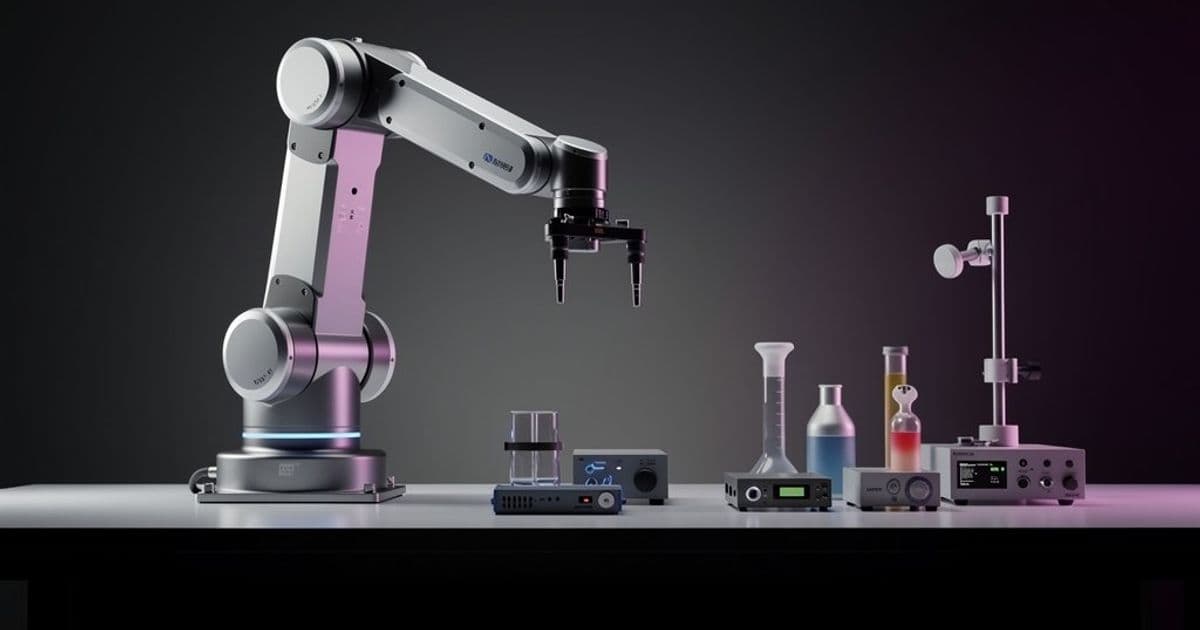
Image: Laboratory automation equipment represents the physical foundation that AI systems must integrate with. The challenge isn't just software intelligence—it's making hardware that reliably executes complex protocols.
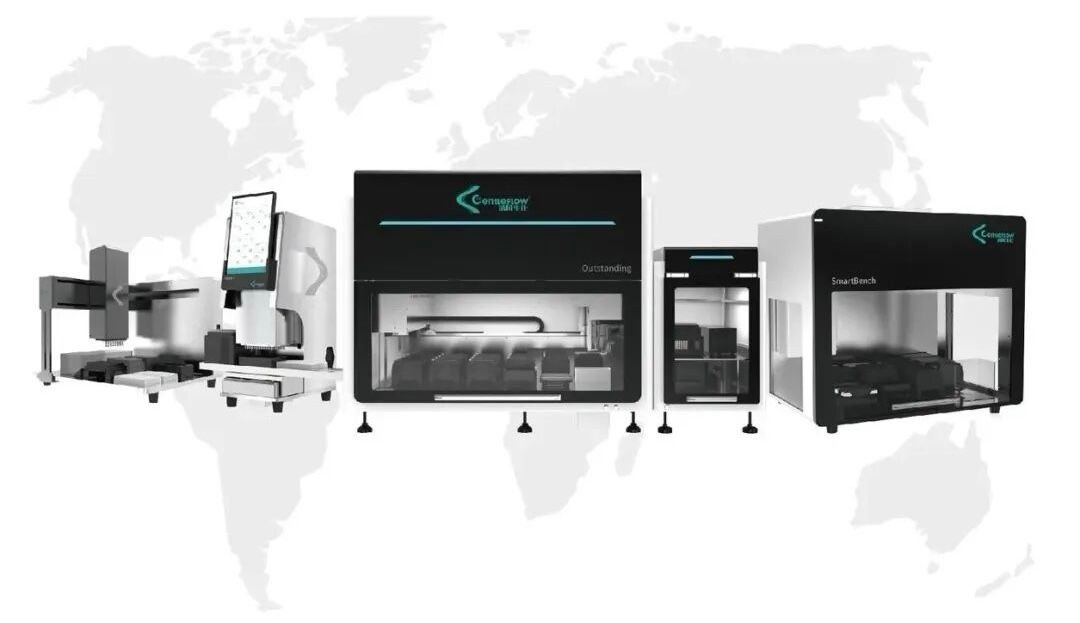
Image: Modular automation platforms aim to address the flexibility problem in lab automation, where traditional systems are often too rigid for diverse research needs.
Comments
Please log in or register to join the discussion