
A Florida woman received a 22-month prison sentence for operating a scheme that illegally acquired and sold Microsoft Certificate of Authenticity (COA) labels, highlighting the legal risks of software licensing violations and the importance of proper supply chain management.
Software Piracy Ring Leader Jailed: Lessons in COA Label Compliance
A Florida woman's 22-month prison sentence for operating a software piracy scheme serves as a stark reminder of the legal consequences of software licensing violations. Heidi Richards, who operated under the company name Trinity Software Distribution, was found guilty of fraudulently acquiring Microsoft Certificate of Authenticity (COA) labels and selling them in bulk, according to court documents.
Understanding Certificate of Authenticity Labels
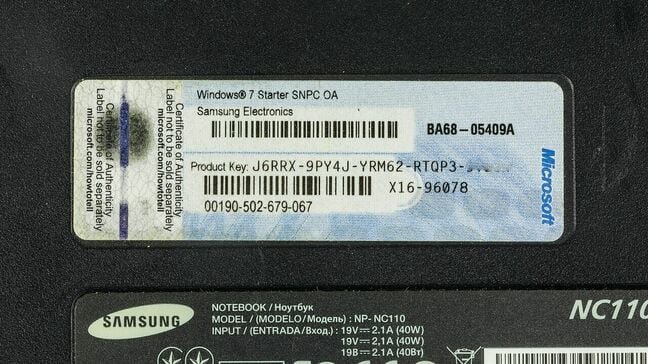
Certificate of Authenticity (COA) labels represent one of Microsoft's primary anti-counterfeiting measures. These distinctive labels contain product activation codes that verify the legitimacy of Microsoft software. The labels are designed to be attached to specific software packages and are not intended for separate sale or distribution.
Microsoft employs various security features in these labels to prevent counterfeiting. Earlier versions of Windows shipped with labels using color-shifting ink, while more recent versions include additional security measures. Since 2016, product keys have been concealed with a silver scratch-off material specifically designed to prevent illegal resellers from obtaining valid keys through simple examination.
Authorized refurbishers also receive specific COA labels designed for refurbished products, further maintaining the integrity of Microsoft's licensing system.
The Illegal Operation
Between 2018 and 2023, Richards paid more than $5 million for Microsoft COA labels, acquiring them "from a variety of sources" that were separated from the software packages with which they were intended to be paired. According to court documents, she primarily procured keys for different versions of Windows 10 (Home/Pro) and Microsoft Office (2019/2021/Home/Student).
Richards, who also operated under the names Heidi Hastings, Heidi Shafer, and Heidi Williams, instructed employees to take the COA labels and transcribe the product activation codes written on them into a spreadsheet. She then sent these codes to buyers who could redeem them for legitimate software activation.
In essence, prosecutors argued that Richards was illegally obtaining Microsoft software keys and selling them at heavily discounted prices while personally profiting from the operation. The existence of a black market for COA labels highlights vulnerabilities in Microsoft's supply chain that criminals continue to exploit.
Legal Consequences
Richards was found guilty by a federal jury following a November 2025 trial. While she faced a maximum potential sentence of five years, she received a 22-month prison sentence and was ordered to pay a $50,000 fine, as announced by Gregory Kehoe, US attorney for the Middle District of Florida.
The case underscores the legal risks associated with software licensing violations. The Department of Justice has increasingly prioritized prosecuting software piracy and licensing fraud, recognizing the significant financial impact on software companies and the broader economy.
Compliance Recommendations
For businesses handling Microsoft software products, this case offers several important compliance lessons:
Verify Supply Chain Sources: Ensure all software products and accompanying COA labels are obtained through authorized Microsoft channels. Be wary of suppliers offering unusually discounted software or COA labels.
Maintain Proper Documentation: Keep detailed records of software purchases, including invoices, purchase orders, and correspondence with suppliers. This documentation can prove compliance in case of audit or investigation.
Educate Staff: Train employees on the importance of proper software licensing and the legal consequences of violations. Ensure staff understand that COA labels should never be separated from their intended software packages.
Implement Internal Audits: Regularly audit software inventory and licensing to identify any potential compliance issues before they escalate into legal problems.
Consult Legal Counsel: When in doubt about licensing requirements or supply chain questions, consult with legal counsel specializing in intellectual property and software licensing.
The Broader Impact
Software piracy and licensing violations represent significant losses for software companies and can undermine the integrity of the software ecosystem. Microsoft and other software companies invest heavily in anti-counterfeiting measures, but as this case demonstrates, determined criminals continue to find ways to exploit vulnerabilities in the supply chain.
The prosecution of Richards sends a clear message that such activities will be met with serious legal consequences. For businesses, the case serves as a reminder that compliance with software licensing requirements is not just a matter of corporate policy but a legal necessity with potentially severe repercussions.
As software licensing models continue to evolve, with increased emphasis on digital activation and cloud-based licensing, businesses must stay vigilant and adapt their compliance practices accordingly. The legal landscape surrounding software licensing continues to develop, and businesses that proactively implement robust compliance programs will be best positioned to avoid the legal pitfalls demonstrated by this case.
Comments
Please log in or register to join the discussion