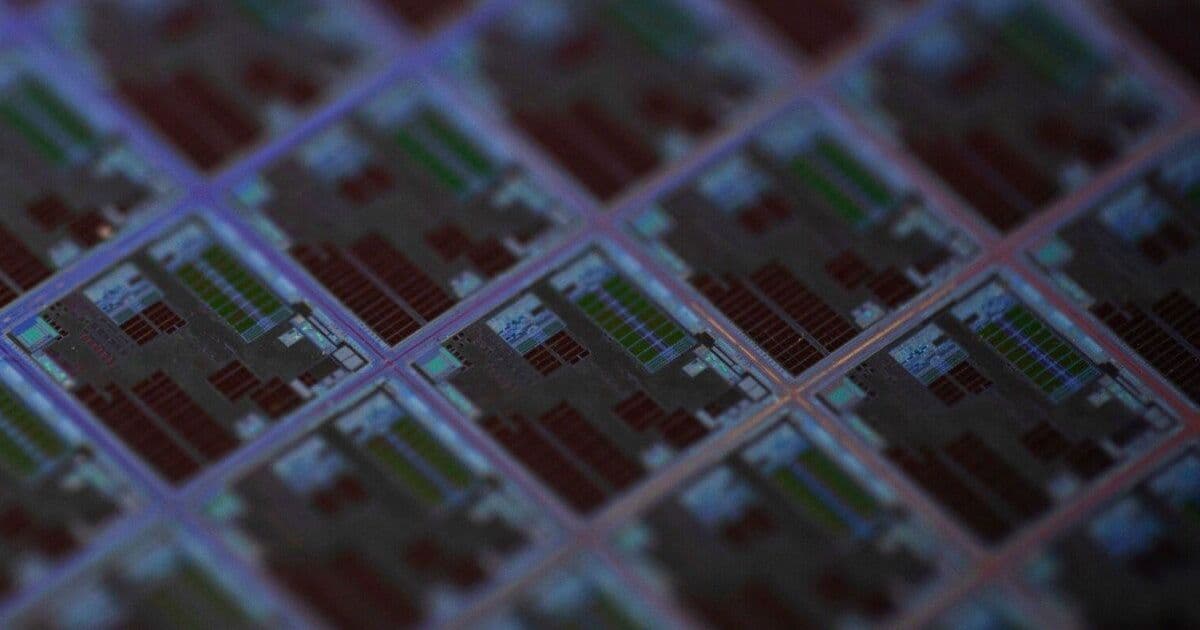
An OECD report shows that while U.S. semiconductor companies receive the largest absolute amount of government aid, Chinese firms enjoy subsidies that amount to nearly 10 % of their revenue – the highest relative support in the industry.
US Firms Still Dominate Chip Subsidies, Yet China’s Relative Support Surpasses All
The Organisation for Economic Co‑operation and Development (OECD) released its latest MAGIC database analysis, confirming that United States‑based semiconductor firms continue to capture the greatest share of public subsidies worldwide. However, the report also reveals a striking contrast: Chinese chipmakers receive a far higher proportion of their sales in state aid, edging close to 10 % of revenue in the early 2020s.
Legal and Policy Background
The OECD’s findings sit at the intersection of two major policy regimes:
- U.S. CHIPS and Science Act (2022) – authorises up to $52 billion in subsidies, tax credits and loan programmes for domestic chip design and fabrication. The Act also created the CHIPS for America Fund, which the Trump administration later leveraged to take a 9.9 % equity stake in Intel, converting previously un‑paid grant money into direct ownership.
- China’s National Integrated Circuit (IC) Programme – first codified in the 2014 Guideline for the Promotion of the Development of the National Integrated Circuit Industry and refreshed in 2020 with a $150 billion budget. The programme combines tax concessions, low‑interest loans and direct grants, and it has been intensified since the 2018 export controls imposed by the United States, the EU and Japan.
Both frameworks rely on the same legal tools—tax breaks, subsidised borrowing and direct grants—but they differ in scale and intent. The OECD counts these instruments as government support while explicitly excluding equity stakes and direct ownership, meaning the reported figures are conservative for China, where equity participation is common.
Who Is Affected?
| Region | Absolute subsidies (USD bn) | Relative support (≈% of sales) | Key players |
|---|---|---|---|
| United States | ~$12‑13 bn (2022‑2024) | 2‑3 % | Intel, AMD, NVIDIA, Qualcomm |
| OECD‑Asia‑Pacific (Japan, Korea, Taiwan) | ~$8‑9 bn | 3‑5 % | Samsung, TSMC, SK Hynix |
| China | ~$4‑5 bn | ≈9‑10 % | SMIC, HiSilicon (via Huawei), Yangtze Memory |
| Europe (auto‑focused) | ~$2 bn | 1‑2 % | Infineon, STMicroelectronics |
Numbers are rounded estimates drawn from the OECD’s coverage of 64‑83 % of global semiconductor sales.
Impact on Users
- Higher prices for end‑products – When governments prop up firms that are not yet cost‑competitive, the market may absorb the subsidy as a price premium on consumer electronics, data‑center servers and automotive chips.
- Supply‑chain concentration – Large subsidies encourage firms to double‑down on existing fabs rather than diversify locations, reinforcing the current U.S.–East‑Asia hub model.
- National security concerns – Heavy state backing of Chinese chipmakers raises questions about technology transfer, intellectual‑property protection and the risk of embedded back‑doors in critical components.
- Innovation incentives – U.S. subsidies are tied to R&D tax credits and technology‑transfer milestones, which can accelerate design‑lead innovations such as AI accelerators. China’s subsidies, while larger relative to sales, are often contingent on meeting production‑capacity targets, potentially favouring volume over breakthrough design.
What Changes Are on the Horizon?
- Tighter reporting requirements – The OECD recommends that all participating governments adopt a common taxonomy for subsidies, mirroring the EU’s State Aid framework. This would make future cross‑border comparisons more transparent.
- Potential WTO disputes – China’s practice of coupling subsidies with export‑control retaliation could trigger challenges under the Agreement on Subsidies and Countervailing Measures.
- U.S. policy refinements – Lawmakers are debating a “CHIPS 2.0” bill that would add performance‑based claw‑backs, requiring firms to meet specific domestic‑employment or production‑share thresholds to retain funding.
- State‑level tax‑incentive audits – Several U.S. states, including Ohio, have paused or re‑evaluated datacenter tax breaks after discovering that the fiscal impact far exceeded projected economic benefits. Similar scrutiny could extend to state‑level chip incentives.
Bottom Line for Companies and Consumers
- U.S. firms should prepare for stricter compliance checks tied to federal subsidies, especially around export‑control licensing and environmental‑impact reporting.
- Chinese chipmakers will likely continue to enjoy high relative subsidies, but they must navigate growing international scrutiny and possible counter‑voting measures at the WTO.
- Consumers may see modest price shifts as governments juggle the cost of subsidies against broader economic goals such as AI leadership and climate‑friendly manufacturing.
The OECD’s data underscores a fundamental tension: absolute subsidy dollars favour the United States, while relative subsidy intensity favours China. How each side balances short‑term market support with long‑term competitiveness will shape the semiconductor landscape for the next decade.
For the full OECD report, see the OECD Semiconductor Subsidies Overview 2026.
Comments
Please log in or register to join the discussion