MIT biologists show that enzymes called kinases form micron‑scale condensates that concentrate ATP and substrates, boosting autophosphorylation and reshaping signaling pathways. The work explains how over‑expression of focal adhesion kinase can drive unchecked growth in cancer and suggests droplet‑disrupting drugs as a therapeutic strategy.
MIT researchers link enzyme condensation to faster, altered signaling
When proteins in a cell become sufficiently crowded they can demix from the surrounding cytoplasm, forming dense, liquid‑like droplets that float like oil in water. This phenomenon, known as phase separation, has emerged as a central organizing principle in cell biology. In a new study published in Cell Reports, Lindsay Case’s lab at MIT demonstrates that for a broad class of enzymes—protein kinases—condensation does more than compartmentalize; it rewires reaction kinetics and even the repertoire of phosphorylation sites.
Technical approach: from engineered over‑expression to machine‑learning prediction
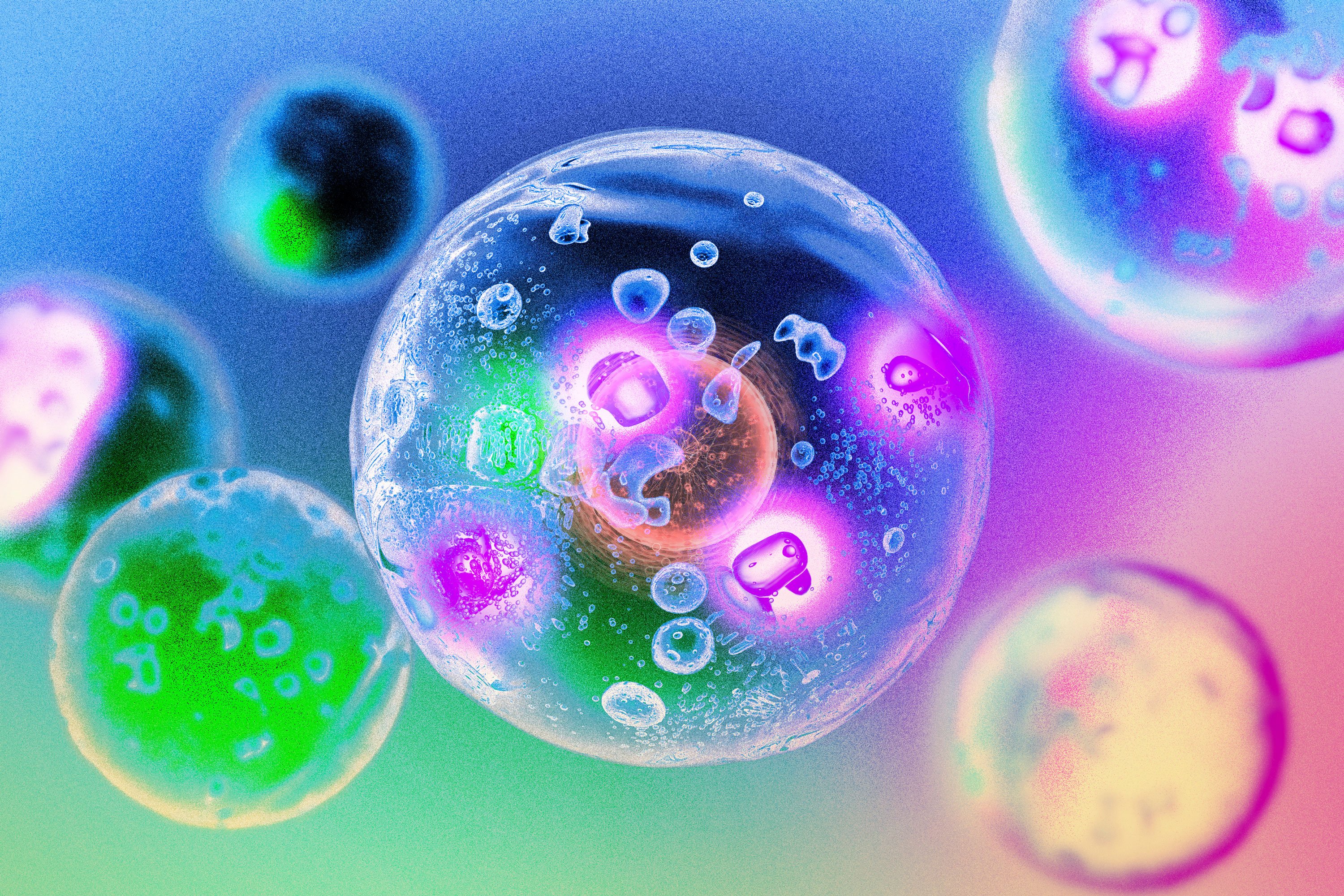
The team focused first on focal adhesion kinase (FAK), a well‑studied enzyme that normally clusters at the plasma membrane when a cell adheres to the extracellular matrix. To decouple membrane recruitment from concentration effects, the researchers over‑expressed fluorescently tagged FAK in suspended cells. At high intracellular levels the protein self‑assembled into sub‑micron droplets (typically < 5 µm, see image) that were visible by live‑cell confocal microscopy.
Key experimental steps included:
- Quantitative imaging to track droplet nucleation, growth, and dissolution in real time.
- FRET‑based kinase activity reporters that measured autophosphorylation rates inside versus outside droplets.
- ATP sensors (e.g., PercevalHR) to map local nucleotide enrichment.
- Mass‑spectrometry phosphoproteomics to compare the spectrum of phosphorylated residues in droplet‑rich versus droplet‑free conditions.
The authors complemented the wet‑lab work with a machine‑learning classifier trained on sequence features (net charge, low‑complexity regions, predicted disorder) of the ~500 human kinases. The model flagged ~45 % of them as likely to undergo condensation, a proportion that matched experimental observations for FAK, Mst2, and Abl.
Real‑world applicability: cancer signaling and drug design
1. FAK droplets as an oncogenic switch
In normal cells, FAK activation is tightly coupled to integrin signaling at adhesion sites. The MIT data reveal that when FAK concentration crosses a threshold, droplets form even in the absence of adhesion cues, leading to constitutive autophosphorylation and downstream activation of pro‑survival pathways (e.g., PI3K‑Akt). This mechanism provides a plausible explanation for why many aggressive tumors over‑express FAK: the excess protein self‑assembles into signaling‑competent condensates that bypass external regulation.
2. Droplet‑mediated substrate expansion
For Mst2 and Abl, the authors observed a shift in substrate specificity inside condensates. Phosphoproteomics showed phosphorylation of non‑canonical sites that are rarely modified in bulk cytoplasm. The authors attribute this to two factors:
- Increased local ATP concentration – positively charged intrinsically disordered regions of the kinases attract the negatively charged nucleotide, raising effective substrate turnover.
- Crowding‑induced proximity – substrates that would normally diffuse apart are forced into the same nanoscale environment, raising collision frequency.
These findings suggest that condensate formation can be a regulatory layer that cells exploit to diversify signaling outputs without altering gene expression.
3. Therapeutic implications
If droplet formation is essential for aberrant signaling, disrupting condensate integrity becomes a drug target. Potential strategies include:
- Small molecules that bind to low‑complexity domains, preventing multivalent interactions required for phase separation.
- Peptidomimetics that compete for ATP‑binding pockets but are engineered to partition poorly into droplets, thereby sequestering the enzyme in a less active state.
- Droplet‑targeted delivery using nanocarriers functionalized with positively charged motifs that preferentially localize to ATP‑rich condensates, concentrating the therapeutic payload where the kinase resides and reducing off‑target exposure.
Case notes that such approaches could improve the therapeutic index of existing kinase inhibitors, many of which suffer from systemic toxicity.
Limitations and next steps
While the study provides compelling evidence for droplet‑enhanced kinase activity, several challenges remain:
- Quantitative thresholds for condensation vary between cell types and are influenced by the cytoskeletal meshwork; translating in‑vitro concentration data to in‑vivo contexts will require sophisticated modeling.
- Temporal control of droplet formation is not yet understood; many signaling events are transient, and it is unclear how quickly condensates can dissolve after the stimulus is removed.
- Off‑target effects of condensate‑disrupting agents need thorough profiling, as phase separation is a widespread phenomenon beyond kinases.
Future work will likely explore optogenetic tools that can induce or dissolve droplets on demand, providing a causal link between condensate dynamics and cellular outcomes. Additionally, expanding the machine‑learning pipeline to include post‑translational modifications could refine predictions of which kinases become condensate‑prone under disease‑specific conditions.
Funding: Searle Scholars Program, U.S. Air Force Office of Scientific Research, NIH, Royal G. and Mae H. Westaway Family Memorial Fund, David H. Koch Graduate Fellowship.
Related resources:
- Original paper: Kinase condensates enrich ATP and trigger autophosphorylation (open access) – https://doi.org/10.1016/j.celrep.2026.06.001
- Lab page for Lindsay Case – https://biology.mit.edu/people/lindsay-case
- Machine‑learning model repository – https://github.com/mitcase/kinase‑condensate‑predictor
Comments
Please log in or register to join the discussion