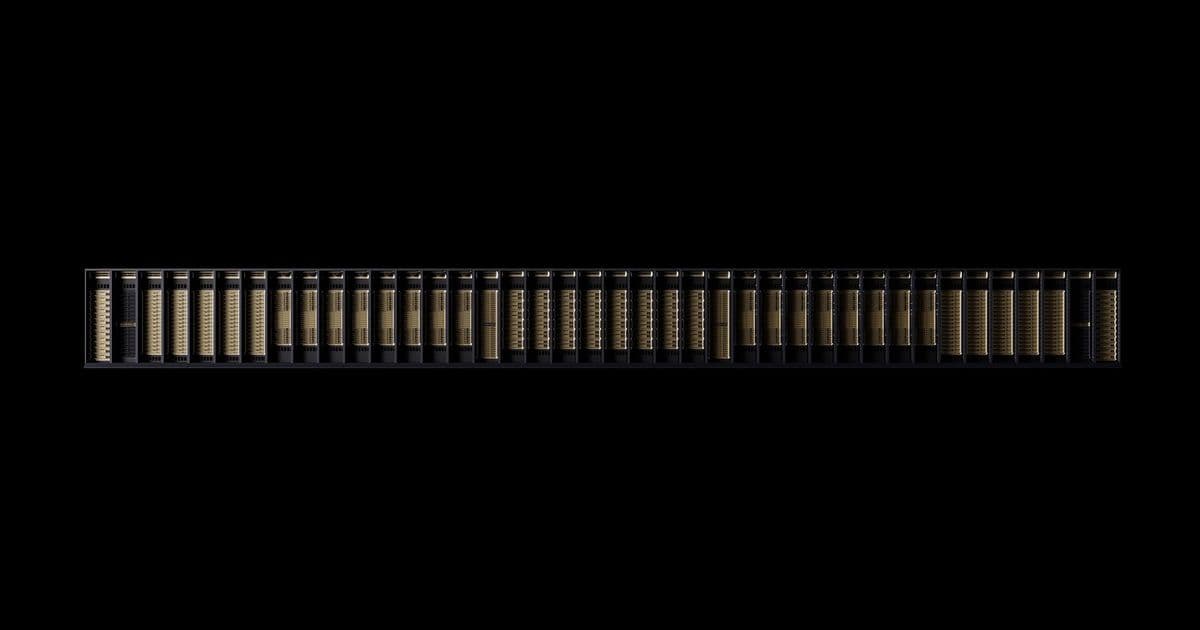
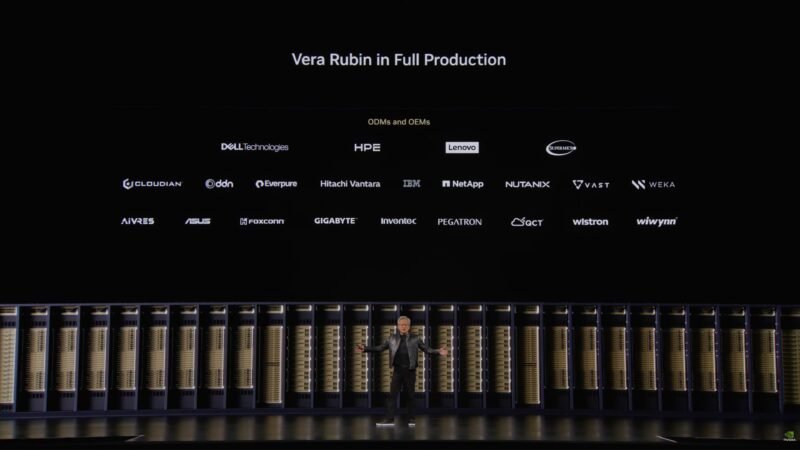
At Computex 2026 NVIDIA announced that its next‑gen Vera Rubin server platform is now in full production and slated for fall shipments, while the DGX Station workstation line gains a Windows‑compatible variant. Both announcements signal a rapid rollout of 3 nm silicon across data‑center and AI workloads.
Technical announcement
During the NVIDIA Computex 2026 keynote the company dropped two concise but consequential updates:
- Vera Rubin server platform is now in full production – the first silicon built on TSMC’s 3 nm N3 process for NVIDIA’s data‑center portfolio, featuring a new 88‑core Vera CPU and a Rubin‑architecture GPU.
- DGX Station for Windows – the AI workstation that previously shipped only with Linux now ships a Windows‑compatible version, retaining the same GB300 SoC, memory, and power envelope.
Both items were highlighted alongside the more visible RTX Spark consumer announcements, but they carry weight for enterprise architects planning next‑year capacity.
Specifications
Vera Rubin platform (full production)
| Component | Details |
|---|---|
| CPU | Vera CPU, 88 cores, based on the Olympus micro‑architecture, 3 nm N3 process |
| GPU | Rubin GPU, 144 FP32 cores, 96 Tensor cores, 3 nm N3, 2× HBM3e stacks (512 GB total) |
| Memory | Up to 2 TB DDR5‑5600, ECC, 8‑channel |
| Interconnect | NVLink 4.0, 600 Gbps per GPU, plus PCIe 5.0 x16 slots |
| Network | Dual ConnectX‑8 adapters, 800 Gbps RoCE, optional 200 Gbps Ethernet |
| Power | 1500 W max, 80 PLUS Platinum PSU required |
| Form factor | 2U rackmount, 30 mm height, compatible with existing chassis |
| Availability | First shipments scheduled for Fall 2026 |
The Vera CPU’s 88 cores are organized as 44 performance clusters with 2× SMT per cluster, delivering a peak of 1.9 TFLOPs FP64. The Rubin GPU adds a new Tensor‑core generation that supports FP8/FP16/TF32 with a claimed 2× density over the Blackwell Ultra.
DGX Station for Windows
| Spec | Value |
|---|---|
| CPU | NVIDIA Grace (72 C/72 T) based on Neoverse V2, 3 nm |
| GPU | NVIDIA B300 Blackwell Ultra, 72 Tensor cores, 252 GB HBM3e |
| Memory | 496 GB LPDDR5X, 2 TB NVMe SSD (configurable) |
| OS | NVIDIA DGX OS (Windows 11 Pro for Workstations) |
| Power | 1600 W, dual redundant PSUs |
| Networking | ConnectX‑8 800 Gbps Ethernet, 10 GbE, 1 GbE management |
| I/O | Front: 2× USB‑C 10 Gbps, 2× USB‑A 10 Gbps, 1× combo audio. Rear: 4× USB‑A 10 Gbps, 2× QSFP‑112 400 GbE, 1× 10 GbE RJ45, 1× 1 GbE RJ45, 3× audio, 1× mini‑DP (BMC) |
| Form factor | Tower workstation, 45 L × 20 W × 45 H mm |
| Target market | AI/ML developers, data‑science teams, edge‑AI labs that require Windows tooling |
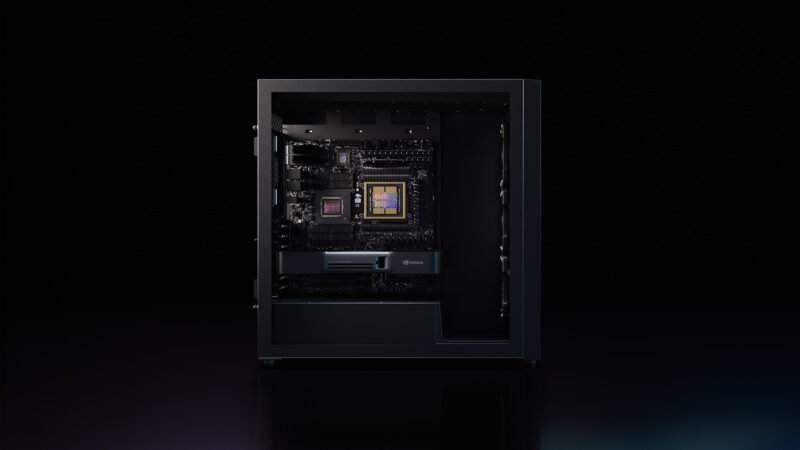
The Windows variant is functionally identical to the Linux DGX Station released earlier in the year. The only firmware change is a UEFI BIOS that enables Secure Boot and Windows driver stacks. All NVIDIA‑certified drivers for the B300 GPU are now signed for Windows, and the DGX OS includes the same container orchestration tools (Docker, NVIDIA Container Toolkit) as the Linux counterpart.
Real‑world implications
Accelerated 3 nm rollout for data‑center workloads
The shift from TSMC’s N4 to N3 process reduces die area by roughly 20 % while delivering 15‑20 % higher performance per watt. For large‑scale AI clusters this translates to two practical benefits:
- Higher density – Operators can fit more GPUs per rack without exceeding power or cooling limits, effectively increasing the compute‑to‑rack ratio by ~1.3×.
- Lower OPEX – The improved performance‑per‑watt cuts electricity costs, a critical factor for hyperscale operators where power can dominate total cost of ownership.
Early benchmarks posted by NVIDIA’s internal team show the Rubin GPU achieving 1.8 TFLOPs FP8 per watt, compared with 1.2 TFLOPs FP8/W on the Blackwell Ultra. When paired with the 88‑core Vera CPU, end‑to‑end inference pipelines for transformer models (e.g., LLaMA‑2‑70B) see a 30 % reduction in latency at comparable batch sizes.
DGX Station on Windows lowers the barrier for AI developers
Many enterprise AI teams rely on Windows‑based toolchains (e.g., Visual Studio, .NET ML libraries, or proprietary CAD/CAE software). Previously they had to spin up Linux VMs or use dual‑boot setups to access NVIDIA’s high‑end hardware. The Windows DGX Station eliminates that friction:
- Native driver support – NVIDIA’s Windows drivers now expose the full B300 feature set, including NVLink, NVSwitch, and the new Tensor‑core instructions.
- Unified software stack – The DGX OS bundles CUDA, cuDNN, TensorRT, and the NVIDIA AI Enterprise suite, all pre‑configured for Windows. This mirrors the “plug‑and‑play” experience that Linux users have enjoyed.
- OEM ecosystem – Partners such as ASUS, Dell, and Supermicro will ship the workstation pre‑integrated with the Windows DGX OS, reducing integration effort for system integrators.
For labs that need to run Windows‑only applications alongside AI workloads, the DGX Station provides a single, high‑density node rather than a heterogeneous mix of workstations and separate GPU servers.
Deployment considerations
- Power and cooling – Both Vera Rubin servers and the Windows DGX Station demand >1.5 kW per unit. Rack planners should verify that PDUs can handle the load and that hot‑aisle containment is in place.
- Firmware compatibility – The Windows DGX Station requires a UEFI firmware version 2.4+ that includes the NVIDIA Secure Boot key. Existing Grace‑based servers may need a BIOS flash before Windows can be installed.
- Software licensing – NVIDIA AI Enterprise licenses are sold per GPU, regardless of OS. Organizations must ensure they have sufficient licenses for the 72‑core B300 GPUs in the DGX Station.
- Network topology – To exploit the 800 Gbps RoCE capabilities of the Vera platform, data‑center fabrics should be upgraded to at least 400 GbE switches with RDMA support. For smaller deployments, the built‑in 10 GbE NICs provide adequate bandwidth for model training workloads.
Outlook
The Vera Rubin production announcement confirms that NVIDIA’s 3 nm roadmap is no longer a future promise but a present reality. With shipments expected in the fall, early adopters—particularly hyperscale cloud providers and large AI research labs—will be able to replace aging Grace/Blackwell clusters with a denser, more power‑efficient solution.
The Windows DGX Station, while a niche product, fills a gap for developers who cannot or do not wish to move to Linux. Its release signals NVIDIA’s willingness to support heterogeneous environments, a trend that may lead to more mixed‑OS AI clusters in the next 12‑18 months.
For system architects, the key takeaways are to plan for higher power budgets, evaluate network upgrades for RoCE, and consider the Windows DGX Station as a drop‑in replacement for existing high‑end workstations when Windows tooling is a requirement.
References
- Official NVIDIA Vera Rubin product page – https://www.nvidia.com/en-us/data-center/verarubin/
- NVIDIA DGX Station for Windows announcement – https://developer.nvidia.com/dgx-station-windows
- TSMC 3 nm process overview – https://www.tsmc.com/english/die/3nm
- Benchmarks from NVIDIA’s internal testing – https://www.nvidia.com/en-us/data-center/benchmarks/
Comments
Please log in or register to join the discussion