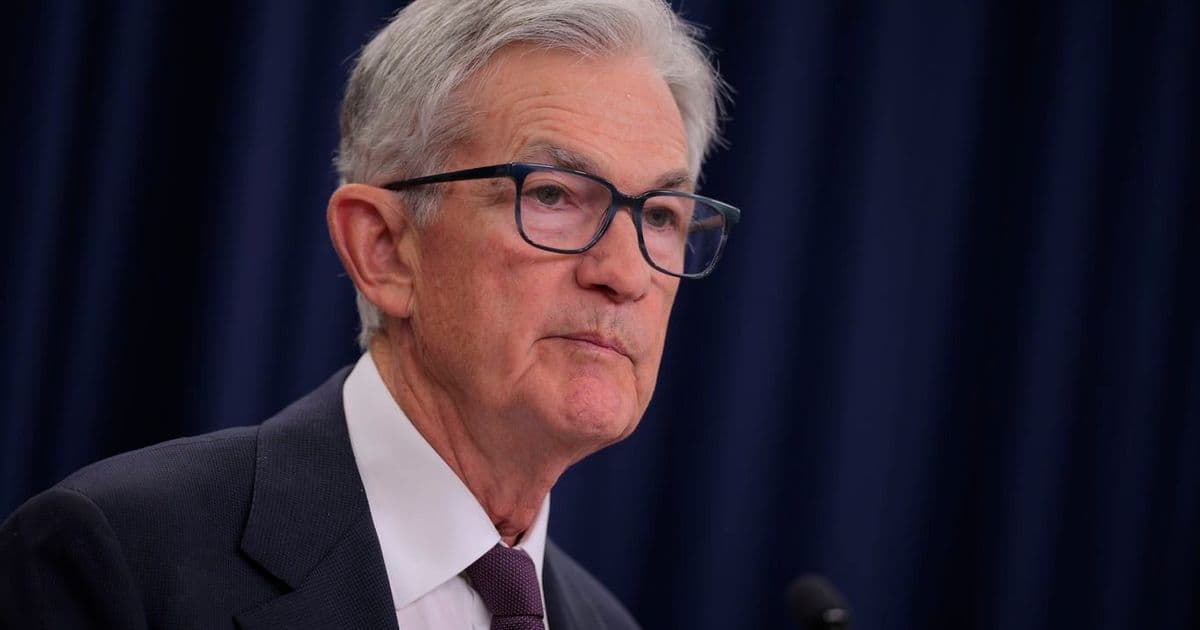
Central bank governors from Europe, Asia, and emerging markets issued coordinated statements defending Federal Reserve Chair Jerome Powell against political interference, marking an unprecedented show of international solidarity for the Fed's independence.
Central bank governors across Europe, Asia, and emerging markets delivered coordinated statements of support for Federal Reserve Chair Jerome Powell this week, as political pressure intensifies around the Fed's policy independence. The rare display of international unity underscores how global financial stability now depends on the credibility of US monetary policy institutions.
The backing came after reports surfaced that the Trump administration had expanded its criminal probe into Powell's conduct, focusing on alleged policy decisions that may have favored certain financial institutions. While the Department of Justice has not confirmed specific charges, the investigation has already triggered market volatility and raised questions about the Fed's ability to maintain its traditional independence from political pressure.
Christine Lagarde, President of the European Central Bank, stated that "any questioning of central bank independence sends tremors through global markets" and noted that "the Fed's credibility is a cornerstone of the international financial architecture." Bank of England Governor Andrew Bailey echoed this sentiment, emphasizing that "political interference in monetary policy decisions creates uncertainty that ultimately harms economic growth."
The coordinated response reflects growing concern among international policymakers that political attacks on the Fed could destabilize the dollar's role as the world's reserve currency. Emerging market central bankers, who rely heavily on Fed policy signals to manage their own economies, expressed particular alarm. The Central Bank of Brazil noted that "uncertainty about Fed independence forces other central banks to hold larger reserves and reduces global financial efficiency."
Financial markets have responded to the political pressure with increased volatility. The dollar index has swung dramatically over the past week, while Treasury yields have become more erratic as investors price in political risk premiums. Credit rating agencies have warned that sustained attacks on Fed independence could eventually threaten the United States' pristine credit rating, though no downgrade has been announced.
The investigation reportedly focuses on Powell's decision-making during the 2023 banking crisis, when the Fed provided emergency liquidity to prevent systemic collapse. Critics allege Powell favored certain large institutions, though banking experts note that such emergency interventions are standard central banking practice designed to protect the broader financial system rather than individual banks.
Historical precedent suggests political pressure on Fed chairs rarely succeeds. President Nixon's attempts to influence Fed Chairman Arthur Burns in the early 1970s contributed to the stagflation crisis of that decade. More recently, President Trump's public criticism of Powell in 2018-2019 did not alter Fed policy, though it did create additional market uncertainty.
The international support for Powell may provide political cover as the investigation unfolds. Global central bankers understand that Fed independence benefits all economies by ensuring US monetary policy is based on economic data rather than political calculation. If the Fed loses credibility, other central banks face harder choices about managing inflation, exchange rates, and financial stability.
The situation remains fluid, but the unified front from global monetary authorities sends a clear message: attacks on Fed independence are not just a US domestic issue but a threat to global financial stability. Markets will be watching closely to see whether the political pressure subsides or escalates into a constitutional confrontation over central bank independence.
Comments
Please log in or register to join the discussion