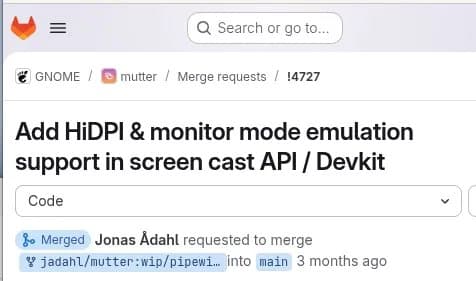
GNOME 50 introduces significant improvements to virtual monitor and remote desktop capabilities, including HiDPI support and monitor mode emulation through Mutter compositor updates.
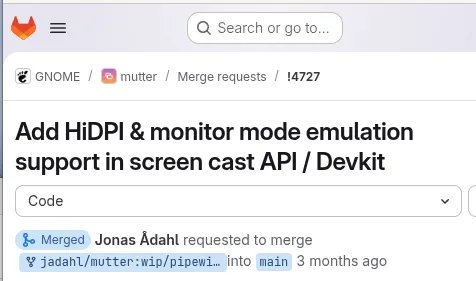
The upcoming GNOME 50 release brings substantial improvements to virtual monitor and remote desktop capabilities, with Jonas Ådahl's three-month effort culminating in merged Mutter compositor code that adds HiDPI support and monitor mode emulation to the screen-casting API and DevKit.
Enhanced Virtual Monitor Experience
The core enhancement centers on how virtual monitors are sized and displayed. The new implementation introduces several key features that work together to create a more flexible and high-quality virtual display experience:
HiDPI Scaling Support: Virtual monitors now support high-resolution displays through a new PipeWire tag called
org.gnome.scale. This allows DevKit to apply appropriate scaling to the monitor stream widget, ensuring crisp and clear content on modern high-DPI displays.Monitor Mode Emulation: The remote desktop API now supports passing a predefined set of virtual monitor modes to
org.gnome.Mutter.ScreenCast.RecordVirtual(). This enables creating non-resizable streams that can only be resized as if changing monitor modes, providing a more authentic multi-monitor experience.Virtual CRTC Improvements: Virtual CRTCs (Cathode Ray Tube Controllers) can now have an optionally specified preferred scale. This scale determines the logical monitor's scale where the virtual CRTC is placed, ensuring consistent sizing across different display configurations.
DevKit Integration: A new tag
org.gnome.preferred-scaleset by DevKit is forwarded as a "preferred scale" in the virtual CRTC, allowing for better coordination between the development toolkit and the compositor.
Technical Implementation Details
The implementation uses PipeWire for stream negotiation, which provides a modern, low-latency multimedia framework for Linux. The use of tags like org.gnome.scale and org.gnome.preferred-scale demonstrates GNOME's commitment to extensible, standards-based solutions.
Impact on Users and Developers
These improvements will benefit users of GNOME's virtual monitor and remote desktop features in several ways:
Better Visual Quality: HiDPI support means that content displayed through virtual monitors will appear sharp and clear on modern high-resolution displays.
More Flexible Display Options: The ability to emulate monitor mode selection provides users with more control over their virtual display configurations.
Improved Development Experience: For developers using DevKit for testing and development, the enhanced virtual monitor capabilities provide a more realistic and flexible testing environment.
Release Timeline and Distribution
GNOME 50 is scheduled for release next month, coinciding with major Linux distribution updates. The improvements will be particularly relevant for users of Ubuntu 26.04 LTS and Fedora Workstation 44, which will ship with this enhanced GNOME version.
Looking Forward
These virtual monitor improvements represent GNOME's ongoing commitment to enhancing remote desktop and virtualization capabilities. As remote work and development environments continue to evolve, having robust virtual monitor support becomes increasingly important for both productivity and development workflows.
The integration of HiDPI support and monitor mode emulation demonstrates GNOME's attention to modern display technologies and user experience requirements. This positions GNOME as a strong choice for users who rely on virtual displays for their daily computing needs.
The technical sophistication of these changes, particularly the use of PipeWire for stream negotiation and the careful consideration of scaling factors, shows the depth of engineering that goes into modern desktop environments. These aren't just surface-level improvements but fundamental enhancements to how virtual displays are managed and presented.
For users and developers alike, the GNOME 50 release promises to deliver a more capable and flexible virtual monitor experience, setting a new standard for remote desktop functionality in Linux desktop environments.
Comments
Please log in or register to join the discussion