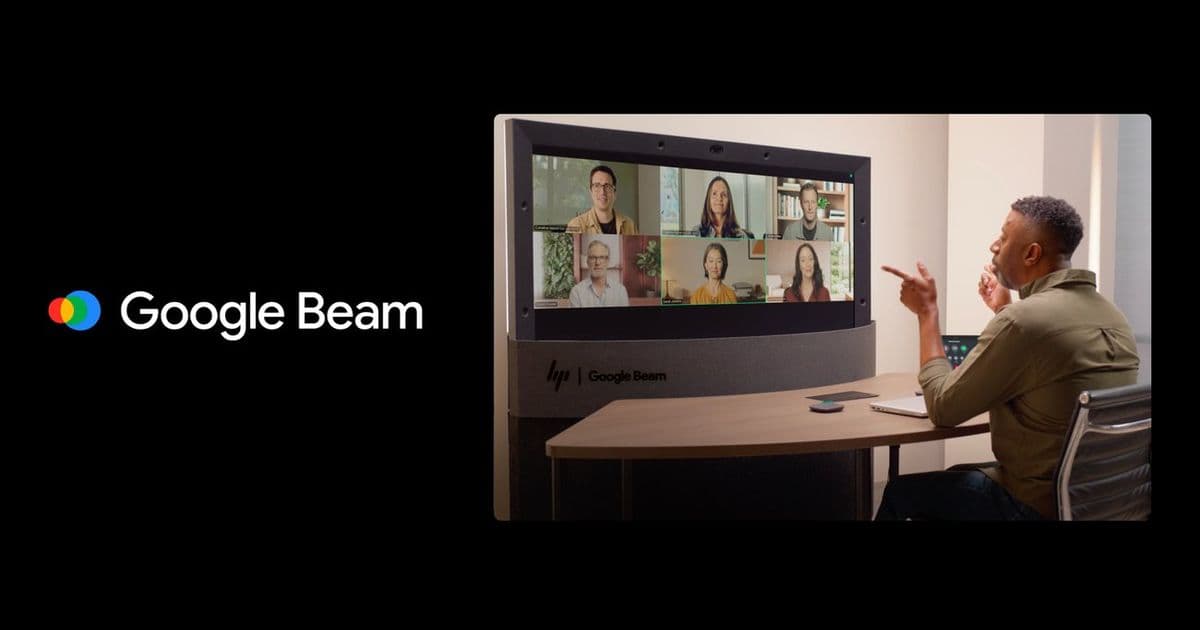
Google Beam introduces experimental features that render remote participants in life-like proportions with spatial audio, addressing the inclusion gap in hybrid meetings while expanding integrations with Zoom and Google Workspace.
Google Beam continues its evolution as a true-to-life video communication platform with the introduction of experimental features designed to transform hybrid meeting experiences. The latest development addresses a persistent challenge in remote collaboration: the feeling of exclusion that remote participants often experience when their visual and auditory presence is diminished compared to in-room colleagues.
What Changed: Immersive Participant Rendering
The new experiment leverages HP Dimension's immersive display technology to render participants joining from non-Beam devices in their true size, positioning them as if they were physically sitting around a meeting table. This spatial representation creates a more natural meeting environment where remote participants aren't confined to small video boxes but appear in life-like proportions.
Complementing the visual enhancement is spatial audio technology that anchors each voice directly to the corresponding participant. This audio-visual combination creates a more immersive experience where colleagues look, sound, and feel more present, regardless of their physical location. The optimization occurs automatically, whether participants join from home or office environments.
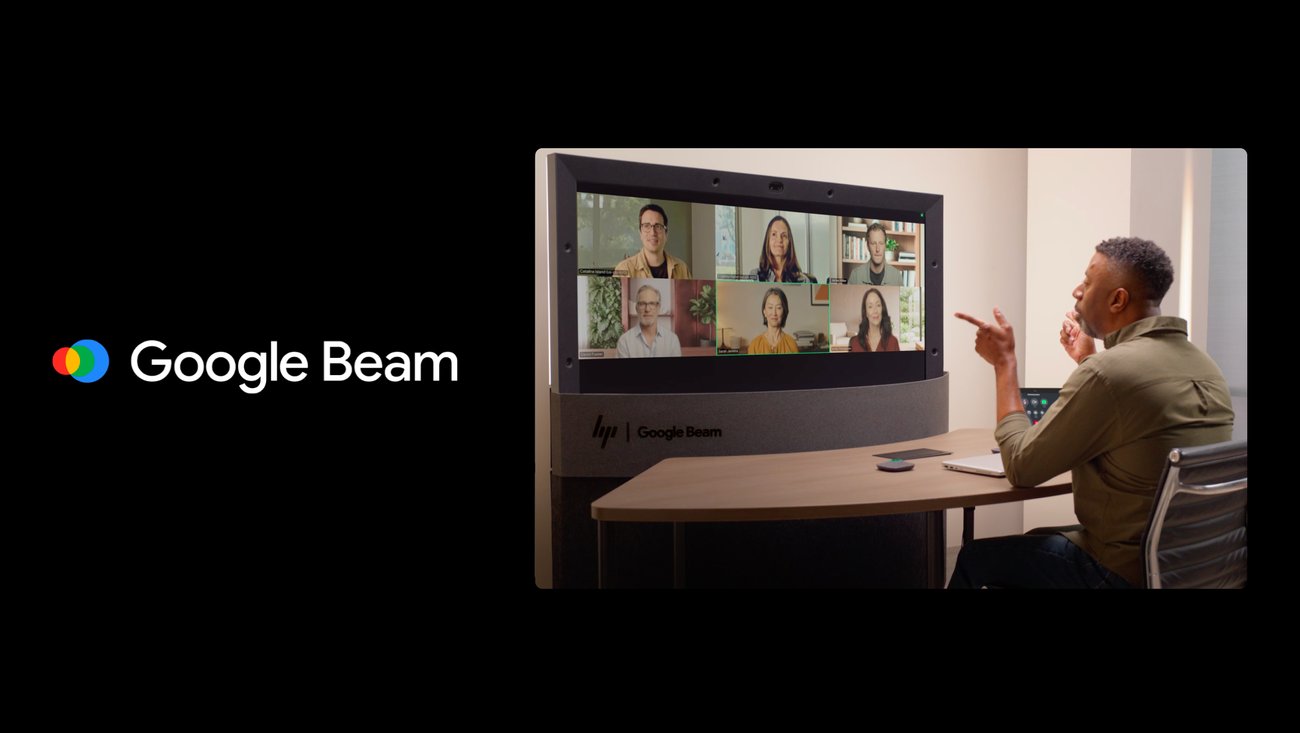
Provider Comparison: Google Beam vs. Traditional Video Conferencing
Google Beam's approach differentiates itself from traditional video conferencing solutions in several key ways:
Spatial Representation: Unlike the typical grid view where participants appear as equal-sized boxes regardless of physical presence, Google Beam creates a spatial hierarchy that acknowledges physical presence.
Audio Fidelity: The spatial audio implementation provides directional cues that help participants identify who is speaking without visual confirmation, mimicking natural human conversation dynamics.
Seamless Integration: The platform is designed to work alongside existing collaboration tools, particularly through its integration with Google Workspace and Zoom.
The collaboration with Zoom, known for its reliable meeting infrastructure, brings best-in-class features to Google Beam. As Jeff Smith, Head of Product at Zoom Workplace, notes, this partnership aims to "deliver a best-in-class collaboration experience for every meeting." This integration strategy allows organizations to enhance their existing Zoom deployments with Google Beam's immersive capabilities without requiring a complete platform migration.
Business Impact: Closing the Hybrid Inclusion Gap
The business implications of these enhancements extend beyond improved meeting aesthetics. Google's research indicates that approaches like these help close the hybrid 'inclusion gap' by facilitating a 50% stronger sense of social connection and a 21% increase in reported ability to contribute to conversations.
For organizations with hybrid work models, these statistics translate to:
- More equitable participation from remote team members
- Improved meeting outcomes through better engagement
- Enhanced retention of distributed talent who feel more included
- Reduced need for expensive in-person meeting infrastructure
The technology addresses a fundamental challenge in hybrid work environments: the tendency for in-room participants to dominate conversations while remote participants struggle to break into discussions. By creating a more balanced sensory experience, Google Beam aims to level the playing field for all participants.
Implementation Considerations
Organizations considering adoption should evaluate several factors:
Hardware Requirements: The full experience benefits from HP Dimension's immersive displays, though partial functionality may be available on standard devices.
Integration Complexity: The Zoom integration allows for gradual adoption, enabling organizations to experiment with the technology alongside existing workflows.
Cost-Benefit Analysis: While specific pricing details aren't yet available, organizations should weigh the potential productivity gains against implementation costs.
Future Outlook
Google Beam continues to evolve its platform, with additional features and integrations expected in the coming months. The company's focus on true-to-life communication suggests a broader industry trend toward more immersive and equitable collaboration tools.
For organizations navigating hybrid work challenges, Google Beam represents a promising approach to creating more inclusive meeting environments. The experimental nature of these features indicates Google is still refining the technology, suggesting future improvements in both functionality and accessibility.
As remote and hybrid work models continue to evolve, technologies like Google Beam may play an increasingly important role in bridging the physical gap between distributed teams. The combination of visual and audio spatialization addresses fundamental human communication patterns that traditional video conferencing has struggled to replicate.
For more information about Google Beam and its experimental features, visit beam.google.
Comments
Please log in or register to join the discussion