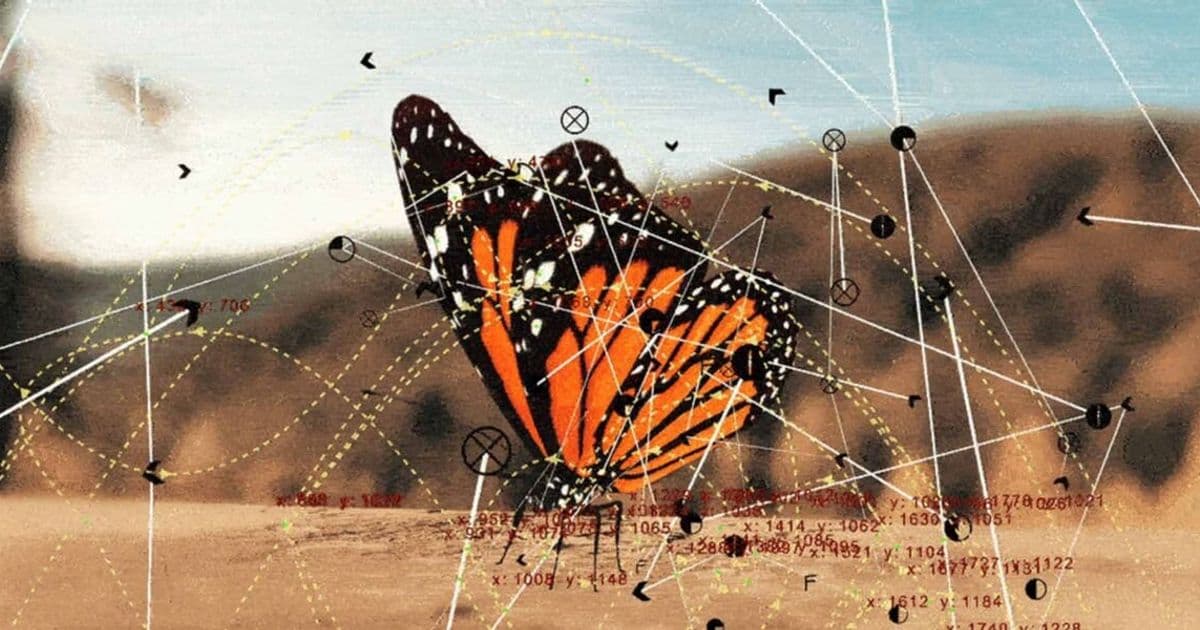
Major tech companies and research institutions are investing heavily in AI-driven weather prediction models, aiming to outperform traditional physics-based systems for longer-range forecasts. The move is driven by the commercial potential of more accurate predictions for industries like agriculture, energy, and logistics.
The race to build better AI weather forecasting tools is accelerating, with Google, Huawei, Microsoft, and Nvidia among the companies spending millions of dollars on the technology. These efforts, alongside those of startups and university research teams, aim to surpass the accuracy of traditional physics-based models, particularly for forecasts beyond a few days.
What's Claimed
The core promise is that AI models can learn complex atmospheric patterns from vast historical datasets, potentially identifying correlations that human meteorologists or conventional models might miss. This could lead to more precise predictions for extreme weather events, seasonal shifts, and long-term climate trends. Companies are positioning these tools as critical for industries where weather is a major variable, such as agriculture (predicting crop yields), energy (optimizing renewable power generation), and insurance (assessing risk).
What's Actually New
While AI has been used in meteorology for years—primarily for short-term nowcasting—the current wave focuses on medium- to long-range forecasting (weeks to months). The novelty lies in the scale of investment and the ambition to replace or augment core numerical weather prediction (NWP) systems.
- Google's approach, detailed in research papers, involves using deep learning models like GraphCast, which is trained on decades of global weather data. GraphCast can generate forecasts in minutes, compared to hours for traditional supercomputers, and has shown competitive accuracy for 10-day forecasts.
- Huawei's Pangu-Weather model, released in 2022, uses a 3D Earth-Specific Transformer architecture. It's designed for global and regional forecasting and has been cited for its speed and accuracy in predicting typhoon paths.
- Microsoft's research focuses on integrating AI with traditional models. Their work includes using AI to correct biases in NWP outputs and to downscale global forecasts to local levels.
- Nvidia provides the computational backbone through its GPUs and software frameworks like Modulus, which is used to build physics-informed neural networks. The company is also investing in foundational models for climate and weather.
Startups like ClimaCell (now Tomorrow.io) and Atmos are building commercial platforms that combine AI forecasts with proprietary sensor data. University teams, such as those at MIT and Stanford, are exploring hybrid models that blend AI with physics-based constraints to improve reliability.
Limitations and Trade-offs
Despite the hype, AI weather forecasting faces significant challenges:
- Data Dependency: AI models are only as good as the data they're trained on. Gaps in historical data, especially for extreme events, can limit their predictive power. They also struggle with "black swan" events that haven't occurred in the training set.
- Physical Consistency: Pure AI models can produce physically implausible results (e.g., violating conservation laws). Hybrid approaches that incorporate physics are more reliable but computationally intensive.
- Interpretability: Unlike NWP models, which are based on well-understood equations, AI models are often black boxes. This makes it hard to diagnose errors or trust predictions in high-stakes scenarios.
- Computational Cost: Training large AI weather models requires massive amounts of data and GPU resources, which can be prohibitively expensive for smaller teams.
Broader Implications
The push for AI-driven weather forecasting reflects a broader trend in scientific computing: using machine learning to accelerate simulations and model complex systems. However, it's not a wholesale replacement for traditional methods. Instead, the most promising applications involve AI augmenting NWP—speeding up calculations, correcting biases, or providing ensemble forecasts.
For industries, the value lies in actionable insights. A more accurate 30-day forecast could help a farmer decide which crops to plant or a utility company manage energy storage. But as with any AI application, the results are probabilistic, not deterministic. Decision-makers must understand the uncertainty bounds.
Key Resources
- Google Research: GraphCast: AI model for faster and more accurate global weather forecasting
- Huawei: Pangu-Weather: A 3D Deep Learning Model for Global Weather Forecasting
- Microsoft: AI for Weather: A Survey of Recent Advances
- Nvidia Modulus: Physics-Informed Machine Learning Framework
- Tomorrow.io: AI-Powered Weather Intelligence Platform
The field is still evolving, and the next few years will determine whether AI can consistently outperform traditional methods. For now, the best forecasts likely come from hybrid systems that leverage the strengths of both approaches.
Comments
Please log in or register to join the discussion