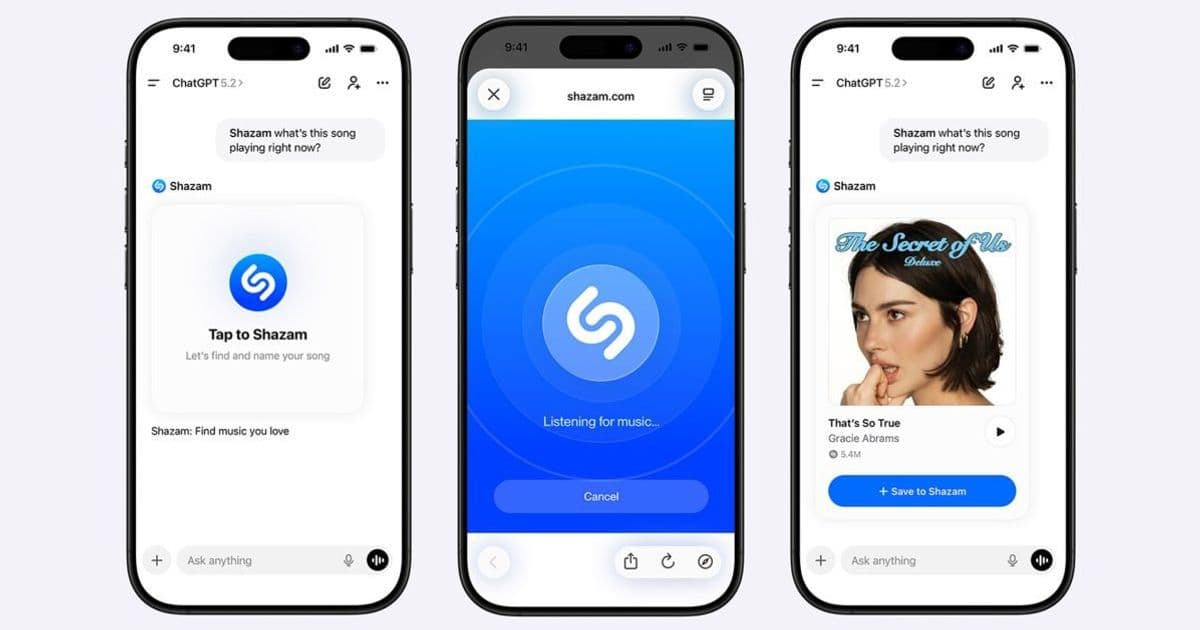
Apple-owned Shazam launches ChatGPT integration, letting users identify songs through natural conversation without needing the standalone app.
Starting today, users can ask Shazam to identify a song without having to leave ChatGPT. Here's how it works.
The Shazam app is available now on ChatGPT
A few months ago, Apple brought Apple Music to ChatGPT, letting users tap into the chatbot's natural-language capabilities to create playlists. Now, Apple-owned Shazam is also releasing a ChatGPT app, allowing users to simply ask "Shazam, what's playing?" or "Shazam, what is this song?" to identify music without leaving the app, even if Shazam isn't installed on their device.
The setup is very simple: users can head over to https://chatgpt.com/apps/, then look for Shazam, and connect their accounts. Once that's done, users can just start their prompt with the word "Shazam" (or type /Shazam to invoke the app) for an experience that will be familiar to what Shazam users are already used to.
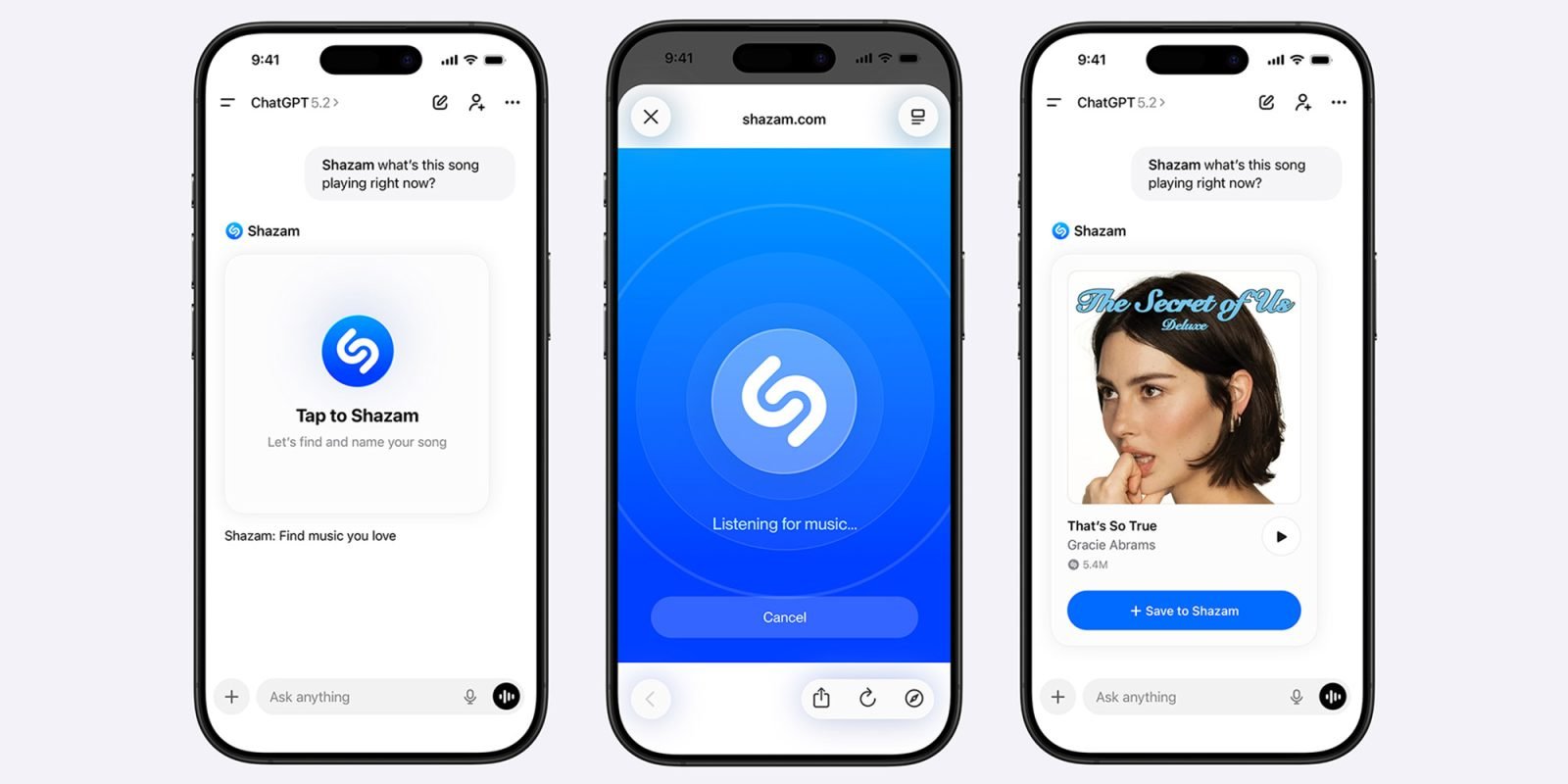
Shazam will go on to identify the song, and bring up a card with the artist's name, the song title, the album artwork, and how many times users have used Shazam to identify that tune. Users can preview the song from the result, or save it to their Shazam library (if they have the Shazam app installed). Alternatively, they can simply continue the conversation, perhaps asking ChatGPT to create an Apple Music playlist inspired by the result.
The Shazam app for ChatGPT is rolling out globally and is available on ChatGPT for iOS, Android, and the web.
This integration represents a significant step in how we interact with music identification services. Rather than switching between apps or relying on a separate tool, users can now maintain their conversational flow while getting instant song recognition. The seamless experience means you could be discussing music with ChatGPT and immediately identify a track playing in the background without breaking context.
For Apple, this move extends the reach of its Shazam acquisition beyond the standalone app. Since purchasing Shazam in 2018, Apple has integrated it deeply into iOS and added features like visual recognition. Bringing Shazam to ChatGPT creates another touchpoint for Apple services while leveraging OpenAI's conversational interface.
The integration also highlights the growing trend of specialized tools within AI platforms. Just as ChatGPT offers plugins and GPTs for specific tasks, this Shazam integration shows how third-party services can create tailored experiences that feel native to the chat interface. Users get the benefit of Shazam's audio recognition technology without needing to install or launch a separate application.
Privacy-conscious users might appreciate that this integration could reduce the need to grant microphone permissions to multiple apps. Since ChatGPT already has voice capabilities, the Shazam functionality can work through the same audio pipeline, potentially offering a more streamlined privacy model.
For developers and service providers, this partnership demonstrates a new distribution model. Rather than competing for app store attention, services can integrate directly into platforms where users already spend time. This could influence how other audio recognition, translation, or specialized services approach their mobile strategies.
The timing is interesting given Apple's broader AI strategy. While Apple develops its own Apple Intelligence features, partnerships like this show a willingness to integrate with external AI platforms where it makes sense. It's a pragmatic approach that prioritizes user experience over platform exclusivity.
As this integration rolls out globally, it will be worth watching whether other music services pursue similar partnerships with ChatGPT or if Apple's control of both Shazam and Apple Music gives it a unique advantage in this space. For now, ChatGPT users have a new, frictionless way to answer that age-old question: "What song is this?"
Comments
Please log in or register to join the discussion