
Google's Pixel 10a offers a safe evolution of last year's model with improved durability and connectivity, but lacks meaningful upgrades to justify its price.
The Google Pixel 10a arrives as the latest entry in Google's affordable smartphone lineup, launching alongside Apple's iPhone 17e in what feels like a coordinated affordable flagship moment. But unlike Apple's approach, Google's strategy with the Pixel 10a raises questions about whether "if it ain't broke, don't fix it" has gone too far.
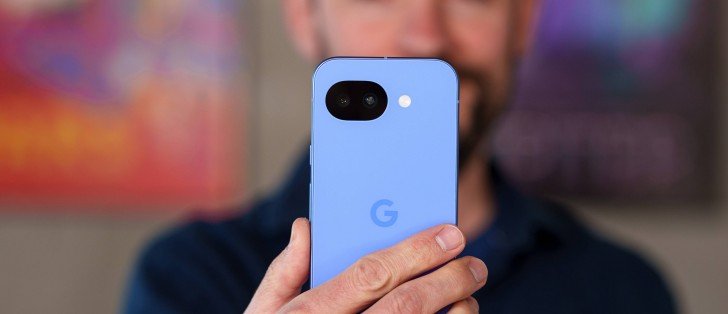
What's New Under the Hood?
At first glance, the Pixel 10a presents itself as a modest evolution rather than a revolution. The device maintains the same 6.3-inch P-OLED display with 1080p resolution and 120Hz refresh rate that made its predecessor appealing. The Google Tensor G4 chipset remains unchanged, paired with 8GB of RAM - a configuration that was already showing its age when it debuted in last year's model.
The battery capacity stays at 5,100mAh, and the camera system remains identical: a 48MP primary shooter with f/1.7 aperture and OIS, complemented by a 13MP ultrawide camera. Even the front-facing camera sticks with a 13MP ultrawide sensor.
The Actual Upgrades
So what justifies calling this a new model? The changes are subtle but potentially meaningful:
Connectivity improvements stand out as the most significant upgrade. The Pixel 10a introduces Bluetooth 6.0 support, offering better audio quality and more stable connections. Satellite SOS functionality adds emergency communication capabilities when cellular networks are unavailable - a feature previously reserved for premium devices.
Charging has been enhanced with faster wired charging (now 30W) and wireless charging capabilities. Google claims you can reach 50% battery in just 30 minutes, which is competitive for this price segment.
Durability receives a notable bump with Gorilla Glass 7i protection on the front, providing better scratch and drop resistance than the previous generation. The IP68 rating remains, ensuring water and dust resistance.
Software is current, shipping with Android 16 and promising up to seven major Android upgrades - a commitment that outpaces most competitors in this price range.
Design and Build Quality
The Pixel 10a maintains Google's minimalist design language with a flat camera bar that houses both rear sensors. The device measures 153.9 x 73.0 x 9.0mm and weighs 183g, making it comfortable to hold despite the plastic back construction.
Available in fresh color options including Lavender, the phone feels solid in hand with its aluminum frame providing structural integrity. The under-display fingerprint sensor works reliably, and stereo speakers deliver decent audio quality for media consumption.
The Value Proposition Problem
Here's where the Pixel 10a becomes difficult to recommend enthusiastically. At launch, the 128GB model starts at €512/£499, while the 256GB variant costs €599/£599. These prices represent a significant premium over what consumers might expect for a device that's essentially a warmed-over version of last year's model.
When you can purchase the previous Pixel 9a at a discount, or consider alternatives from brands like Samsung, Nothing, or even Google's own Pixel 8a, the 10a's value proposition becomes murky. The phone doesn't feel like a generational leap - it feels like Google is charging more for incremental improvements.
Camera Performance
The camera system, while unchanged in hardware, continues to benefit from Google's computational photography prowess. The 48MP primary camera delivers excellent daylight shots with accurate colors and good dynamic range. Low-light performance remains strong thanks to Google's Night Sight capabilities.
The 13MP ultrawide camera performs adequately but doesn't match the quality of the primary sensor. For a device in this price range, the camera system is competitive, though not class-leading.
Performance and Software
Running on the Tensor G4, the Pixel 10a handles everyday tasks competently. App launches are snappy, multitasking works smoothly, and the 120Hz display makes navigation feel fluid. However, the chipset's limitations become apparent during more demanding tasks like gaming or heavy multitasking.
Software remains the Pixel's strongest suit. Android 16 brings the latest features and security updates, while Google's promise of seven years of OS updates ensures longevity that few Android competitors can match.
The Competition
Compared to the iPhone 17e, the Pixel 10a offers clear advantages: a second rear camera, a high-refresh-rate display, and the flexibility of the Android ecosystem. However, Apple's optimization and software support remain compelling for many users.
Within the Android ecosystem, the Pixel 10a faces stiff competition from devices that offer more for less money. The Samsung Galaxy A55, Nothing Phone 2a, and even last year's Pixel models present strong alternatives.
Who Should Buy This?
The Pixel 10a makes the most sense for:
- Existing Pixel users looking to upgrade from models several generations old
- Those who prioritize software updates and clean Android experience
- Users who value Google's camera processing and want reliable photography
- People who need satellite SOS functionality for outdoor activities
Final Thoughts
The Google Pixel 10a is a competent smartphone that delivers on the basics: good display, reliable performance, excellent software support, and capable cameras. However, it's hard to shake the feeling that Google is asking too much for too little improvement.
At a lower price point, the Pixel 10a would be an easy recommendation. As it stands, it's a solid device trapped in an awkward position - not quite premium enough to compete with flagship killers, yet priced too high to be the obvious budget choice.
For most consumers, waiting for discounts or considering last year's models might be the wiser financial decision. The Pixel 10a proves that sometimes, the best upgrade is patience.
Comments
Please log in or register to join the discussion