
Google has introduced stronger Android authentication safeguards and enhanced recovery tools to make smartphones more challenging targets for thieves.
Google has introduced stronger Android authentication safeguards and enhanced recovery tools to make smartphones more challenging targets for thieves. These updated Android theft protection features build on the company's existing anti-theft defenses introduced in October 2024 to protect users before, during, and after theft attempts.
"Phone theft is more than just losing a device; it's a form of financial fraud that can leave you suddenly vulnerable to personal data and financial theft," the Android Security Team said on Tuesday.
As part of these changes, the company has added granular controls for the Failed Authentication Lock feature, which automatically locks device screens after excessive failed authentication attempts, now allowing users to enable or disable it using a dedicated settings toggle.
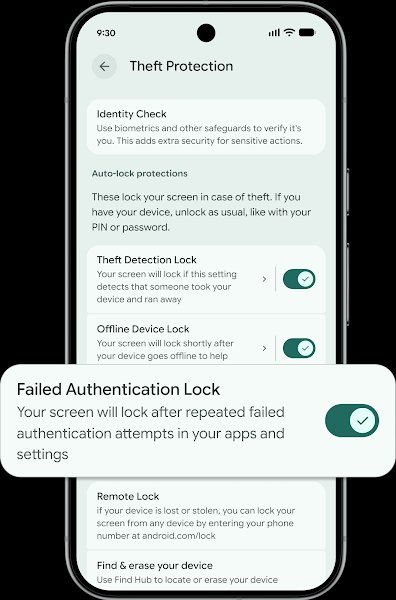
Google has expanded Identity Check, which requires biometric authentication for specific actions performed outside trusted locations, ensuring this safeguard now covers all features and apps that use Android Biometric Prompt, automatically protecting Google Password Manager and third-party banking apps.
The company is also trying to prevent accidental lockouts (e.g., curious children attempting to unlock the device) by ensuring that repeated incorrect guesses don't count toward the retry limit, and by making it harder for thieves to guess the PIN, pattern, or password by increasing the lockout time after failed attempts.
Remote Lock, a tool that allows users to lock lost or stolen devices from any web browser at android.com/lock, was also updated to add an optional security challenge to verify device ownership before initiating a lock.
For new Android devices activated in Brazil, Google will also enable two of its theft-protection features by default: Theft Detection Lock, which locks the device if it detects a "snatch-and-run" theft, and Remote Lock, which lets users lock their devices remotely.
The enhanced recovery tools are available on Android 10 or later devices, while the authentication safeguards require Android 16 or later.
"We've expanded our security to protect you against an even wider range of threats. These updates are now available for Android devices running Android 16+", the Android Security Team added. "We're also enhancing our recovery tools to make them even more helpful. This update is now available for Android devices running Android 10+."
In December, Google also expanded support for its Android in-call scam protection feature to multiple banks and financial applications (including Cash App, with 57 million users, and the JPMorganChase mobile banking app, with over 50 million downloads) in the United States. In-call scam protection was announced in May and introduced in Android 16 to warn users of potential risks when they launch a financial app and share their screen during a call with numbers not in their contact list.

These updates represent Google's continued commitment to strengthening mobile security as smartphone theft remains a significant concern for users worldwide. The granular controls and expanded protections provide users with more options to secure their devices while making it increasingly difficult for thieves to access sensitive information or use stolen phones.
For users concerned about device security, these features can be accessed through the Security section of Android settings, with specific options varying based on device manufacturer and Android version. The Remote Lock feature at android.com/lock provides an additional layer of protection for users who may have lost their devices or had them stolen.
The timing of these updates coincides with growing concerns about mobile security and the increasing sophistication of theft techniques, including organized crime rings that target smartphones specifically for their resale value and access to personal and financial information.
Comments
Please log in or register to join the discussion