
Google has made a strategic, undisclosed investment in Japanese AI startup Sakana AI, which was valued at $2.6 billion in late 2025. The deal provides Sakana with access to Google's large language models while simultaneously boosting the presence of Google's Gemini chatbot in a market where local AI development is accelerating. This partnership reflects a pragmatic approach to global AI expansion, prioritizing local collaboration over pure technological dominance.
Google's latest investment in the AI space isn't about chasing the next breakthrough model or acquiring a team of star researchers. Instead, the company is making a calculated, regional play in Japan, partnering with Sakana AI in a deal that underscores how the global AI race is increasingly about strategic positioning rather than just raw technological capability.
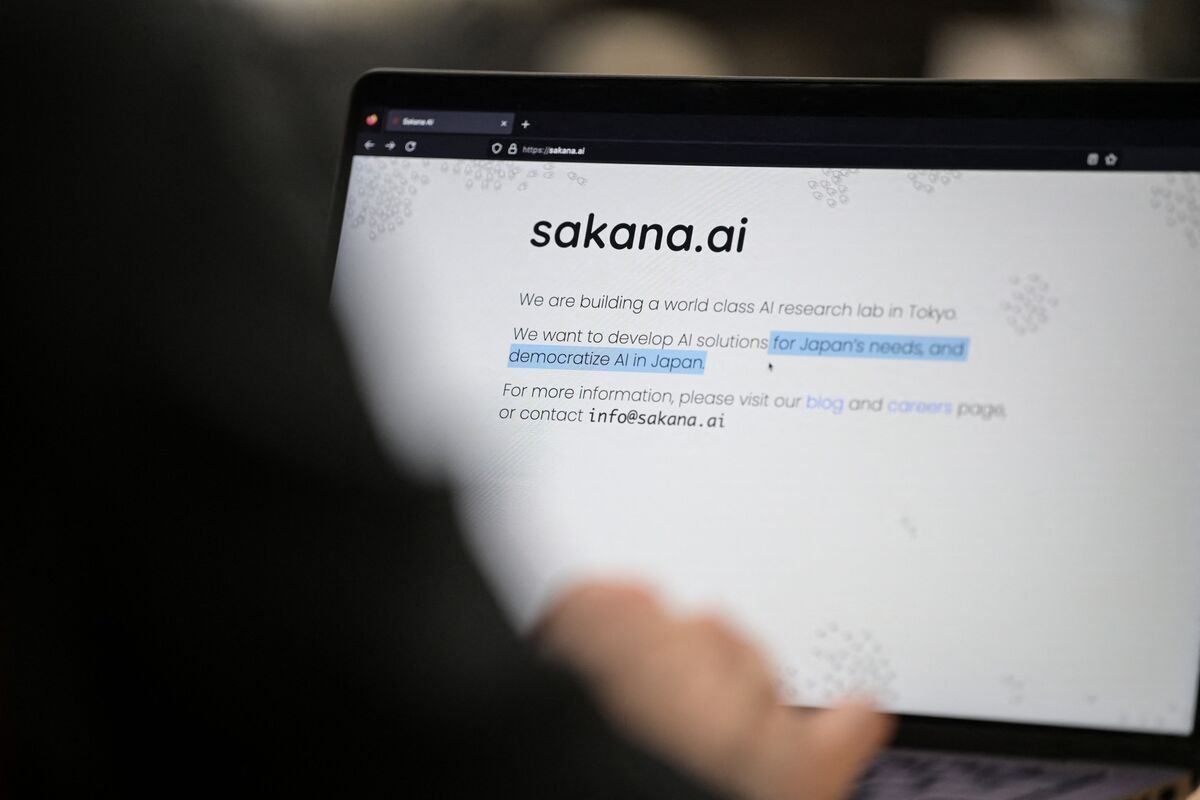
The investment, whose exact amount remains undisclosed, comes at a time when Sakana AI was valued at $2.6 billion in November 2025. For Google, this represents a relatively modest financial commitment compared to the billions it has poured into its own Gemini development, but the strategic value lies in what it gains: a foothold in Japan's burgeoning AI ecosystem and a local partner to help navigate the market's unique demands.
The Japanese AI Landscape: A Market of Contrasts
Japan presents a fascinating case study in the global AI adoption curve. The country is simultaneously a technological powerhouse and a market with specific cultural and regulatory nuances that make direct foreign tech penetration challenging. Japanese enterprises have been relatively conservative in adopting generative AI compared to their American counterparts, partly due to stringent data privacy laws and a cultural preference for proven, reliable solutions.
This creates an opening for partnerships rather than pure competition. Sakana AI, founded in 2023, has positioned itself as a Japanese-centric AI company, developing models trained on Japanese language data and tailored to local business needs. By investing in Sakana, Google effectively gains a local ambassador for its Gemini technology—a company that understands the market's intricacies and can help position Gemini as a tool that complements rather than replaces local AI development.
The Technology Exchange: More Than Just Capital
The deal includes a crucial component beyond financial investment: Sakana AI will gain access to Google's large language models. This isn't merely a licensing agreement; it represents a technology transfer that could accelerate Sakana's development while giving Google valuable insights into how its models perform in a non-English context.
For Sakana, access to Google's LLMs provides a significant competitive advantage. Building foundational models from scratch requires enormous computational resources and expertise—resources that a startup, even one valued at $2.6 billion, would struggle to match against Google's deep pockets. By leveraging Google's models as a base, Sakana can focus on fine-tuning and localization, areas where its Japanese expertise provides a clear edge.
For Google, this partnership serves as a real-world testing ground. Japanese language presents unique challenges for AI models: complex writing systems (hiragana, katakana, and kanji), context-dependent meanings, and formal business communication styles that differ significantly from Western business English. Insights gained from Sakana's implementation could inform improvements to Gemini's multilingual capabilities.
A Pattern of Strategic Partnerships
This investment fits into Google's broader pattern of AI expansion through partnerships rather than pure acquisition. Unlike Microsoft's deep integration with OpenAI or Amazon's investment in Anthropic, Google has pursued a more distributed approach, making smaller strategic investments in regional AI companies worldwide.
This strategy has several advantages. It allows Google to maintain flexibility in its AI ecosystem, avoiding the kind of deep entanglement that could limit future options. It also reduces regulatory scrutiny—large-scale acquisitions in the AI space are increasingly facing antitrust examination, while strategic investments often fly under the radar.
Moreover, this approach acknowledges a fundamental truth about AI development: the technology is becoming increasingly commoditized at the foundational model level. The real competitive advantage increasingly lies in application, localization, and integration with specific industries and workflows. By partnering with Sakana, Google is essentially outsourcing the heavy lifting of market-specific adaptation while maintaining control over the core technology.
The Competitive Context
Google's move comes as competition in Japan's AI market intensifies. Local players like Preferred Networks and Sony's AI division are developing their own models, while international competitors including Microsoft and Amazon are also establishing presences in the market.
Sakana AI itself has been making waves with its unique approach to AI development. The company's name comes from the Japanese word for "fish," reflecting its philosophy of creating AI systems that can adapt and evolve like schools of fish—flexible, responsive, and capable of collective intelligence. This biomimetic approach to AI design has attracted attention and funding, culminating in its recent $2.6 billion valuation.
For Google, the partnership provides a counterbalance to these developments. Rather than trying to outspend or outdevelop local competitors on their home turf, the company is effectively co-opting a leading local player. This is a classic "if you can't beat them, join them" strategy, but with the twist that Google maintains technological control while Sakana handles market execution.
Implications for Gemini's Global Strategy
The Sakana partnership could serve as a template for Google's expansion into other non-Western markets. If successful, it demonstrates a viable path for bringing Gemini to markets where direct competition with local players would be costly and potentially counterproductive.
This approach also helps Google navigate the increasing regulatory fragmentation in the AI space. Different countries are developing distinct approaches to AI governance, from the EU's comprehensive AI Act to China's strict content controls. By working through local partners, Google can adapt its technology to comply with local regulations while maintaining a consistent global brand.
The Bigger Picture: AI's Regionalization
The Google-Sakana deal reflects a broader trend toward the regionalization of AI development. While the foundational research and compute infrastructure remain concentrated in a few countries (primarily the US and China), the application and deployment of AI technology is becoming increasingly localized.
This regionalization creates opportunities for companies that can bridge the gap between global technology and local needs. It also suggests that the future of AI won't be dominated by a single global model, but rather by a ecosystem of models and applications tailored to specific markets and use cases.
For Google, this means accepting a more modest role in some markets—providing the technological backbone while local partners handle the customer relationships and market-specific adaptations. It's a pragmatic approach that acknowledges the limits of one-size-fits-all technology in a diverse world.
Looking Ahead
The success of the Google-Sakana partnership will be measured not just by financial returns, but by its ability to demonstrate a replicable model for global AI expansion. If Sakana can successfully integrate Google's LLMs into compelling Japanese-language applications, it could become a case study for how Western AI companies can effectively enter markets where they lack local expertise.
For the broader AI industry, this deal represents a maturation of the market. The early days of generative AI were characterized by a winner-take-all mentality, with companies racing to build the most powerful models. Now, we're entering a phase where strategic positioning, local partnerships, and market-specific adaptations are becoming equally important.
Google's investment in Sakana AI isn't making headlines for its size or technological breakthrough, but for what it represents: a thoughtful, strategic approach to global AI expansion that prioritizes sustainable market presence over short-term dominance. In the increasingly crowded and competitive AI landscape, such strategic patience may prove to be as valuable as any technological innovation.
Comments
Please log in or register to join the discussion