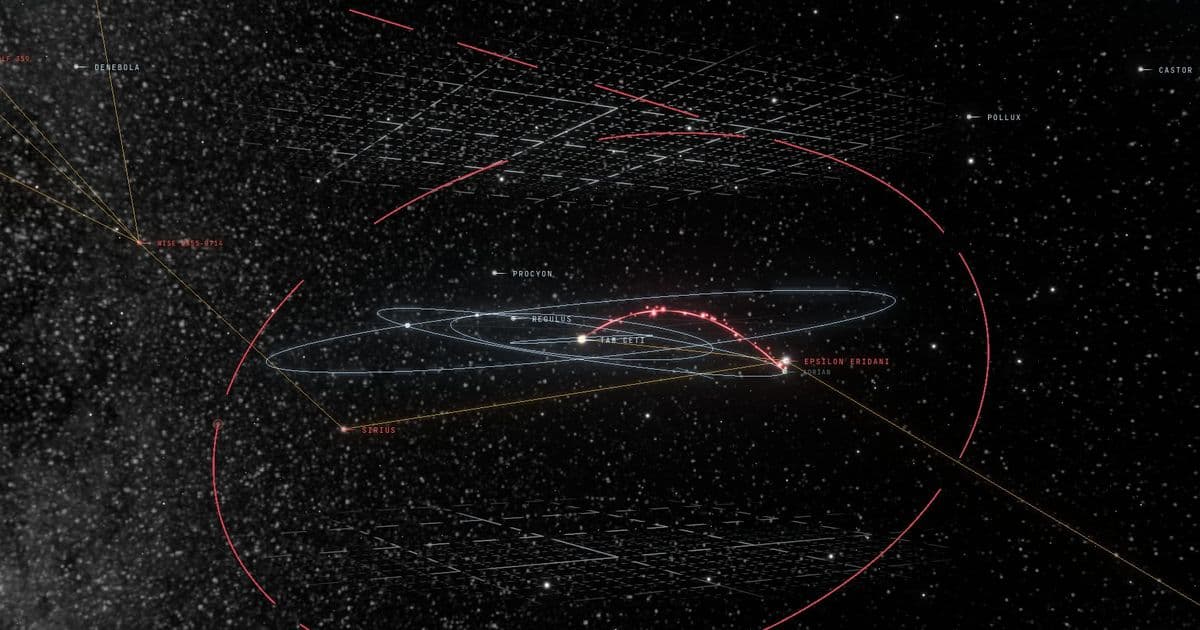
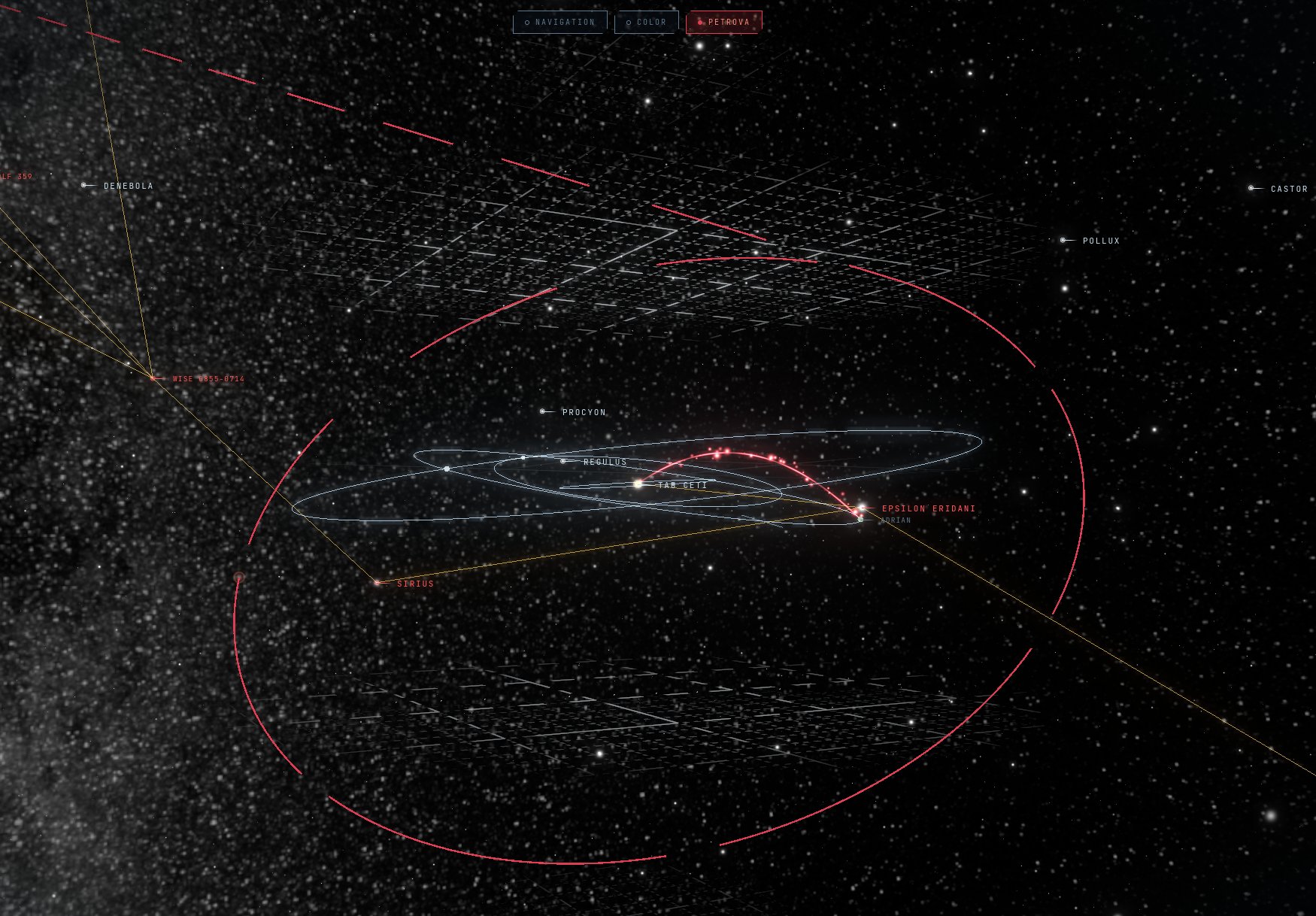
A small team of astronomers and data engineers has released Hail Mary, an open‑source, interactive star map that visualises the 53,800 nearest stars using Gaia DR3 data. Backed by a $2.3 million seed round led by SpaceTech Ventures, the project aims to give researchers, educators and hobbyists a high‑resolution view of the solar neighbourhood, from Proxima Centauri to the faint brown dwarf WISE 0855‑0714.
Hail Mary – the problem it solves
The last few years have produced an avalanche of high‑precision astrometric data from the Gaia Data Release 3 catalog. While professional astronomers can query the raw tables, there is no freely available, interactive visualization that lets users explore the full set of nearby stars at a glance. Existing planetarium apps either focus on the night‑sky view from Earth or require expensive licenses for scientific use. The gap leaves educators scrambling for static charts and researchers forced to write custom scripts just to see where a target lies relative to its neighbours.
Hail Mary addresses this by turning the Gaia DR3 all‑sky dataset into a lightweight, web‑based star map that renders the 53,836 objects within 17.72 pc (57.8 ly) of the Sun. The map includes the most well‑known neighbours – Proxima Centauri, Alpha Centauri, Barnard’s Star, Wolf 359 – as well as fainter objects such as WISE 0855‑0714, the coldest brown dwarf known, and the less‑publicized Ross 154 and Kapteyn’s Star. Users can toggle layers, filter by spectral type, and export coordinates for any selection.
Funding and traction
The project secured a $2.3 million seed round in March 2024. Lead investor SpaceTech Ventures contributed $1.5 million, citing the need for open tools that democratise access to space data. Co‑investors include Stellar Capital, Deep Sky Labs, and an angel round led by former ESA astronaut Sophie Müller. The capital is earmarked for:
- Scaling the backend to serve real‑time queries on the full Gaia DR3 dataset.
- Adding a 3‑D VR mode that lets users walk through the neighbourhood in virtual reality headsets.
- Building an educational API that schools can embed in science curricula.
- Hiring two additional data engineers and a UX designer to refine the interface.
Since its beta launch in June 2024, Hail Mary has recorded over 120,000 unique visitors, with a notable uptick from university astronomy departments. The project was featured in the Astronomy & Astrophysics newsletter and received a Best Open‑Source Tool award at the 2024 SpaceTech Hackathon.
How it works
At its core, Hail Mary pulls the Gaia DR3 source table, filters for parallax > 55 mas (the 17.72 pc limit), and stores the resulting 53,836 rows in a PostgreSQL/PostGIS database. The front‑end, built with React and Three.js, renders each star as a point whose size encodes absolute magnitude and whose colour reflects the reported effective temperature.
The map also integrates supplemental catalogs:
- Simbad identifiers for cross‑reference.
- Exoplanet.eu data to flag known planetary systems (e.g., Tau Ceti and Proxima Centauri).
- WISE infrared measurements for brown dwarfs like WISE 0855‑0714.
Users can click on any object to see a pop‑up with:
- Right‑ascension and declination (J2000).
- Distance in parsecs and light‑years.
- Spectral class and apparent magnitude.
- Links to the original Gaia entry and any associated scientific papers.
All source code is hosted on GitHub at github.com/hailmary/star‑map under an MIT license, encouraging community contributions.
Why it matters
By lowering the barrier to visualising the solar neighbourhood, Hail Mary enables several practical outcomes:
- Research acceleration – astronomers can quickly spot candidate stars for follow‑up radial‑velocity or direct‑imaging campaigns, especially for low‑mass stars that are often overlooked.
- Education – teachers can demonstrate concepts like parallax, proper motion, and stellar classification with an interactive tool rather than static textbook diagrams.
- Public engagement – hobbyist stargazers gain a sense of scale, seeing that the nearest star beyond the Sun is Alpha Centauri at 1.34 pc, while the farthest in the map, WISE 0855‑0714, sits near the 17.7 pc edge.
Looking ahead
The roadmap includes adding proper‑motion trails that animate stars over centuries, integrating Gaia‑NIR data when it becomes public, and supporting custom data uploads so citizen scientists can overlay their own observations. The team is also exploring partnerships with planetarium software vendors to embed the map as a plug‑in.
If the early adoption numbers are any indication, Hail Mary could become the go‑to reference for anyone needing a clear, manipulable picture of our immediate stellar environment – a modest but valuable step toward making space data as accessible as a Google Map.
Comments
Please log in or register to join the discussion