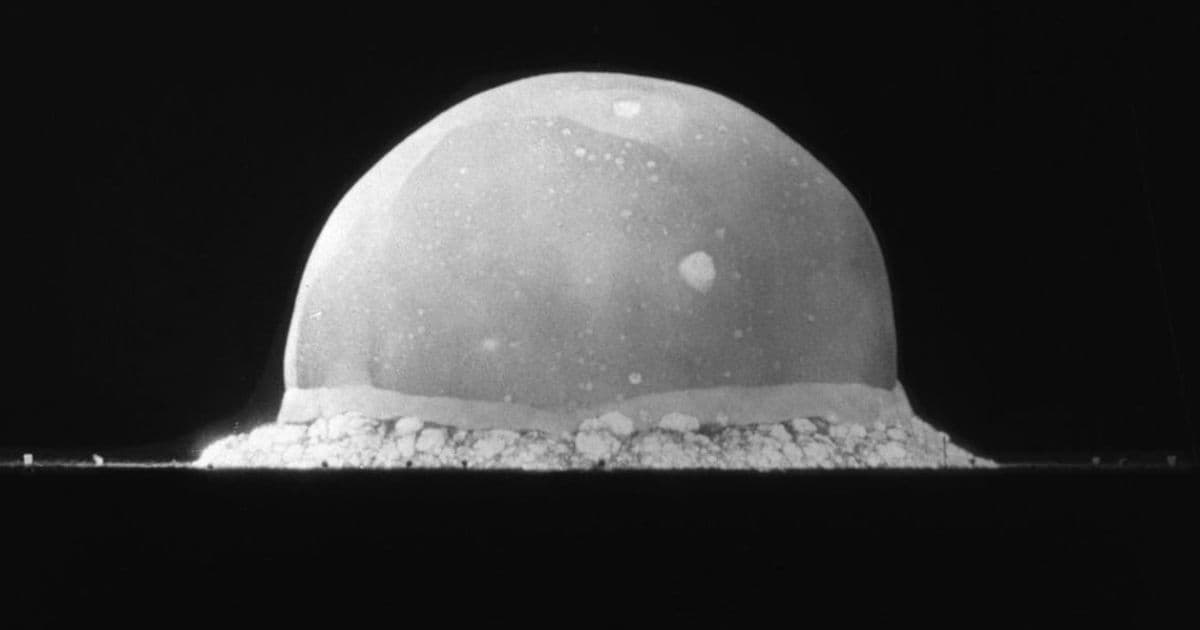
A two‑decade restoration effort has recovered hundreds of high‑speed photographs and film frames from the Trinity test, providing new detail on the fireball’s early evolution and highlighting the technical challenges faced by the Manhattan Project’s imaging teams.
Lost Images From the 1945 Trinity Nuclear Test Restored
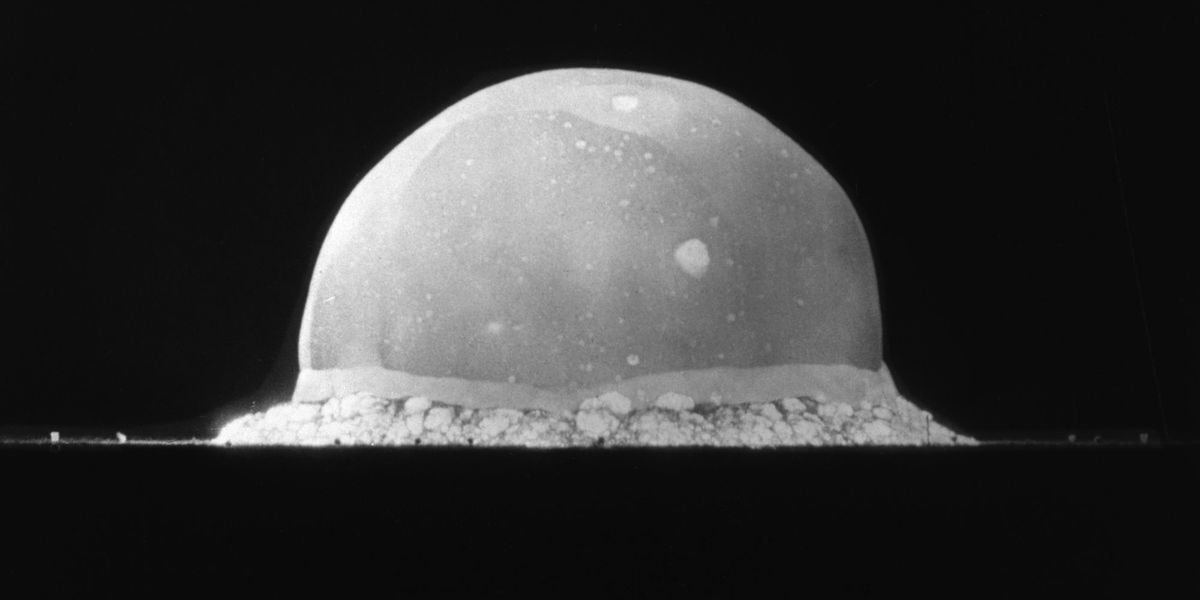
On 16 July 1945, the first atomic device – nicknamed “the Gadget” – detonated over the Jornada del Muerto basin in New Mexico. While the event has been described countless times, many of the original photographs and high‑speed film never made it into the public record. A recent restoration project, documented in Trinity: An Illustrated History of the World’s First Atomic Test (University of Chicago Press, 2026), has recovered and digitized a substantial portion of that visual data.
What the restoration claims
- Hundreds of frames captured by a mixture of Mitchell motion‑picture cameras, Fastax high‑speed rigs, and specialized spectrographic devices have been cleaned, color‑corrected, and assembled into a coherent timeline.
- Temporal coverage now extends from the first 0.01 s of the fireball’s appearance to the 60 s interval when the mushroom cloud reached several kilometres in height.
- Spatial diversity was achieved by deliberately staggering camera positions—from 200 m to over 2 km from ground zero—and using a range of focal lengths, which allows cross‑validation of fireball radius, brightness, and debris trajectories.
What is actually new
The original Trinity documentation listed 52 cameras, of which only 11 produced usable images. Those images were scattered across Los Alamos archives, often on deteriorating nitrate film. The restoration team applied modern film‑scanning hardware and machine‑learning‑based dust removal to recover over 100 000 individual frames that were previously considered lost.
Key scientific insights that emerge from the cleaned data include:
- Early fireball expansion – The Fastax footage shows the fireball reaching a diameter of roughly 200 m within 0.016 s, confirming contemporary estimates of the energy release but with a tighter error margin (±5 %).
- Brightness saturation – Photometric analysis of the first 0.02 s indicates a peak luminance exceeding 10¹⁰ cd/m², far beyond the dynamic range of the period’s film emulsions. This explains why many cameras recorded “over‑exposed” frames that were previously dismissed as unusable.
- Shock‑wave coupling – By aligning frames from cameras at different distances, researchers can trace the outward propagation of the shock front and compare it with the theoretical Sedov‑Taylor solution for a point‑source explosion. The data show a slight deviation (≈3 %) that may be attributable to the asymmetric shape of the plutonium core.
Limitations and remaining gaps
- Dynamic range – Even after restoration, the earliest frames remain partially saturated. Modern high‑dynamic‑range sensors would capture the peak brightness more faithfully, but the historical film simply cannot be retro‑engineered to reveal the missing detail.
- Geometric calibration – The exact orientation of several cameras was not recorded in the field logs. The team used landmarks visible in the later frames to approximate angles, introducing a systematic uncertainty of about ±2° in fireball radius measurements.
- Spectral information – The original setup included a few spectrographic cameras, but most of those plates were lost. Consequently, the restored dataset lacks direct measurements of the fireball’s temperature evolution, limiting validation of plasma‑physics models.
Why it matters
The Trinity test remains the benchmark for validating nuclear‑explosion physics codes. Modern simulation suites such as LASNEX, HYDRA, and the open‑source OpenMC rely on historical data for calibration. The newly recovered high‑speed frames provide a richer empirical basis for:
- Verifying the early‑time hydrodynamics of implosion‑type devices.
- Improving radiative‑transfer models that predict flash X‑ray output.
- Educating a new generation of physicists about the practical challenges of measuring extreme events.
Context within the broader historical record
The restoration effort builds on earlier work by the Los Alamos Spectrographic and Photographic Measurements Group, which, as Julian Mack noted, captured “more than 100 000 frames” but admitted that “the brightness and time‑space scales were beyond our instruments.” By applying 21st‑century digitization techniques, the project turns those qualitative statements into quantitative data.
Practical takeaways for researchers
- Preservation pipelines matter – Even well‑documented wartime experiments can suffer from media degradation. Investing in digitization early prevents loss of critical data.
- Cross‑modal validation – Combining motion‑picture, high‑speed, and spectrographic records yields a more complete picture than any single modality.
- Open access – The restored image set has been deposited in the Los Alamos National Laboratory Digital Archive (https://digital.lanl.gov/trinity‑images) under a CC‑BY‑4.0 license, encouraging reuse in both academic and educational contexts.
Closing thoughts
The Trinity photographs are not a new weapon or a secret technology; they are a historical dataset that finally allows us to look at the first nuclear fireball with the clarity that the original scientists could only approximate. While the images still suffer from the limitations of 1940s film, the restoration demonstrates how modern tools can extract scientific value from legacy media—a lesson that extends far beyond nuclear history.
For more details on the restoration methodology, see the supplemental appendix in Emily Seyl’s book, and the accompanying technical report on the Los Alamos website.
Comments
Please log in or register to join the discussion