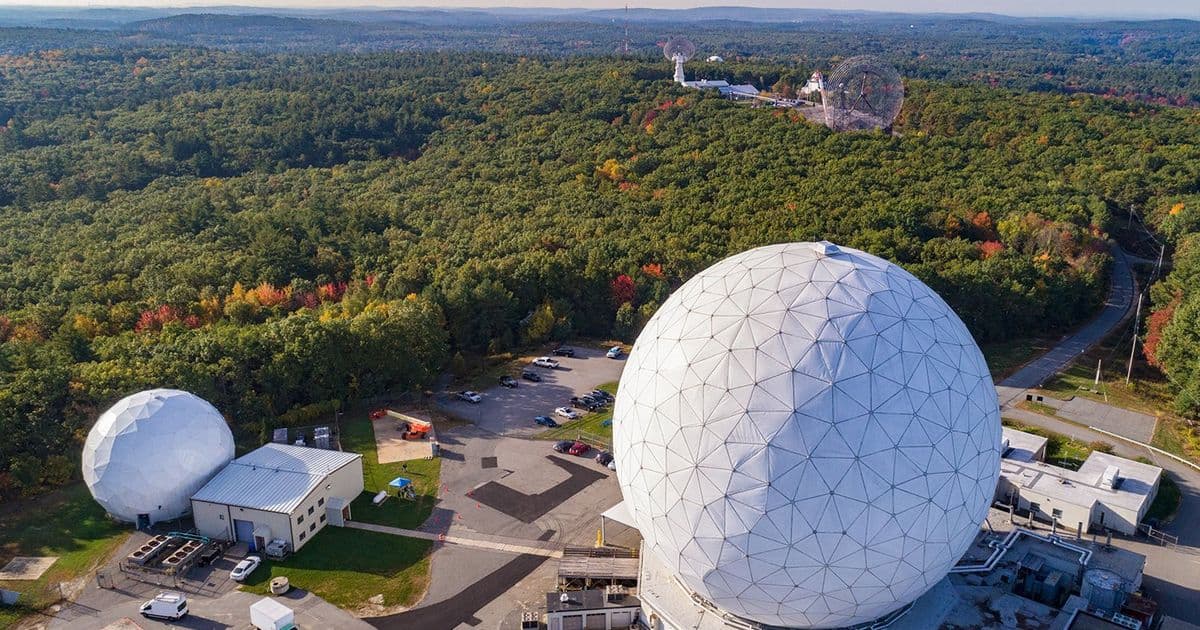
MIT’s refurbished 37‑meter radio telescope has rejoined global VLBI networks, delivering the first multifrequency images of M87’s giant jet since 2025 and opening new programs in planetary defense, astro‑chemistry, and student training.
Haystack 37 m Telescope Returns to Front‑Line Astronomy After a Decade of Upgrades
The 37‑meter radio and millimeter‑wave antenna at MIT Haystack Observatory has moved from a maintenance‑focused role back into cutting‑edge astrophysical research. After more than ten years of structural refurbishment, receiver upgrades, and digital back‑end development, the telescope participated in a Very Long Baseline Interferometry (VLBI) campaign on 8 December 2025 that imaged the extended jet of the supermassive black hole in Messier 87. The success marks the start of a new research phase that blends classic radio astronomy with emerging planetary‑defense and astro‑chemical investigations.
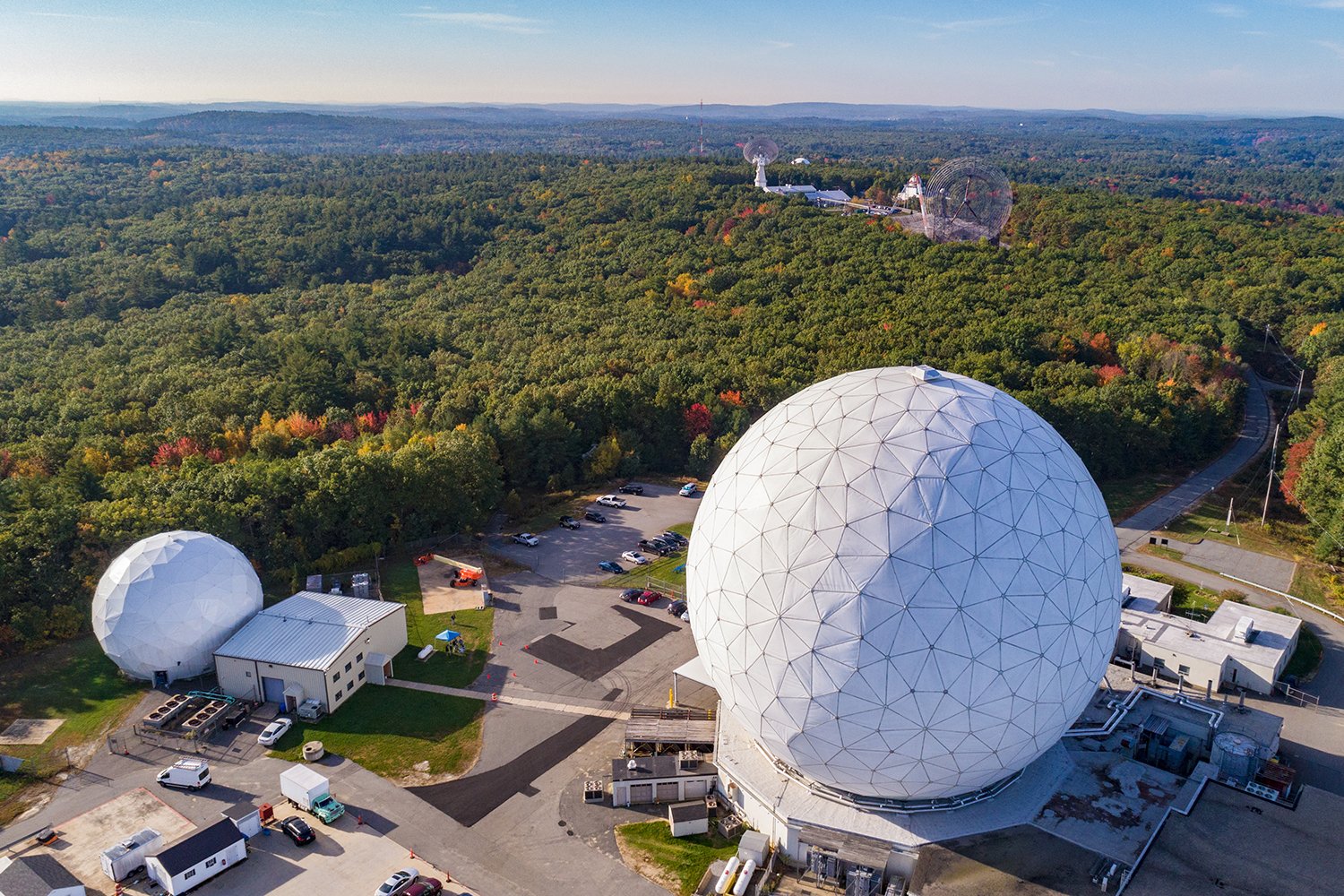
Technical upgrades that made the comeback possible
| Upgrade | What it changed | Why it matters |
|---|---|---|
| Surface panel realignment (2010‑2014) | Improved surface accuracy to < 150 µm RMS, enabling reliable observations at 3 mm (≈ 90 GHz). | Millimeter‑wave sensitivity is essential for high‑resolution VLBI and for detecting weak molecular lines in interstellar clouds. |
| Cryogenic receiver package (2019) | Installed dual‑polarization, low‑noise amplifiers covering 1‑12 GHz and 70‑115 GHz bands. | Reduces system temperature by ~ 30 K, boosting detection of faint continuum emission from distant jets and planetary radar echoes. |
| Next‑generation digital back‑end (2025) | FPGA‑based correlator with 64 GHz instantaneous bandwidth and real‑time fringe fitting. | Provides the data rates required by the ngEHT and allows simultaneous multi‑frequency observations, a key capability for jet‑structure studies. |
| Control‑system overhaul (2025) | Replaced legacy VME controllers with Linux‑based real‑time nodes and introduced Python‑driven observation scripts. | Enables rapid reconfiguration for diverse science cases—from asteroid radar ranging to astro‑chemical line surveys—while giving students a modern software stack to work with. |
These hardware improvements were complemented by software advances funded through the NSF’s Next Generation Event Horizon Telescope (ngEHT) program and MIT’s Jarve Seed Fund. The new pipeline integrates the DiFX software correlator with machine‑learning flagging tools, reducing post‑processing time from weeks to hours.
First science result: probing M87’s kiloparsec‑scale jet
The December 2025 VLBI run linked Haystack with the Very Long Baseline Array (VLBA) and the Greenland Telescope (GLT). By combining baselines up to 9 000 km, the array achieved an angular resolution of ~ 20 µas at 86 GHz, sufficient to resolve structures in M87’s jet far downstream from the black‑hole shadow imaged by the Event Horizon Telescope.
- Key finding – Multi‑frequency imaging revealed a gradual widening of the jet and a shift in polarization angle that suggests a transition from magnetically dominated flow near the core to a kinetic‑energy dominated regime at ~ 0.5 pc.
- Haystack’s contribution – The 37 m dish’s large collecting area provided the bulk of the signal‑to‑noise on the longest baselines, allowing detection of emission at the few‑milliJansky level that would have been lost with smaller antennas.
“Haystack’s exceptional sensitivity at millimeter wavelengths makes it a linchpin for intercontinental VLBI,” says Paul Tiede, principal investigator of the M87 campaign. “Together with the GLT and VLBA we now have the first multifrequency movies of the jet’s faint outer regions.”
New research avenues opened by the upgrade
1. Planetary‑defense radar and asteroid characterization
MIT’s Planetary Defense Project, led by Saverio Cambioni and Richard Teague (EAPS), will use Haystack’s high‑power S‑band transmitter and the upgraded receiver to perform bistatic radar ranging of Near‑Earth Objects (NEOs). The improved bandwidth enables shape reconstruction at ~ 10 m resolution for objects as small as 30 m at 0.05 AU, a capability that rivals the former Arecibo system.
2. Astro‑chemical surveys of complex organics
Associate Professor Brett McGuire (Chemistry) plans a spectral line survey of star‑forming regions at 3 mm, targeting pre‑biotic molecules such as glycolonitrile and ethyl formate. The wide instantaneous bandwidth allows simultaneous coverage of dozens of transitions, dramatically increasing survey efficiency.
3. Star‑formation and protoplanetary‑disk studies
Jens Kauffmann’s astronomy program will map CO isotopologues in nearby molecular clouds, probing gas dynamics on scales of a few hundred AU. The combination of high sensitivity and flexible scheduling makes it possible to monitor time‑variable phenomena such as accretion bursts.
Educational impact and workforce development
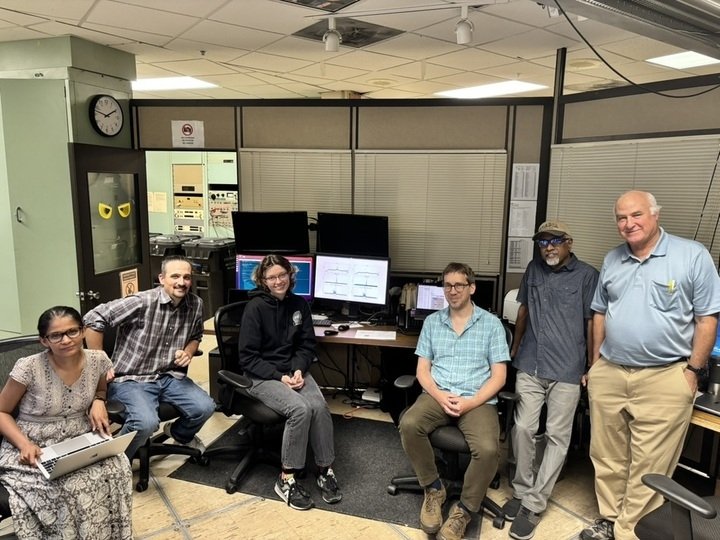
Undergraduate interns, including Abigail Bohl, have already contributed to control‑system software and data‑analysis pipelines. The hands‑on experience mirrors professional observatory work and fills a growing gap in graduate‑level training for radio‑interferometry. As Kauffmann notes, “Providing students direct access to a world‑class telescope is becoming increasingly rare; Haystack now offers that opportunity on our doorstep.”
Remaining limitations and next steps
- Frequency coverage – The current receiver suite stops at 115 GHz; extending to 230 GHz would open higher‑energy molecular transitions but requires a new surface‑panel control system.
- Real‑time fringe tracking – While the digital back‑end can process 64 GHz, the fringe‑fitting software still runs offline for the longest baselines. Ongoing development aims to implement on‑the‑fly calibration to support rapid‑response VLBI of transient events.
- Funding continuity – The program relies on a mix of NSF grants, private donors, and agency contracts. Securing a multi‑year line item in the federal budget would stabilize long‑term operations.
Outlook
The Haystack 37 m Telescope is once again a cornerstone of both scientific discovery and student training. Its restored capabilities enable high‑resolution imaging of black‑hole jets, precise radar characterization of potentially hazardous asteroids, and deep searches for the molecular seeds of life. As MIT and its partners continue to refine the instrument, the telescope is set to play a pivotal role in the next generation of radio‑astronomy projects, from the ngEHT to coordinated planetary‑defense campaigns.
For more details on the telescope’s technical specifications, see the official Haystack 37 m Telescope page.
Comments
Please log in or register to join the discussion