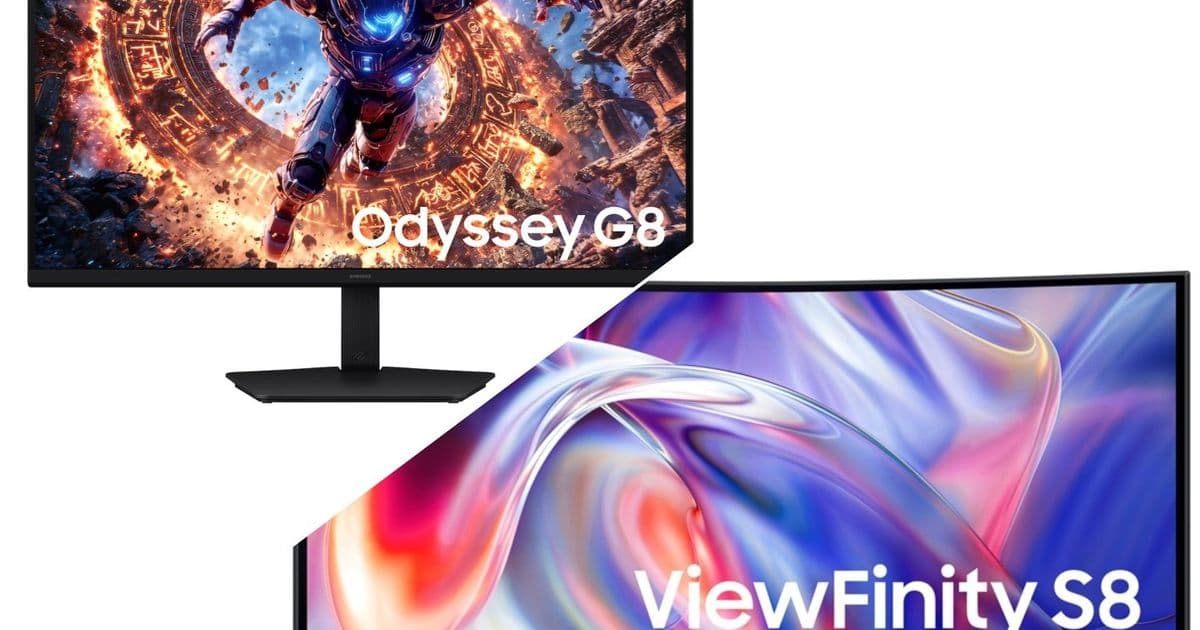
Samsung’s 2026 monitor refresh adds a 32‑inch 6K Odyssey G8 that tops out at 165 Hz, a dual‑mode 3K/6K switch, higher‑refresh OLED variants and a Thunderbolt‑5‑enabled ViewFinity S8. The lineup targets hardcore gamers, creators and productivity‑focused users, while pricing remains undisclosed.
What’s new
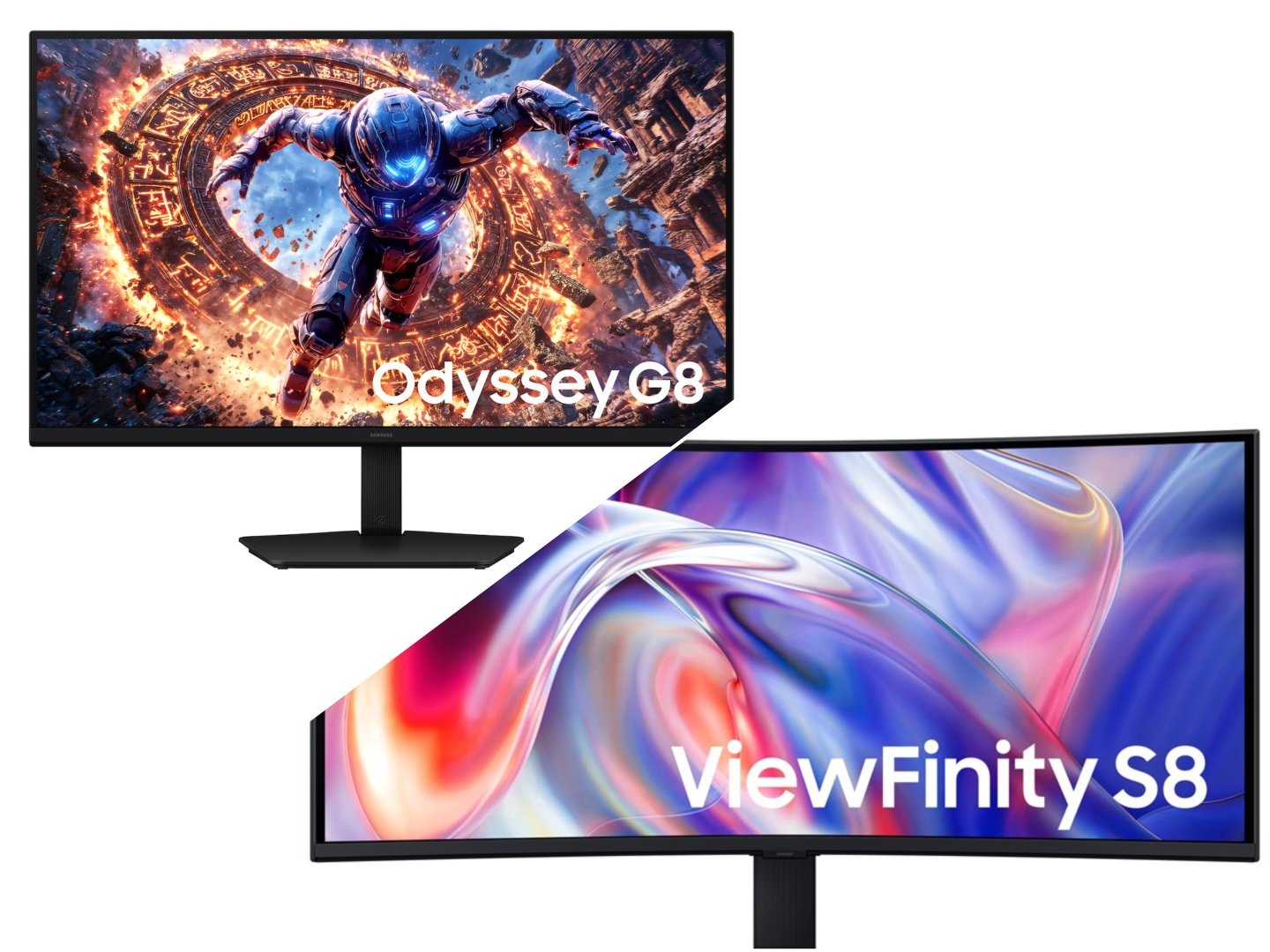
Samsung has rolled out a six‑model refresh of its Odyssey, ViewFinity and Movingstyle families. The headline is the Odyssey G8 (G80HS) – a 32‑inch IPS panel that reaches a true 6K resolution (6,144 × 3,456) and 165 Hz. Samsung calls it the first 6K gaming monitor on the market. A built‑in Dual Mode lets the display drop to 3K (3,072 × 1,728) and double the refresh rate to 330 Hz for ultra‑fast competitive play.
Other highlights:
- Odyssey G7 (G80HF) – 27‑inch 5K (5,120 × 2,880) panel, 180 Hz native, 360 Hz at QHD (2,560 × 1,440).
- Odyssey OLED G7 (G73SH) – 32‑inch 4K OLED, 165 Hz (330 Hz at Full‑HD), 0.03 ms GTG, 1,300 nits peak, VESA DisplayHDR True Black 400.
- Odyssey OLED G8 (G80SH) – 27‑ and 32‑inch 4K OLED, 240 Hz, 1,000 nits peak, HDR10+ Gaming, FreeSync Premium Pro.
- ViewFinity S8 S85TH – 40‑inch curved VA, 5K2K (5,120 × 2,160), 144 Hz, Thunderbolt 5 (80 Gbps, 140 W PD), KVM switch.
- ViewFinity S8 S80HF – 27‑inch flat VA, 5K (5,120 × 2,880), 60 Hz, no Thunderbolt.
- Movingstyle Essential – 43‑inch 4K panel with a fully articulating stand; details are sparse.
How it compares to the previous generation and rivals
| Model | Resolution | Refresh (native/low‑res) | Panel | Brightness (peak) | Adaptive sync | Notable extras |
|---|---|---|---|---|---|---|
| Odyssey G8 (6K) | 6,144 × 3,456 | 165 Hz / 330 Hz (3K) | IPS | 400 nits | G‑Sync, FreeSync Premium | First 6K gaming monitor |
| Odyssey G7 (5K) | 5,120 × 2,880 | 180 Hz / 360 Hz (QHD) | IPS | 400 nits | G‑Sync, FreeSync Premium | Same chassis as G8, smaller screen |
| OLED G7 | 3,840 × 2,160 | 165 Hz / 330 Hz (Full‑HD) | OLED | 1,300 nits | FreeSync Premium | 0.03 ms response, True Black 400 |
| OLED G8 | 3,840 × 2,160 | 240 Hz (native) | OLED | 1,000 nits | FreeSync Premium Pro | No G‑Sync, higher refresh |
| ViewFinity S85TH | 5,120 × 2,160 | 144 Hz | VA | 350 nits | FreeSync Premium | Thunderbolt 5, 80 Gbps, 140 W PD, KVM |
| ViewFinity S80HF | 5,120 × 2,880 | 60 Hz | VA | 350 nits | FreeSync Premium | Simpler connectivity |
Compared with the 2024 Odyssey G9 (49‑inch, 5120 × 1440, 240 Hz), the new G8 trades sheer size for pixel density. At 224 ppi the 6K panel rivals a 27‑inch 4K display while still offering a 32‑inch gaming field. Competing 6K options from Dell (UltraSharp UP3224Q) target creators rather than gamers; they lack high refresh rates and adaptive‑sync support. Samsung’s Dual Mode is a practical compromise – you keep the 6K workspace for content creation, then switch to 3K for competitive titles that demand >300 Hz.
The OLED G7’s 1,300 nits claim exceeds most consumer OLEDs (LG’s UltraGear 27GN950 reaches ~600 nits). If the spec holds, HDR highlights will be dramatically brighter than typical LCD HDR10 displays. However, the lack of G‑Sync may limit its appeal to Nvidia‑centric e‑sports rigs.
ViewFinity’s Thunderbolt 5 is a step ahead of the Thunderbolt 4 ports still common in 2025 monitors. 80 Gbps bandwidth supports dual‑4K@144 Hz streams or a single 8K@60 Hz signal, making the S85TH a strong candidate for workstation‑plus‑gaming hybrids.
Who should consider each model
- Competitive FPS/RTS players – The 3K/330 Hz mode on the Odyssey G8 and the 360 Hz QHD mode on the G7 give the highest frame‑rate headroom. Pair with a high‑refresh GPU (RTX 4090 or Radeon 7900 XTX) to fully exploit the bandwidth.
- Content creators who also game – The native 6K canvas on the G8 provides a workstation‑grade workspace without sacrificing a 165 Hz gaming experience. HDR‑10+ support helps when grading video.
- OLED enthusiasts and dark‑room gamers – The OLED G7’s near‑instant response and deep blacks are ideal for titles that benefit from high contrast, such as horror or atmospheric RPGs.
- Professional users needing fast data transfer – The ViewFinity S85TH’s Thunderbolt 5 port lets you dock a laptop, charge it at 140 W, and switch between a 4K monitor and a 5K2K display without extra cables. The built‑in KVM switch simplifies multi‑PC setups.
- Budget‑conscious gamers – The 27‑inch G7 (5K) still offers a respectable 180 Hz at native resolution and a lower price point than the 6K G8, making it a solid entry‑level high‑refresh option.
- Office or home‑theater users – The Movingstyle Essential’s 43‑inch 4K panel provides a large, adjustable screen for video calls, streaming, and light gaming, though its performance specs remain to be confirmed.
Pricing and availability
Samsung has announced that the Odyssey G8, G7 and ViewFinity S8 models are already shipping in select regions, but U.S. listings have not been updated at the time of writing. No official MSRP has been disclosed, and the Movingstyle Essential is slated for a later release. Expect pricing to align with premium gaming monitors – roughly $1,200 – $1,600 for the 6K G8, $900 – $1,100 for the 5K G7, and $800 – $1,000 for the OLED G7, based on historical Samsung pricing trends.
Sources: Samsung press release, product spec sheets, Notebookcheck testing previews.
Comments
Please log in or register to join the discussion