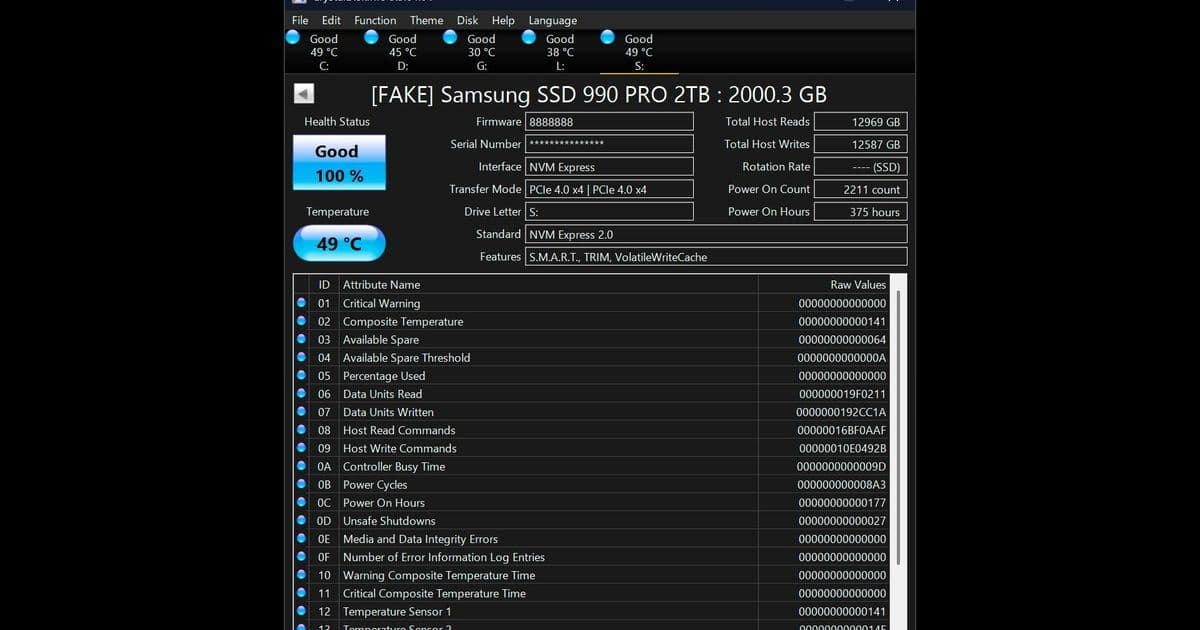
Tom's Hardware reports that CrystalDiskInfo v9.9.0 now flags fake Samsung SSDs by checking firmware signatures and PCI Vendor IDs, a response to a surge in counterfeit drives fueled by AI‑generated supply‑chain pressure.
Samsung SSD counterfeits trigger new detection feature in CrystalDiskInfo
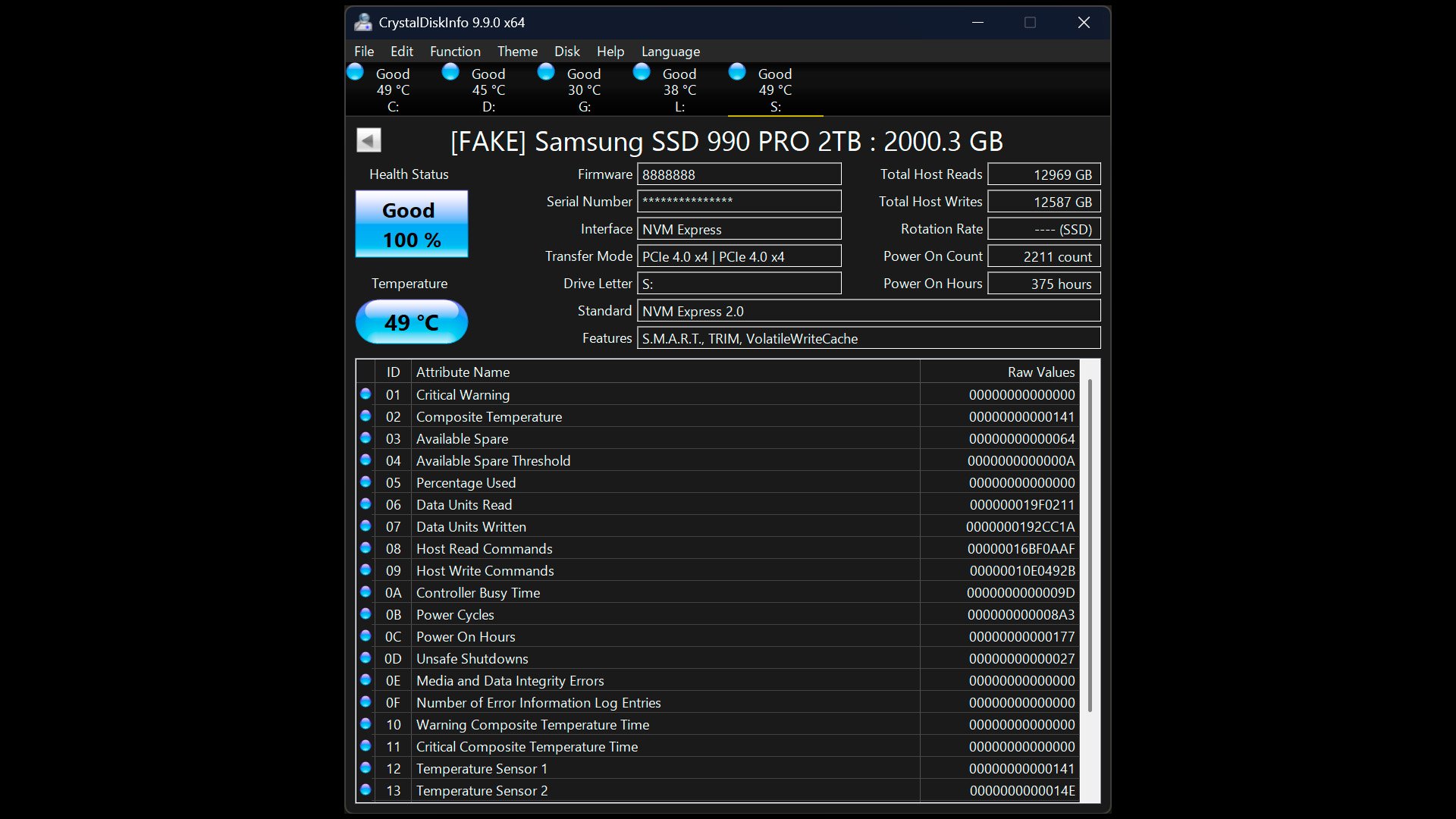
The latest release of CrystalDiskInfo (v9.9.0) introduces a [FAKE] label that appears in the drive list when a Samsung SSD fails authenticity checks. Noriyuki "hiyohiyo" Miyazaki, the project's maintainer, explained that the feature relies on cross‑referencing S.M.A.R.T. data, firmware version strings, and the PCI Vendor ID of the storage controller. In a test run with ITG Marketing, the tool instantly flagged a cloned Samsung 990 Pro whose controller reported a Vendor ID belonging to Maxio and a bogus firmware version of 8888888.
How the detection works
- PCI Vendor ID verification – Genuine Samsung SSDs use Samsung’s vendor ID (0x144D). Counterfeit drives often reuse cheap controllers from JMicron, Maxio, or Phison, whose IDs are publicly listed. Changing this ID requires flashing the controller’s firmware, a step most counterfeit operations skip.
- Firmware fingerprinting – The software maintains a small database of known Samsung firmware signatures (e.g.,
MZ7OA0B0). When the reported version deviates from any entry, CrystalDiskInfo marks the drive as suspect. - S.M.A.R.T. attribute sanity checks – Attributes such as Power‑On Hours or Temperature that exceed realistic limits trigger a secondary warning, helping to catch drives that masquerade with correct IDs but contain fabricated health data.
The detection routine is updated via the program’s built‑in updater, meaning users must keep the utility current to benefit from the latest counterfeit signatures.
Why counterfeit Samsung SSDs are proliferating now
- AI‑driven demand spikes – Large‑scale AI training clusters are consuming memory and storage at a rate 3‑4× higher than in 2022. The resulting supply crunch has pushed prices for genuine NVMe drives above $250 for a 2 TB model, creating a lucrative margin for counterfeiters.
- Supply‑chain opacity – With major fab lines like TSMC and Samsung operating near capacity, secondary markets receive less transparent inventory. Fraudsters exploit this opacity by re‑branding generic drives with Samsung stickers.
- Reduced verification tools – Samsung’s own Magician utility is bundled only with drives purchased through official channels, leaving end‑users without a reliable third‑party check.
Market implications
| Metric | Current (Q2 2026) | Expected (Q4 2026) |
|---|---|---|
| Average price for 2 TB Samsung PCIe 4.0 SSD | $248 | $210 (after supply stabilises) |
| Counterfeit detection rate (CrystalDiskInfo field reports) | 1.2 % of scans | 2.5 % (as database expands) |
| Estimated counterfeit volume in North America | 3 million units | 4.5 million units |
The rise in flagged units suggests that counterfeit activity could double before the end of the year if supply constraints persist. Retailers that rely on third‑party verification may see higher return rates, while OEMs could face warranty claims for drives that were never genuine.
What users should do
- Install the latest CrystalDiskInfo – Download from the official site.
- Run a scan after each firmware update – The tool re‑evaluates the Vendor ID and firmware hash each time the drive is re‑enumerated.
- Report false positives – Export the scan log (Menu → Export → Text) and submit it via the project's GitHub issues page. Community contributions accelerate the signature database.
- Prefer verified channels – Purchase Samsung SSDs directly from Samsung, authorized distributors, or reputable retailers that provide serial‑number verification.
Looking ahead
Miyazaki hinted at a future version that will incorporate machine‑learning models trained on thousands of legitimate and counterfeit firmware dumps. If successful, the tool could flag anomalies in real time without needing a static signature list, narrowing the window for new counterfeit variants.
For now, CrystalDiskInfo’s [FAKE] label offers a practical, free method for end‑users to protect their systems against a market distortion that is directly tied to the AI‑driven storage shortage.
Tom's Hardware continues to monitor the counterfeit SSD market and will update the community as supply conditions evolve.
Comments
Please log in or register to join the discussion