Kojima’s latest comments make his AI position more practical than absolutist: machines can clean up production work, but they do not get the director’s chair.
What's new
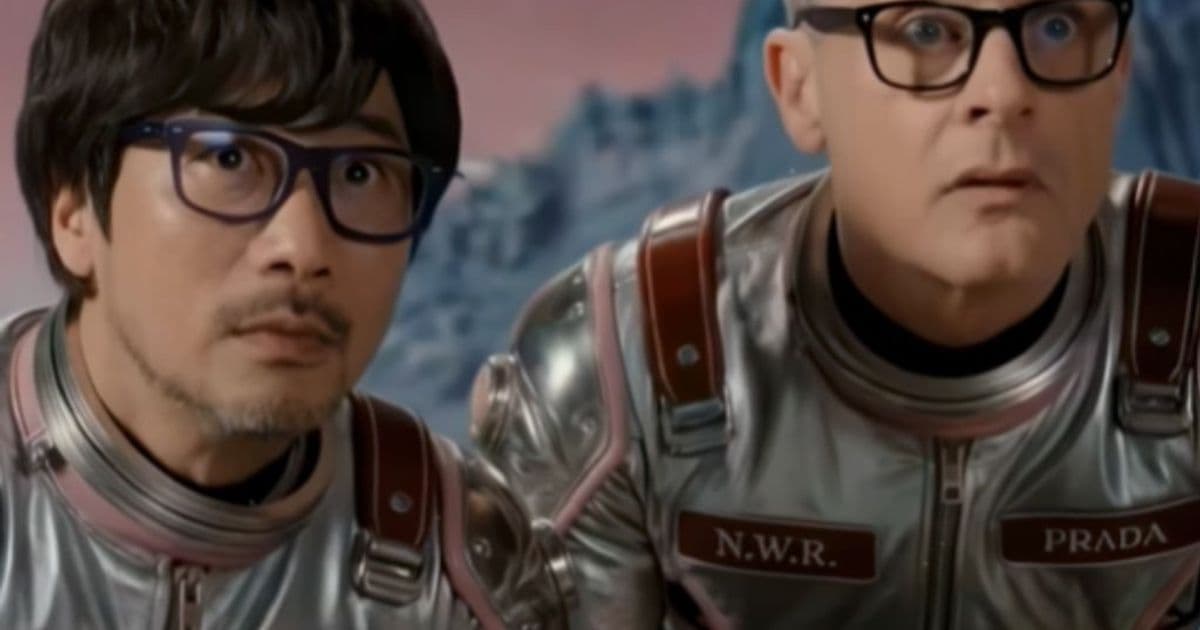
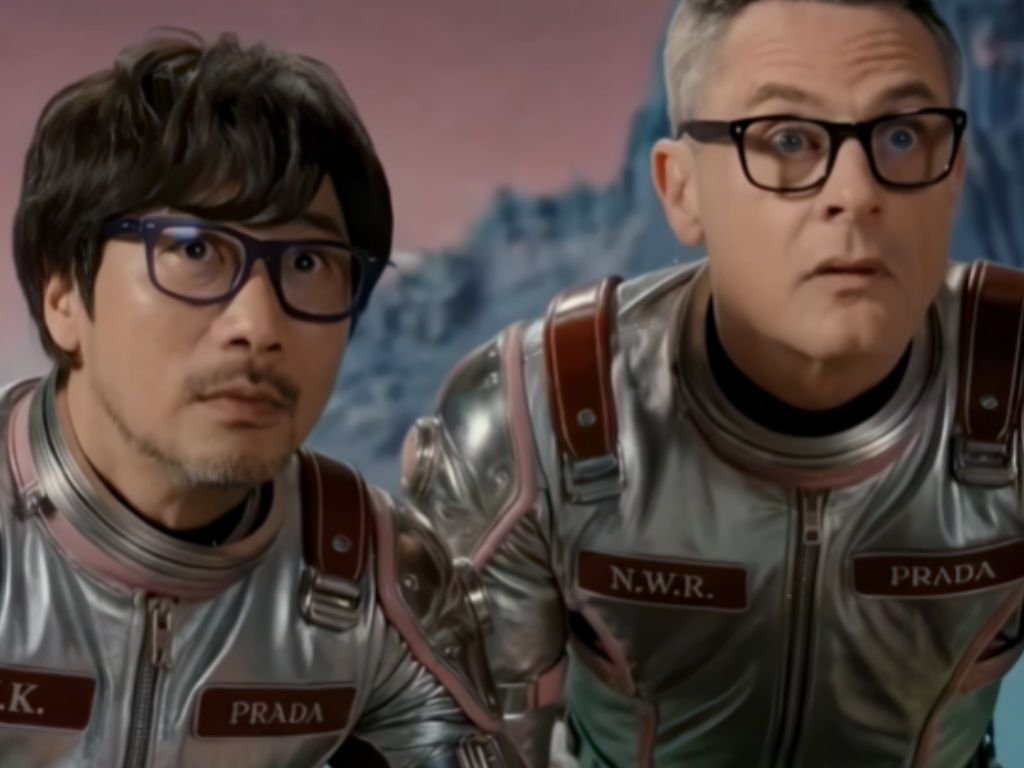
Hideo Kojima has sharpened his public stance on generative AI after appearing in an AI-generated Prada promotional short with Nicolas Winding Refn, a campaign that drew heavy criticism from game fans and AI skeptics. Speaking in a Washington Post interview cited by Notebookcheck, Kojima said he does not expect AI to create what he considers real art within his lifetime. His core distinction is simple: AI can help with chores, but the human creator still has to make the work.
That matters because Kojima is not a passive commentator on this subject. Kojima Productions is currently attached to several technically ambitious projects, including Death Stranding 2: On the Beach, the Xbox-backed horror project OD, and the PlayStation action-espionage project Physint. Those games sit exactly where the AI debate is hottest: performance capture, facial scanning, voice work, procedural systems, concept art, localization, QA, and huge content pipelines.
The useful buyer-facing takeaway is that Kojima is not promising AI-free development. He is drawing a line around authorship. Earlier comments from him suggested interest in AI for control systems, efficiency, and non-visual production tasks. This newer statement narrows the interpretation: do not expect Kojima Productions to treat generative AI artwork, character design, or story output as a replacement for human creative direction.
The spec sheet, if we treat this like a product announcement, looks like this. Creative role: human-led. AI role: workflow assistant. Target use cases: repetitive production work, control systems, player-response logic, and possibly tools that shorten development time. Excluded role, at least under Kojima’s current position: final artistic authorship. Release impact: no confirmed change to OD, Physint, or Death Stranding 2 content plans. Pricing impact: none announced. Death Stranding 2 is listed by PlayStation at $69.99 for the standard edition and $79.99 for the Digital Deluxe Edition, while OD and Physint still lack public pricing.
How it compares
Compared with Kojima’s earlier AI comments, this is less enthusiastic and more specific. Previously, he sounded open to AI as a development companion, especially for tedious tasks and systems work. That could mean anything from automated test coverage to animation cleanup to adaptive enemy behavior. Now he is making the boundary more visible: AI can be useful, but it does not replace lived experience, taste, contradiction, memory, or intent.
That distinction lines up with how game development already uses machine learning without turning the finished work into AI-generated content. Upscaling tech, animation interpolation, procedural placement, automated bug detection, telemetry analysis, and adaptive difficulty are all tool-layer uses. They can make a game easier to build or tune without deciding what the game means. Generative AI art, synthetic performances, and automated scriptwriting are different because they move closer to the expressive layer players actually judge.
The Prada short likely forced that distinction into public view. A digital Kojima and Refn traveling through space sounds on paper like something that might fit Kojima’s taste for surreal imagery. In execution, the backlash showed the risk of AI video around recognizable creators: the audience does not only judge novelty, it judges intent, craft, and whether the work feels earned. For a creator whose reputation rests on obsessive authorship, a flat AI promo can read less like experimentation and more like brand dilution.
Compared with competitors, Kojima’s stance is more conservative than studios openly pitching generative AI as a content multiplier, but less absolutist than creators who reject all AI use. That middle position is probably where many high-end studios will land. The economics are obvious. AAA games are expensive, slow, and filled with repetitive labor. AI tools that reduce time spent tagging assets, cleaning mocap data, generating placeholder text, or stress-testing quests are attractive. The risk is equally obvious. Once AI starts replacing concept artists, writers, actors, or level designers at the point of creative decision-making, the studio inherits legal, ethical, and quality-control problems.
Death Stranding 2 is a good comparison point because its appeal is not just technical polish. It is Kojima’s arrangement of strange systems, film actors, terrain traversal, social multiplayer, music, and uncomfortable pacing. The official PlayStation page lists PS5, PS5 Pro Enhanced, and PC support, plus features like 21:9 ultrawide support in the March 2026 update. Those are measurable specs. The harder spec is authorship. Players buy a Kojima game expecting the odd decisions to come from Kojima and his team, not from a model averaging past media.
OD complicates the comparison further. Kojima Productions says OD is being built with Xbox Game Studios and cloud gaming technology, with Jordan Peele involved and a cast that includes Sophia Lillis, Hunter Schafer, and Udo Kier. Horror is a genre where timing, discomfort, silence, and expectation matter more than raw asset volume. AI could help test player reactions or vary control behavior, but if it produces the scares directly, the result risks feeling interchangeable. Kojima’s comments suggest he understands that distinction.
Physint, meanwhile, is even more sensitive to this debate because it is positioned as a return to action-espionage, the genre most associated with Kojima’s authorship. If the project is still years out, the AI tooling available by release will be far stronger than what exists now. That does not mean the game will use AI-generated art. It means Kojima Productions will have to decide which tools improve production without weakening the signature that makes a Kojima project commercially valuable.
Who it's for
For players, the practical read is straightforward. If you were worried that Kojima’s future games would be filled with AI-generated character art, AI-written dialogue, or synthetic performances standing in for actors, his latest comments reduce that concern. They do not eliminate every possible AI use, and they should not be read as a technical ban. They do indicate that the studio’s creative center is still human.
For developers, this is a useful model because it separates pipeline acceleration from creative substitution. AI as a janitor for creative chores is not a throwaway phrase. It describes a sensible production hierarchy. Let tools sort, search, clean, prototype, flag, and accelerate. Keep taste, final selection, performance, writing, world rules, and emotional pacing under human control. That is not anti-technology. It is a quality-control position.
For buyers choosing whether to follow OD, Physint, or Death Stranding 2, the strongest signal remains the same as with hardware: look at the final implementation, not the label on the box. AI-assisted development can still produce handmade-feeling work if the tool stays behind the bench. AI-generated creative output can also look cheap even when the render quality is high. The Prada short is a useful warning because its problem was not resolution or compute. Its problem was trust.
The bigger pattern is that AI in games is splitting into two categories. The first category is invisible infrastructure: smarter workflows, better testing, faster localization drafts, cleaner animation data, and more responsive systems. The second category is visible authorship: art, voice, story, characters, trailers, and marketing. Kojima appears open to the first and skeptical of the second. That is the same distinction many players are already making, even if they do not describe it in production terms.
My read, after treating this like a product under test, is that Kojima’s position is not anti-AI. It is anti-outsourcing the soul of the work. The hardware-reviewer version would be: the tool can improve throughput, but it does not get credit for the benchmark if the human operator is still doing the tuning. For Kojima Productions, that tuning is the product.
Comments
Please log in or register to join the discussion