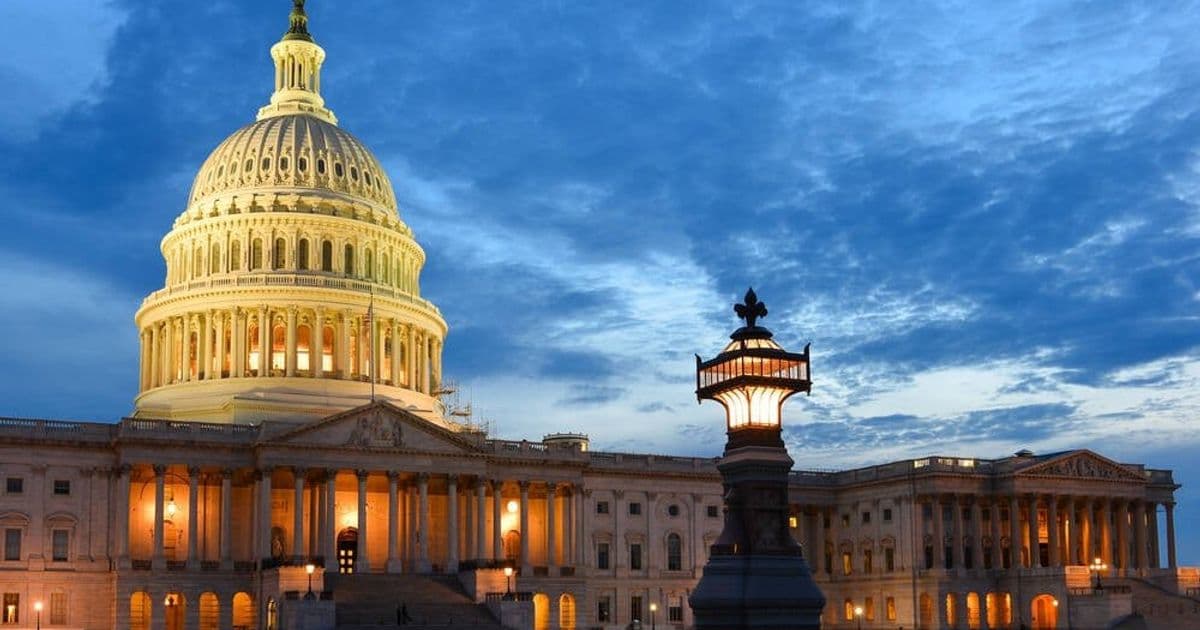
A Republican-led bill seeking congressional review of AI chip exports to adversary nations has cleared a key House committee, setting up a potential showdown with the Trump administration's recent decision to allow Nvidia H200 GPU sales to China.
The House Foreign Affairs Committee voted overwhelmingly on Wednesday to advance the "AI Overwatch Act" to the full House of Representatives, marking a significant step in legislative efforts to establish congressional oversight over the export of advanced artificial intelligence chips to China and other countries of concern.
Introduced by Rep. Brian Mast (R-FL) in December, the bill would require the House Foreign Affairs Committee and the Senate Banking Committee to review and potentially block exports of sensitive AI hardware to adversary nations. The committees would have at least 30 days to conduct this review before any export license could be finalized.
Legislative Context and Motivation
The bill's advancement comes in direct response to President Trump's recent decision to approve the sale of Nvidia's H200 GPUs to China. This move has created unusual friction within Republican ranks, with several lawmakers expressing concern that the administration's trade policy may be undermining long-term U.S. technological competitiveness.
During Wednesday's committee meeting, Rep. Mast framed the legislation as extending existing military oversight protocols to modern AI hardware. "When the United States considers selling a C-130 or a fighter jet, or an engine that goes on one of those airframes, or ordnance that goes on the wing of a jet, or the avionics that go in a cockpit, or anything that has military use, it goes through a process known as the foreign military sales process," Mast explained. "If we were just talking about war games on Xbox, then Jensen Huang can sell as many chips as he wants to anybody that he wants, and I should have absolutely no business having a say about whether he wants to do that. But this is not about kids playing Halo on their television."
Bipartisan Concerns Over China's AI Development
The concerns extend beyond Mast's committee. Rep. John Moolenaar (R-MI), Chair of the House Select Committee on China, has also voiced strong reservations about the H200 export deal. In a letter to Commerce Secretary Howard Lutnick last month, Moolenaar cited reports showing that China still trails American chip designs despite advancements in rack-scale architectures.
Specifically, Moolenaar referenced Huawei's CloudMatrix-384 system, which represents China's attempt to build competitive AI infrastructure. "I am fully committed to advancing President Trump's vision for enduring U.S. AI dominance," Moolenaar wrote. "I have serious concerns that granting China access to potentially millions of chips that are generations beyond its domestic capabilities will undermine those objectives."
The H200 export deal itself contains unusual terms, with sales contingent on the U.S. government receiving a 25 percent revenue share—a structure that has raised questions about the administration's motivations and the potential for conflicts of interest.
White House Response and Political Dynamics
The legislative push has attracted attention from senior White House officials. David Sacks, the White House AI advisor, recently endorsed a social media post suggesting the bill was orchestrated by "never Trumpers" with financial backing from Anthropic CEO Dario Amodei. Sacks' retweet of the speculation with the comment "Correct" indicates the administration views the legislation as politically motivated opposition to its trade policies.
Amodei has been vocal in advocating for stricter controls on AI accelerator exports to China. At the World Economic Forum in Davos this week, he drew a stark analogy, comparing H200 shipments to China with "giving nukes to North Korea." This perspective reflects growing concern within the AI industry that unrestricted exports could accelerate China's military AI capabilities.
Legislative Path Forward
Despite the committee's favorable recommendation, the AI Overwatch Act faces a challenging path to becoming law. The bill must pass both the House of Representatives and the Senate before reaching President Trump's desk. Given the administration's stated position on AI exports, the legislation would likely require a veto override to take effect—a high bar that demands substantial bipartisan support.
The bill's prospects may hinge on whether congressional Republicans maintain unity on trade policy or if the administration's economic arguments prove more persuasive than national security concerns. The 25 percent revenue share in the H200 deal could appeal to lawmakers focused on economic competitiveness, while the national security implications may drive others toward supporting export controls.
Broader Implications for AI Governance
The AI Overwatch Act represents a growing trend toward treating AI hardware as strategic national security assets rather than commercial products. This shift reflects the increasing recognition that advanced AI chips have dual-use applications—enabling both commercial innovation and military capabilities.
If passed, the legislation would establish a precedent for congressional oversight of AI technology exports, potentially affecting not just chip sales but also other AI-related technologies. The 30-day review period could create uncertainty for companies like Nvidia, which have historically operated with relatively streamlined export licensing processes.
The debate also highlights the tension between maintaining U.S. technological leadership through global market access and preventing adversaries from acquiring capabilities that could undermine that leadership. This balance will likely remain a central challenge in AI policy for years to come.
As the bill moves to the full House, stakeholders across industry, government, and academia will be watching closely. The outcome will signal whether Congress is willing to assert greater control over AI export policy or if the executive branch will maintain its current authority in this rapidly evolving domain.
Comments
Please log in or register to join the discussion