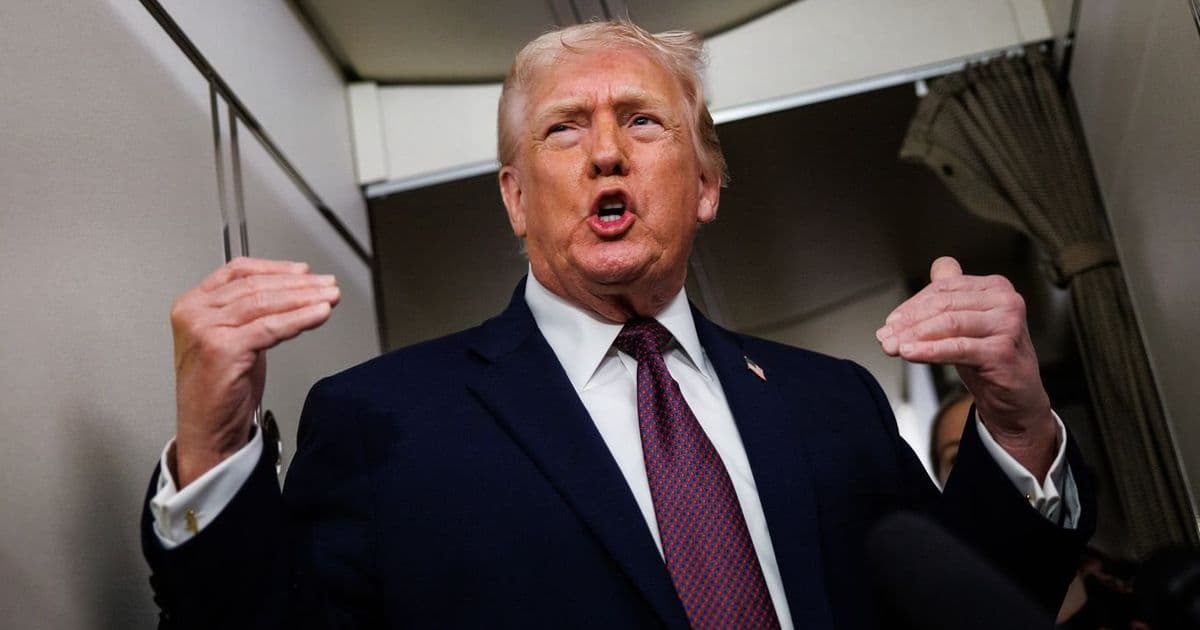
Rep. Andy Ogles introduces legislation to authorize President Trump's Greenland acquisition, framing it as a strategic investment in American security and economic future.
A House Republican introduced legislation on Tuesday that would formally authorize President Trump to negotiate the acquisition of Greenland, providing congressional backing for a controversial proposal that has gained renewed attention in recent weeks.
Rep. Andy Ogles (R-Tenn.) filed the bill titled "MAGA Act" which would designate Greenland as a territory of the United States and authorize the President to negotiate terms with Denmark. The legislation arrives as Trump has repeatedly expressed interest in purchasing the autonomous Danish territory, citing strategic military positioning and untapped natural resources.
Strategic Rationale and Economic Calculations
The bill frames Greenland acquisition as a national security imperative rather than real estate transaction. Greenland sits at a critical Arctic crossroads where warming temperatures are opening new shipping lanes and exposing vast mineral deposits. The island holds an estimated 6.2 billion barrels of oil reserves and 3.1 trillion cubic meters of natural gas according to the U.S. Geological Survey, plus rare earth minerals essential for electronics manufacturing and defense systems.
Military analysts note Greenland's Thule Air Base already houses critical early warning radar systems tracking potential missile threats. The island's position provides unmatched access to Arctic operations and control over the GIUK Gap—the strategic naval corridor between Greenland, Iceland, and the UK that has historically controlled access between the Atlantic and Arctic oceans.
Political and Diplomatic Hurdles
The proposal faces overwhelming obstacles. Denmark has repeatedly and unequivocally rejected any notion of selling Greenland, with Prime Minister Mette Frederiksen calling the idea "absurd" in 2019 when Trump first raised it. Greenland's government has also stated it is not for sale and that its people should determine their own future.
International law presents additional barriers. The United Nations Charter protects territorial integrity, and any forced acquisition would violate fundamental principles of sovereignty. Even a negotiated purchase would require approval from Greenland's 56,000 residents and the Danish parliament.
Congressional Dynamics
Ogles' bill currently has no co-sponsors and stands no chance of advancing in the current Congress. However, it signals how Trump's territorial ambitions have moved from campaign rhetoric to formal legislative proposals within his party.
The legislation includes a $1.5 trillion authorization for acquisition and development costs, though it provides no funding mechanism. It would also establish a commission to study Greenland's resource potential and integration into the U.S. economy.
Historical Context
The United States has previously attempted to acquire Greenland. In 1867, Secretary of State William Seward negotiated a purchase agreement that fell through. During World War II, the U.S. occupied Greenland to prevent Nazi Germany from using it as a base. The U.S. maintains a permanent military presence there through the Thule Air Base.
Trump revived the concept in 2019, calling it a "large real estate deal." The idea was dismissed by Danish and Greenlandic officials, leading Trump to cancel a state visit to Denmark. The renewed push comes as Arctic competition intensifies between the U.S., Russia, and China.
What This Means for U.S. Foreign Policy
While the bill itself is symbolic, it reflects a broader shift in how some Republicans view territorial expansion and resource acquisition. The proposal suggests a growing appetite among Trump allies for more aggressive pursuit of strategic assets abroad, potentially signaling future foreign policy approaches that prioritize economic and military positioning over traditional diplomatic norms.
The legislation also raises questions about congressional war powers and the President's authority to acquire new territory. Legal scholars note that while the Constitution gives Congress power to admit new states, the process for acquiring territory remains ambiguous and historically has involved both executive negotiation and congressional approval.
For tech and business interests, Greenland represents a potential treasure trove of rare earth elements critical for manufacturing semiconductors, batteries, and advanced electronics. China currently dominates rare earth processing, making alternative sources strategically valuable for U.S. supply chain security.
The bill's introduction serves as a marker for how Trump's second term priorities might translate into concrete legislative action, even on proposals that appear politically impossible today.
Comments
Please log in or register to join the discussion