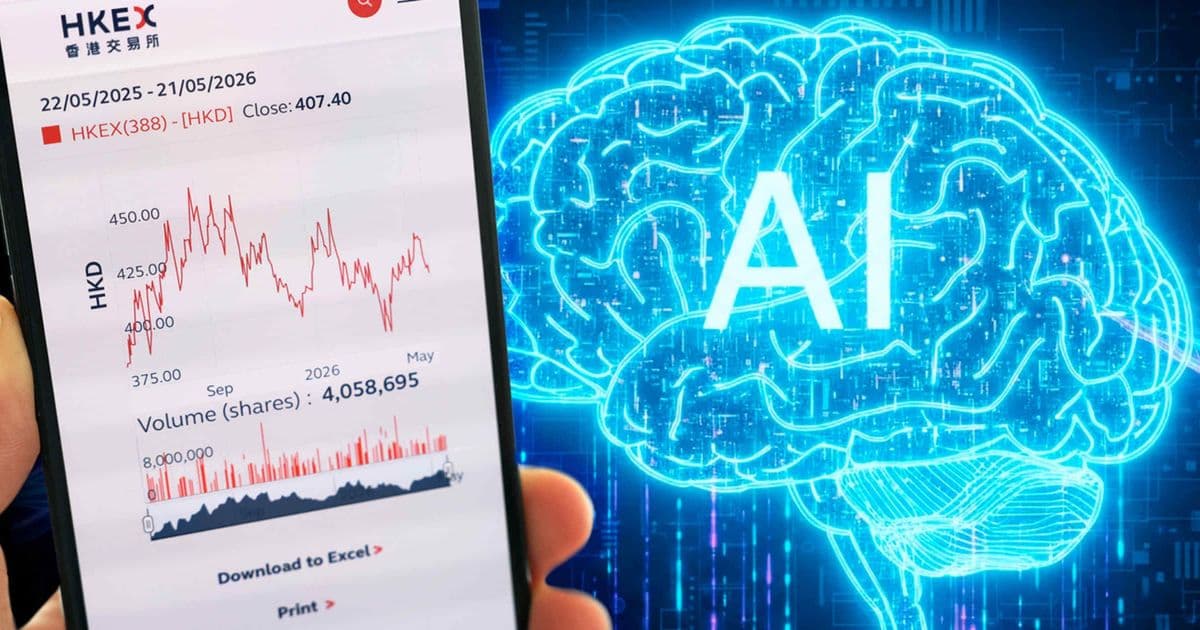
Artificial intelligence is transforming retail stock trading, democratizing access to sophisticated trading strategies while raising regulatory concerns about market stability and investor protection.
How AI is changing stock trades for retail investors
The financial landscape is undergoing a quiet revolution as artificial intelligence becomes increasingly accessible to retail investors. Once the exclusive domain of institutional players with massive computing resources and specialized teams, AI-powered trading strategies are now available to individual investors through user-friendly platforms and competitions that gamify the experience.
The Rise of AI Trading for Retail Investors
In April 2026, East Money, one of China's leading retail stock brokers, organized a virtual trading competition that exemplifies this trend. The event invited users to deploy an OpenClaw AI agent to manage a portfolio of stocks, with a 500 yuan ($73.5) prize attracting thousands of participants. While the prize amount may seem modest, the competition highlights how AI trading tools are being democratized and popularized among retail investors.
This development mirrors a broader pattern across Asian markets. According to industry data, AI-powered trading platforms targeting retail investors have seen a 300% increase in adoption over the past two years, with major brokerage firms in Japan, South Korea, and Singapore all launching similar initiatives. The market for AI trading tools is projected to reach $12.7 billion by 2028, with retail investors accounting for approximately 35% of this market.
How AI Trading Technologies Work
AI trading systems for retail investors typically combine machine learning algorithms with natural language processing to analyze vast amounts of data that would be impossible for humans to process manually. These systems identify patterns in market data, news sentiment, social media trends, and economic indicators to make trading decisions.
The OpenClaw AI agent mentioned in the East Money competition represents a sophisticated approach to retail trading. It likely employs reinforcement learning, a type of machine learning where algorithms learn through trial and error, optimizing their strategies based on past performance. This technology allows retail investors to deploy trading strategies that were previously only available to hedge funds and proprietary trading firms.
Other popular AI trading approaches include:
- Sentiment analysis of news and social media
- Pattern recognition in price movements
- High-frequency trading strategies adapted for retail accounts
- Portfolio optimization algorithms that rebalance based on market conditions
Benefits for Retail Investors
The democratization of AI trading offers several advantages for retail investors:
Leveling the playing field: Retail investors can now access sophisticated tools that were previously only available to institutional players with millions of dollars in resources.
Reduced emotional trading: AI systems execute trades based on algorithms rather than emotions, helping investors avoid common psychological pitfalls like fear and greed.
24/7 market monitoring: AI trading systems can monitor global markets continuously, identifying opportunities that human traders might miss.
Backtesting capabilities: Retail investors can test their strategies against historical data before risking real capital.
Lower costs: Many AI trading platforms operate on subscription models or take a percentage of profits, making them more accessible than traditional advisory services.
Risks and Challenges
Despite these benefits, AI trading for retail investors comes with significant risks:
Over-reliance on technology: Retail investors may become too dependent on AI systems without understanding the underlying strategies, leading to poor decision-making when systems fail or encounter unprecedented market conditions.
Model risk: AI models are trained on historical data and may not perform well in novel market environments or during periods of high volatility.
Data quality issues: AI systems are only as good as their data inputs. Poor quality or biased data can lead to suboptimal trading decisions.
Cybersecurity threats: AI trading platforms represent attractive targets for hackers seeking to manipulate markets or steal sensitive financial data.
Black box problem: Many sophisticated AI trading algorithms operate as "black boxes," making it difficult for users to understand exactly how decisions are made.
Regulatory Landscape and Concerns
The rapid proliferation of AI trading tools has prompted regulators across Asia to develop frameworks to monitor their use and mitigate potential risks. In Hong Kong, the Securities and Futures Commission (SFC) has issued guidance on algorithmic trading, emphasizing the need for proper risk management and testing procedures. Singapore's Monetary Authority (MAS) has established a regulatory sandbox for AI trading platforms to ensure they meet certain standards before being widely deployed.
Regulators are particularly concerned about:
Market stability: The potential for AI-driven trading systems to amplify market volatility through herding behavior or flash events.
Investor protection: Ensuring that retail investors understand the risks associated with AI trading and are not misled by unrealistic performance claims.
Market manipulation: The possibility of AI systems being used to manipulate markets through coordinated trading strategies.
Systemic risk: The interconnected nature of modern financial markets means that issues with AI trading systems could potentially cascade across the entire system.
Future Outlook
The integration of AI into retail trading is expected to accelerate, with several key developments on the horizon:
Improved explainability: AI systems that can explain their decision-making processes in understandable terms will become more prevalent, addressing the "black box" problem.
Personalized AI advisors: More sophisticated AI systems will be able to tailor trading strategies to individual risk profiles, investment goals, and time horizons.
Regulatory clarity: As regulators develop more specific frameworks for AI trading, compliance requirements will become clearer, potentially increasing institutional adoption.
Integration with traditional advisory services: Hybrid models combining human advisors with AI tools are likely to emerge, offering the best of both worlds.
Enhanced risk management: Future AI trading systems will incorporate more sophisticated risk management features to protect investors during market downturns.
Implications for the Financial Industry
The rise of AI-powered trading for retail investors has significant implications for the financial industry:
Brokerage firms: Traditional brokerages must either develop their own AI capabilities or partner with fintech companies to remain competitive.
Wealth management firms: AI tools are likely to disrupt traditional wealth management services, particularly for mass affluent clients.
Financial education: There will be an increased need for financial education focused on helping consumers understand and responsibly use AI trading tools.
Market structure: The proliferation of AI trading systems may lead to changes in market structure, potentially increasing liquidity but also raising concerns about stability.
Job market: While some traditional trading roles may be automated, new opportunities will emerge in AI development, data analysis, and system oversight.
Conclusion
The integration of artificial intelligence into retail stock trading represents a fundamental shift in how individual investors approach the markets. As demonstrated by initiatives like East Money's virtual trading competition, AI trading tools are becoming increasingly accessible to retail investors, offering sophisticated strategies that were once the exclusive domain of institutional players.
However, this democratization comes with significant challenges. Regulators are working to develop frameworks that protect investors while fostering innovation, and retail investors must carefully consider the risks before embracing AI trading tools. The future of retail investing will likely involve a hybrid approach, combining human judgment with AI capabilities to navigate the complexities of modern financial markets.
As the technology continues to evolve, the key will be finding the right balance between innovation and protection, ensuring that AI trading tools enhance rather than undermine the financial well-being of retail investors.
Comments
Please log in or register to join the discussion