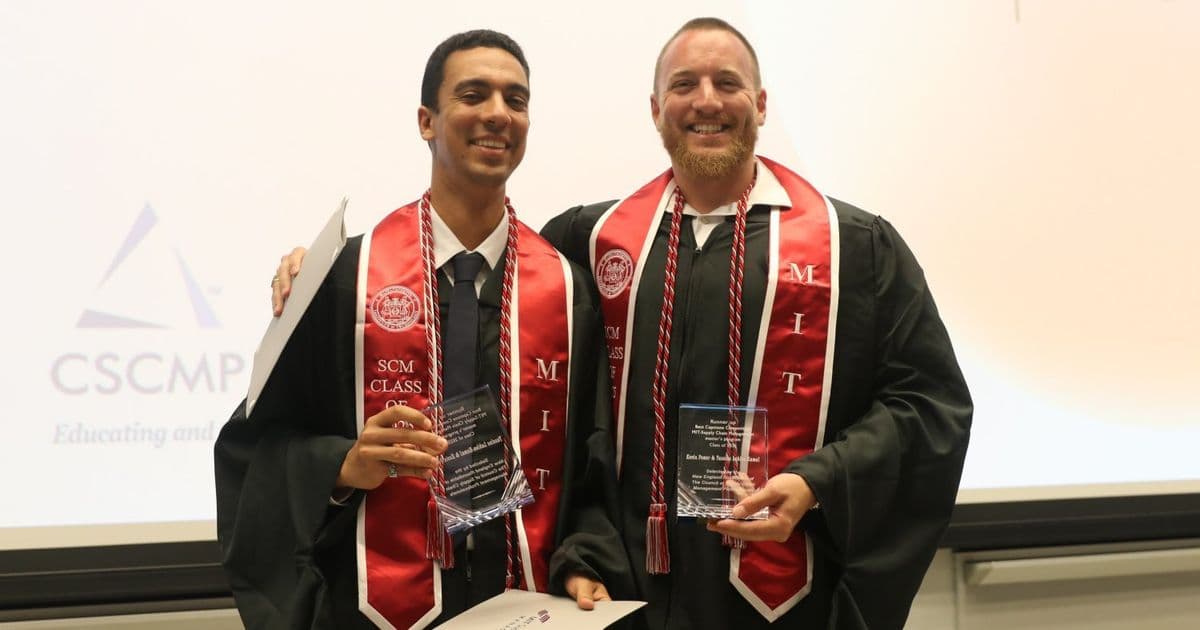
Kevin Power's journey from an oil refinery engineer to an MIT master's student illustrates how the MITx MicroMasters Program in Supply Chain Management serves as a gateway for professionals seeking to pivot into the field. His story highlights the program's unique blended model, combining flexible online learning with intensive on-campus research that directly translates to industry-ready skills.
Kevin Power never envisioned a career in supply chain management during his undergraduate years in manufacturing engineering. While working full-time at an oil refinery, his schedule was a demanding mix of shift work, long days, and evening classes. After graduation, he found himself searching for new learning opportunities and discovered the online courses of the MITx MicroMasters Program in Supply Chain Management, offered by the MIT Center for Transportation and Logistics.
Starting with Supply Chain Analytics (SC0x), Power was immediately struck by the direct applicability of the coursework to his professional work. "So many courses that you do are more theoretical," he reflects. "Everything I learned, I could apply it directly to my work and see the value in doing it." This practical relevance led him to complete the entire five-course MicroMasters track, earning a credential that opened an unexpected door: the MIT SCM Blended Master's Program.
The blended program represents a sophisticated educational model designed for working professionals. It pairs the online MicroMasters credential with a single intensive semester on MIT's campus, culminating in a Master of Applied Science in Supply Chain Management. For Power, this hybrid structure proved transformative. He describes the online portion as ideal for his introverted learning style, allowing for deep, self-paced study through textbooks and digital resources. However, the on-campus experience forced him to develop crucial soft skills.
"When I came to campus, it was more about networking and being able to communicate with executives, on top of our academic work," Power explains. The immersive environment deliberately combines scholarly rigor with real-world industry experience, creating a space where professionals from across the supply chain spectrum can collaborate and learn from each other.
During his residential semester, Power engaged in research that directly addressed contemporary industry challenges. His work included simulation modeling for port shipping operations—a technique he had never previously encountered but which he recognized as "huge in the industry." He also developed generative-AI-driven projects focused on supply chain resilience, applying cutting-edge technology to practical problems.
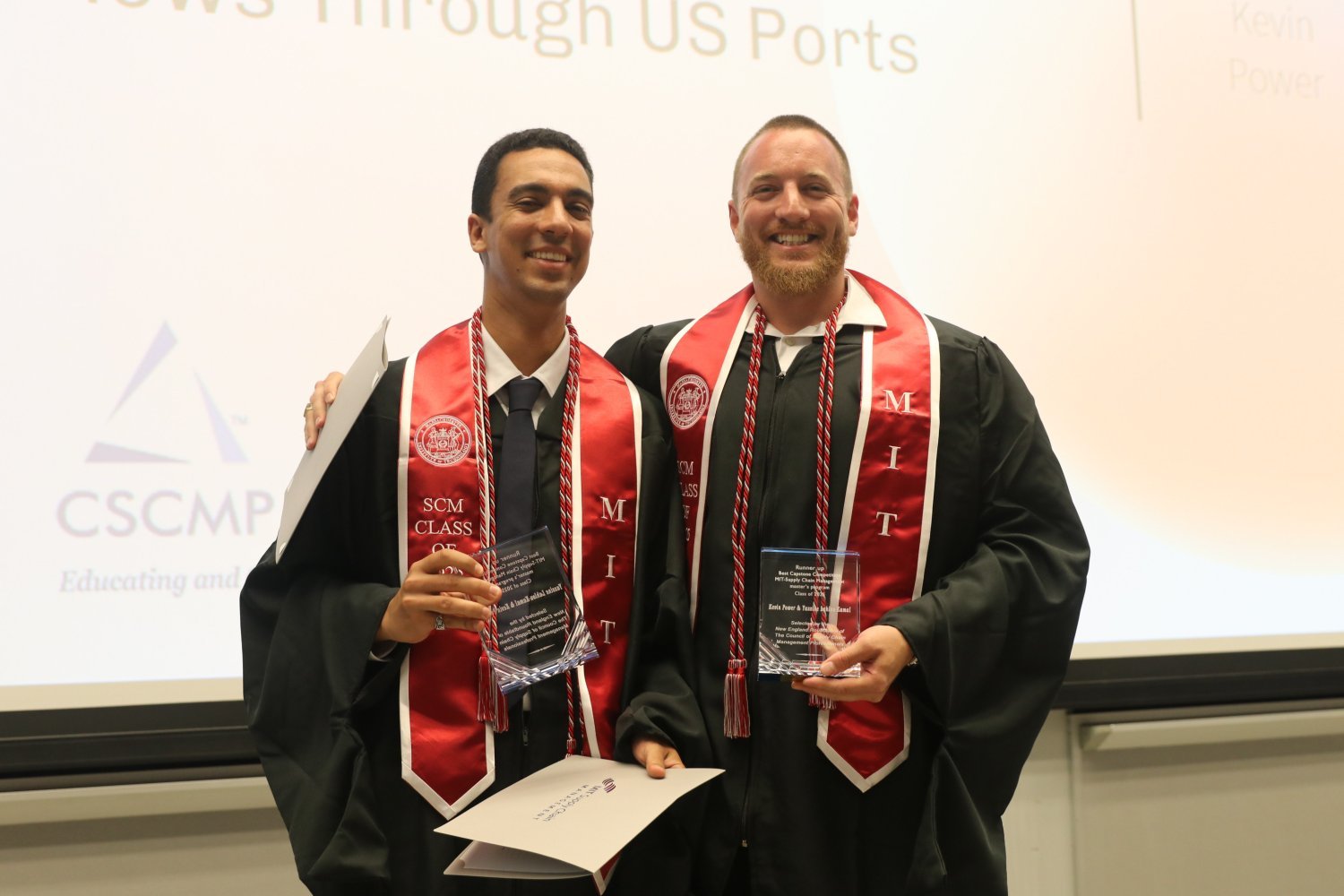
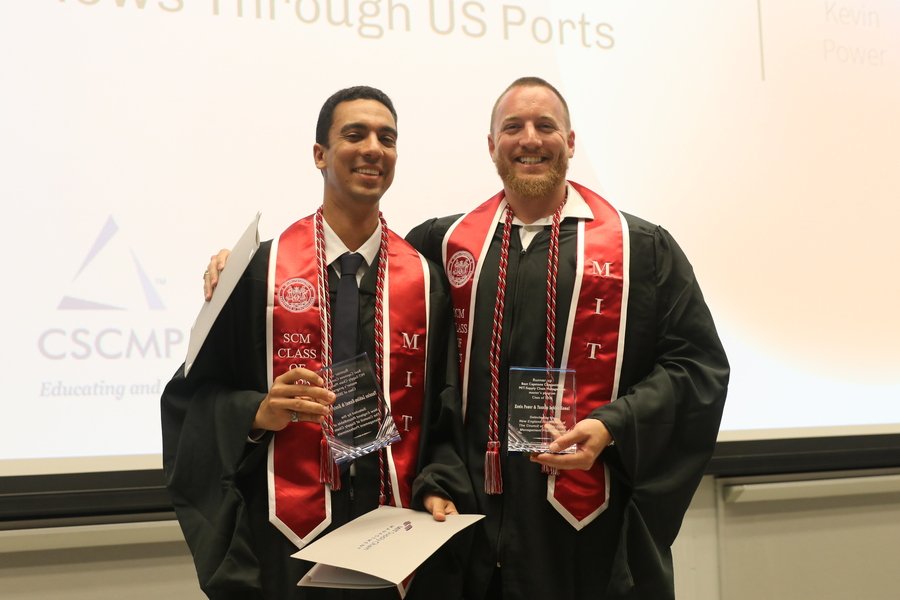
This research culminated in a project completed with fellow MIT SCM student Yassine Lahlou-Kamal, which won recognition at the 2025 Annual MIT Global SCALE Network Supply Chain Student Research Expo. The expo showcases industry-sponsored thesis and capstone projects, providing students with a platform to demonstrate their work to potential employers and industry partners. Power's project, like many others from the program, was directly informed by real industry needs and sponsored by companies seeking innovative solutions.
Beyond formal research, Power immersed himself in the competitive hackathon culture at MIT, despite having no prior experience. His first attempt was an internal MIT competition called Hack-Nation's Global AI Hackathon, where he won with an AI sports-betting agent project that combined model-driven analysis with web scraping techniques. This success gave him the confidence to tackle the OpenAI Red Teaming Challenge on Kaggle, a competition focused on identifying vulnerabilities in AI systems.
Despite joining the challenge halfway through its 15-day window, Power raced through the final week and was selected as one of the winners. "It gave me a lot of confidence… that the things I'm working on right now are cutting-edge, even in the eyes of OpenAI," he notes. The financial return was also substantial: "I'm getting so much value out of being here. Even from just doing the Kaggle competition, I won more than the cost of my full MIT degree."
The program's track record for career placement validates Power's experience. "As far as I know, everybody that was looking for a job in the supply chain program has one," he observes. This isn't anecdotal—the data confirms that every student from the MIT SCM residential program Class of 2025 secured employment within six months of graduation. This placement rate reflects the program's strong industry connections and the practical, research-driven skills students develop.
Power's journey didn't end with the SCM master's. He is now pursuing a second master's degree in the MIT Technology and Policy Program, exploring how technology intersects with public policy. His entrepreneurial aspirations have also taken shape: "I want to do a startup. A lot of the ideas came from research I've done here." The research experiences, industry connections, and technical skills he acquired have provided a foundation for future ventures.
Reflecting on his transformation in just ten months, Power calls it "crazy." From an engineer in an oil refinery to a researcher developing AI-driven supply chain solutions, his trajectory demonstrates the program's capacity to catalyze career pivots. "The SCM program really is amazing… I'd recommend it to anyone," he concludes.
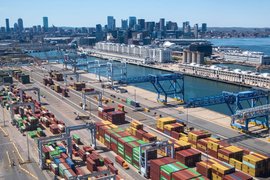
The MIT MicroMasters Program in Supply Chain Management, part of the MIT Center for Transportation and Logistics, represents a broader shift in graduate education for working professionals. The program's structure—combining rigorous online coursework with intensive residential research—addresses a critical need in supply chain management: the field requires both deep technical knowledge and the ability to navigate complex, interconnected systems involving multiple stakeholders, from port operators to AI developers.
For professionals like Power, the program offers a pathway to acquire these skills without leaving their careers. The online portion provides flexibility, while the residential semester creates an intensive environment for networking, collaborative research, and hands-on problem-solving. This model has proven particularly effective for fields like supply chain management, where theoretical knowledge must be immediately applicable to real-world logistics challenges.
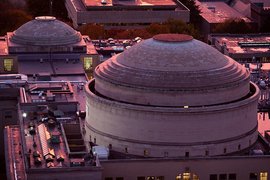
The success of this approach is reflected in the program's recognition. The MIT Global SCALE Network, which includes the SCM program, was named the No. 1 supply chain and logistics master's program for 2024-25. This ranking acknowledges not just academic rigor but also the program's effectiveness in preparing graduates for industry roles.
Power's story illustrates a larger trend in professional education: the blurring of boundaries between online and in-person learning, between academic research and industry application, and between traditional career paths and interdisciplinary innovation. His journey from manufacturing engineering to supply chain management, and now toward technology policy and entrepreneurship, shows how targeted educational programs can unlock new professional possibilities for lifelong learners.
The program's impact extends beyond individual career changes. By bringing professionals from diverse industries into MIT's research ecosystem, it creates a feedback loop where academic work is informed by real-world challenges, and industry practices are shaped by cutting-edge research. This symbiosis is particularly valuable in supply chain management, a field that has become increasingly complex due to globalization, technological disruption, and sustainability pressures.
For Kevin Power, the transformation has been profound. In less than a year, he went from applying for a program to exploring startup ideas born from his research. His experience demonstrates how the right educational model can accelerate professional growth, providing not just knowledge but also the confidence, network, and practical skills needed to navigate an evolving industry landscape.
Related Links:
Comments
Please log in or register to join the discussion