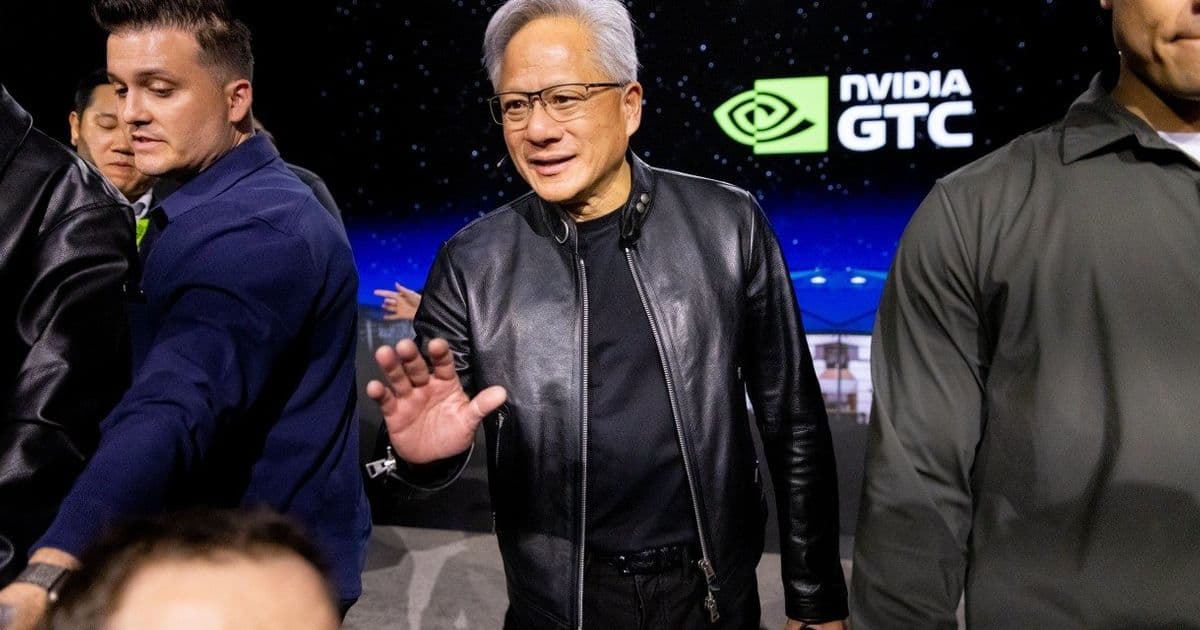
Nvidia has evolved from chipmaker to venture capitalist and strategic partner, investing billions in AI startups and helping customers afford its expensive hardware, fundamentally reshaping the AI industry's power dynamics.
Nvidia has transformed itself from a graphics chip manufacturer into Silicon Valley's most influential financier, investing billions in AI startups and strategically supporting customers who couldn't otherwise afford its expensive hardware. This evolution represents a fundamental shift in how the AI industry operates, with Nvidia now wielding power that extends far beyond its core business of selling GPUs.
The company's financial influence has grown so extensive that CEO Jensen Huang recently told guests at an opera performance, "This is what it is like to be rich!" The remark captured the lavish lifestyle that Nvidia's success has enabled, but it also hinted at the company's newfound role as a kingmaker in the AI ecosystem.
Nvidia's venture arm has deployed capital across hundreds of AI companies, creating a web of dependencies that ensures its chips remain the industry standard. The strategy works on multiple levels: direct investments create goodwill and lock-in, while financial support for customers helps them afford the very hardware Nvidia sells. It's a virtuous cycle for the company, though critics might call it a monopolistic moat.
The scale of Nvidia's financial commitments is staggering. The company has invested in everything from early-stage startups to established tech giants, with checks often reaching into the hundreds of millions. These aren't passive investments either—Nvidia typically provides technical support, preferential access to new chip designs, and sometimes even helps with go-to-market strategies.
This approach has created a unique dynamic in the AI industry. Startups that might have struggled to afford Nvidia's high-end GPUs can now access the hardware through financial arrangements that make the economics work. In return, these companies become dependent on Nvidia's ecosystem, using its software frameworks, development tools, and cloud partnerships.
The strategy extends to cloud providers and large enterprises as well. Nvidia has been known to offer creative financing terms to major customers, helping them manage the enormous capital expenditures required for AI infrastructure. This support can make the difference between a company proceeding with an AI initiative or abandoning it due to cost concerns.
What makes this particularly powerful is that Nvidia's investments often come with strings attached. Recipients frequently commit to using Nvidia hardware exclusively, adopting the company's software stack, and participating in joint marketing efforts. These arrangements create switching costs that make it difficult for customers to move to competing solutions, even if technically superior alternatives emerge.
The financial engineering behind these deals is sophisticated. Nvidia sometimes takes equity stakes that appreciate as its portfolio companies succeed, effectively subsidizing the cost of its own hardware. Other times, it structures deals where customers pay over time as they generate revenue from their AI applications. These arrangements reduce the upfront burden while ensuring long-term customer loyalty.
This model has proven especially effective in the current AI boom. As companies race to build ever-larger models and deploy AI applications at scale, the demand for Nvidia's specialized hardware has skyrocketed. By helping customers manage these costs, Nvidia ensures it captures a larger share of the market while its competitors struggle to gain traction.
The strategy also serves as a defensive moat against potential disruptors. By funding a broad ecosystem of AI companies, Nvidia reduces the risk that any single competitor could emerge to challenge its dominance. Even if a new chip architecture proves superior, the inertia of the existing ecosystem—built with Nvidia's financial support—makes it difficult to gain widespread adoption.
Critics argue that Nvidia's approach stifles competition and innovation. By controlling access to the hardware that powers modern AI, the company can effectively decide which companies succeed and which fail. This concentration of power in a single corporation raises concerns about market dynamics and the long-term health of the AI industry.
However, supporters point out that Nvidia's investments have accelerated the development of AI technology. Many groundbreaking applications might never have been built without the company's financial support and technical assistance. The ecosystem Nvidia has fostered has created thousands of jobs and generated billions in economic value.
The company's influence now extends into areas that seem far removed from its original chipmaking business. Nvidia funds research labs, sponsors academic conferences, and even supports creative projects that showcase AI capabilities. This broad engagement ensures that Nvidia remains at the center of conversations about AI's future, regardless of the specific technological direction the field takes.
As AI continues to transform industries from healthcare to finance to entertainment, Nvidia's role as both hardware provider and financial backer becomes increasingly significant. The company's ability to shape which applications get built, which companies survive, and which technologies gain traction gives it influence that rivals or exceeds that of traditional venture capital firms.
Looking ahead, Nvidia shows no signs of slowing its financial expansion. The company continues to identify new areas where its capital and expertise can create competitive advantages, from robotics to autonomous vehicles to scientific computing. Each new investment further entrenches Nvidia's position at the heart of the AI revolution.
What began as a strategy to support sales of graphics chips has evolved into a comprehensive approach to controlling the AI industry's future. By combining financial might with technical expertise, Nvidia has positioned itself not just as a supplier to the AI boom, but as one of its primary architects. In doing so, it has become arguably the most powerful company in technology today—not through market dominance alone, but through the strategic use of capital to shape an entire industry's trajectory.
This transformation represents a new model for tech industry leadership, where financial engineering and ecosystem building matter as much as technological innovation. Whether this concentration of power ultimately benefits or harms the AI industry remains to be seen, but one thing is clear: Nvidia's influence now extends far beyond the chips it manufactures, into the very fabric of how artificial intelligence develops and deploys.
Comments
Please log in or register to join the discussion