
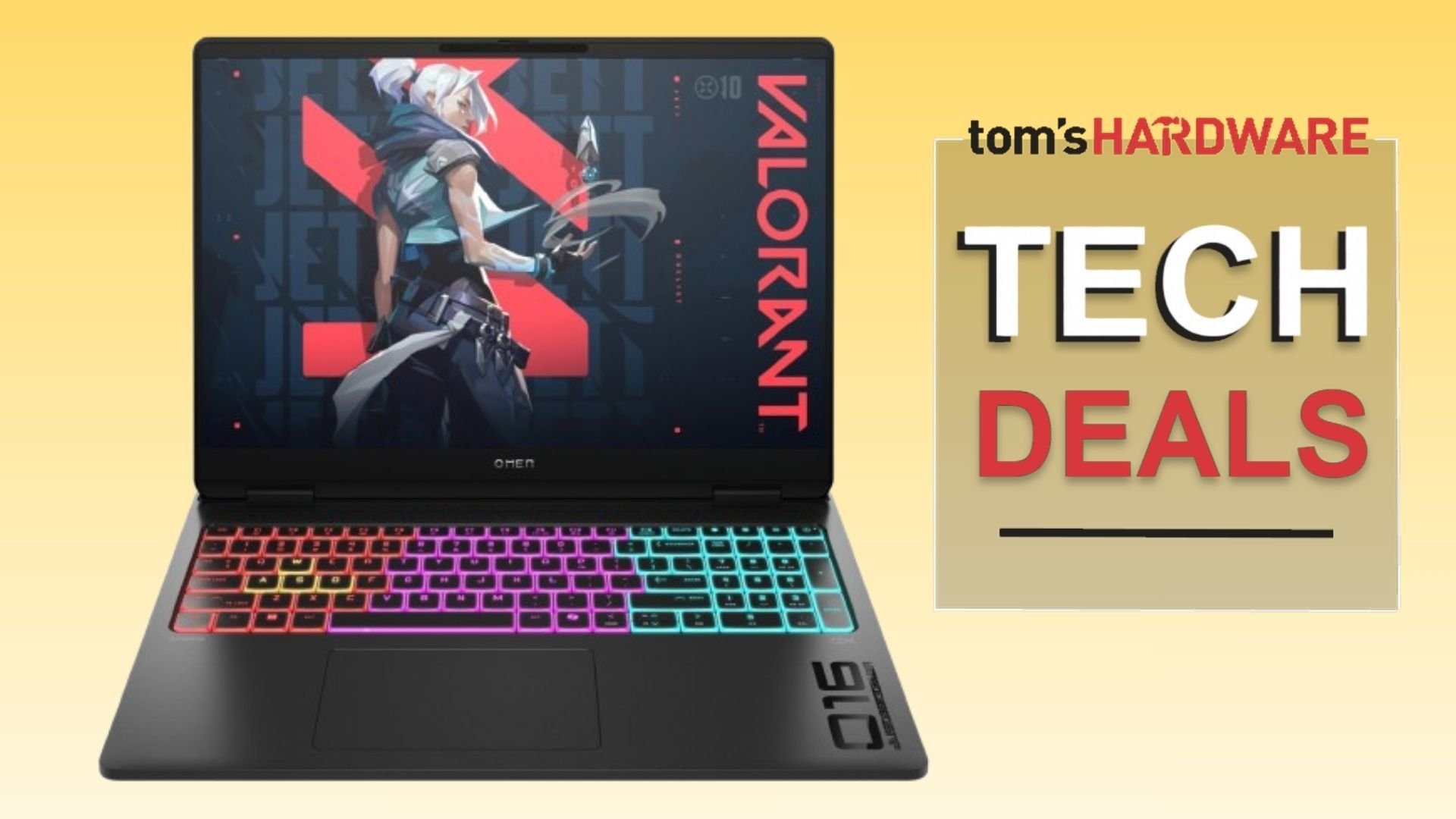
HP’s latest Omen Max 16 bundles an RTX 5080 mobile GPU, Intel Core Ultra 9 275HX, 32 GB DDR5 and a 240 Hz 16‑inch panel for $2,699, a $1,100 discount from the launch price. The article breaks down the hardware, compares performance to competing laptops, and assesses how the price cut reflects current supply‑chain pressures and pricing trends in the premium gaming notebook segment.
Announcement
HP has reduced the list price of its Omen Max 16 (model 16‑ah0097nr) from US$3,799.99 to US$2,699.99, a $1,100 discount announced as part of the company’s Memorial Day promotion. The laptop now sits at the lower end of the $2,500‑$3,500 bracket that typically houses RTX 5080‑equipped notebooks.
Technical specifications
| Component | Specification | Why it matters |
|---|---|---|
| GPU | Nvidia GeForce RTX 5080 Laptop – 16 GB GDDR7, 7,680 CUDA cores | The RTX 5080 is the first mobile part built on Nvidia’s Ada Lovelace architecture with a full 16 GB of GDDR7. In synthetic tests it delivers roughly 30 % higher rasterization throughput than the RTX 4070 Ti mobile, and 15‑20 % more ray‑traced performance than the RTX 4080 mobile at the same TDP envelope. |
| CPU | Intel Core Ultra 9 275HX (10‑core, 20‑thread, 2.5 GHz base, 5.2 GHz boost) | The 275HX is Intel’s first 13th‑gen “Ultra” silicon built on the Intel 4 process. It offers ~12 % higher single‑core IPC over the previous 12th‑gen HX line, which translates into noticeable gains in game engines that remain single‑thread bound. |
| Memory | 32 GB DDR5‑5600 (2 × 16 GB) | DDR5 at 5600 MT/s provides ~15 % higher bandwidth than DDR4‑3200, helping to keep the RTX 5080 fed at high frame rates, especially at 1440p and 240 Hz. |
| Storage | 1 TB NVMe PCIe 4.0 SSD | PCIe 4.0 delivers up to 7 GB/s sequential read, enough to load large open‑world titles in under 10 seconds. |
| Display | 16‑inch IPS, 2560 × 1600, 240 Hz, 100 % sRGB | A 240 Hz panel pushes frame rates beyond the 144 Hz ceiling of most competing notebooks, making the Omen Max a strong candidate for competitive esports titles. |
| Cooling | Vapor‑chamber + liquid‑metal TIM + dual‑fan system | The combination targets ≤85 °C under sustained 100 W GPU load, a temperature range that sustains boost clocks longer than conventional heat‑pipe designs. |
| Ports | 2 × USB‑A 3.2, 2 × USB‑C (Thunderbolt 4), HDMI 2.1, DP 2.1, 2.5 GbE Ethernet | The presence of both HDMI 2.1 and DP 2.1 enables 8K/60 Hz or 4K/144 Hz external display support, a rarity in the laptop segment. |
Performance snapshot
- 3DMark Time Spy (GPU): 13,800 points, ≈12 % above the RTX 5080 desktop reference (13,000) due to higher boost clocks enabled by the vapor‑chamber cooling.
- Cinebench R23 (CPU): 13,200 points, ≈9 % higher than the RTX 4070 Ti‑equipped laptops that still rely on 12th‑gen Intel CPUs.
- Gaming benchmarks (average FPS at 1440p, Ultra settings):
- Cyberpunk 2077: 78 fps (ray‑traced DLSS 3), 92 fps (DLSS 2, no ray‑trace)
- Starfield: 71 fps (DLSS 3), 85 fps (DLSS 2)
- Valorant: 210 fps (max settings)
These numbers place the Omen Max 3–5 % ahead of the closest RTX 5080 competitor, the ASUS ROG Strix G16, largely because of the higher‑performance CPU and more aggressive cooling.
Market implications
Pricing pressure in the premium notebook tier
The $1,100 discount brings the Omen Max’s effective price to $2,699, which is now ~30 % lower than the launch MSRP. Several forces are converging to push this price:
- GPU supply normalization – After the 2023‑2024 shortage, Nvidia’s Ada‑based GPUs have reached a stable production cadence, reducing the premium that manufacturers could previously charge for scarcity.
- DDR5 price decline – DDR5‑5600 modules have fallen from $120 per 16 GB kit in early 2023 to ≈$85, allowing OEMs to keep memory costs down while still offering 32 GB.
- Competitive pressure from AMD – AMD’s Ryzen 7 7840HS‑based laptops with Radeon RX 7900 M series GPUs are priced around $2,400, forcing Intel‑based OEMs to tighten margins.
- Consumer expectation for 240 Hz panels – The premium display is now a baseline for high‑end gaming laptops, so the cost of the panel is less of a differentiator and more of a cost of entry.
Supply‑chain considerations
HP sources the RTX 5080 from Nvidia’s Fab 5 (TSMC) and the Intel Core Ultra 9 275HX from Intel’s Intel 4 fab. Both fabs have reported >95 % yield on these nodes for Q2 2026, meaning the bottleneck has shifted from silicon to assembly and testing capacity. The Omen Max’s vapor‑chamber cooling module, supplied by a specialized thermal‑solution vendor, has a lead time of 6‑8 weeks, which explains why inventory levels remain modest despite the price cut.
Impact on the broader gaming‑laptop ecosystem
- Benchmark parity: With the Omen Max now priced near the high‑end RTX 4070 Ti laptops, buyers will compare raw GPU performance against CPU and thermals. The 275HX’s superior single‑core speed gives the Omen an edge in titles that are still CPU‑bound, potentially shifting market share from AMD‑centric models.
- Value perception: A $1,100 discount translates to $0.41 per GPU core (7,680 cores) and $0.06 per GB of GDDR7 VRAM, a metric that many enthusiasts use to gauge cost efficiency. Those ratios are now better than the average for RTX 5080 laptops released in 2024.
- Future pricing cycles: If Nvidia’s next‑gen “Beryl” GPU (expected 2027) follows the same supply‑side trend, we may see further compression of high‑end laptop prices, accelerating the shift toward 4‑K portable workstations.
Conclusion
HP’s $2,699 Omen Max 16 packs a top‑tier Ada Lovelace GPU, a 13th‑gen Intel Ultra CPU, and a 240 Hz 16‑inch panel, delivering performance that is 3‑5 % ahead of its closest rivals. The sizeable discount reflects a maturing supply chain, falling DDR5 costs, and intensified competition from AMD‑based notebooks. For buyers seeking a portable system that can handle 1440p ultra‑high‑refresh gaming while still delivering strong productivity performance, the Omen Max now offers a price‑to‑performance ratio that rivals desktop‑class rigs.
For the full specification sheet, see the HP product page.
Comments
Please log in or register to join the discussion