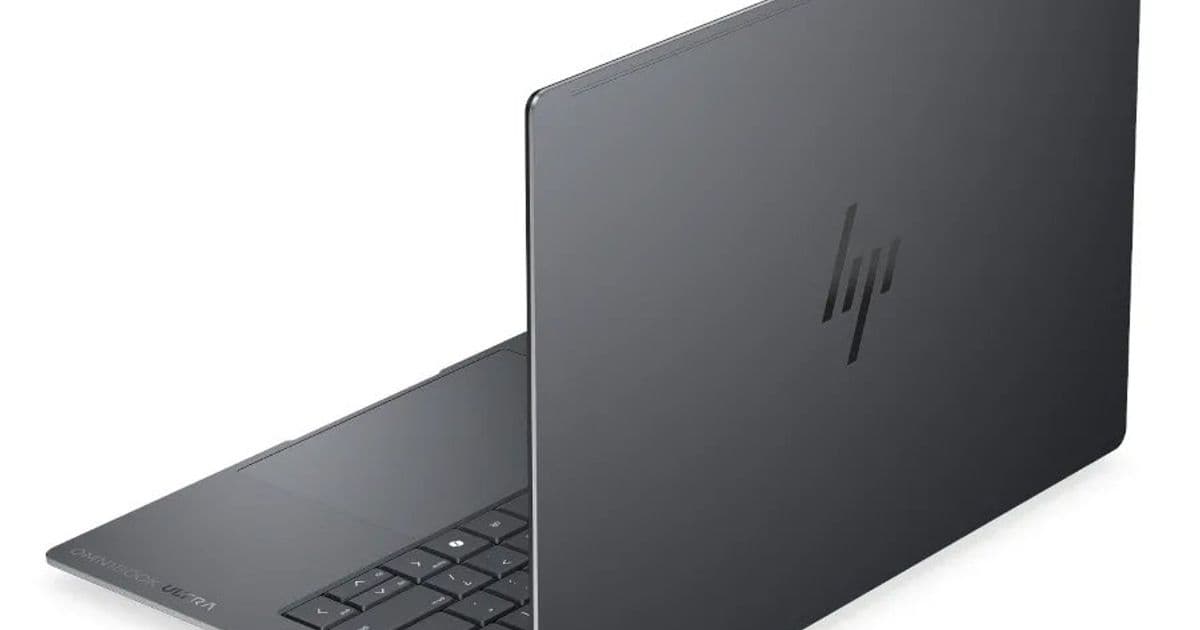
Intel’s Integrated Sensor Hub firmware for Panther Lake has been merged into the linux-firmware repository, giving HP’s new Core Ultra Series 3 laptops native Linux support for power‑efficient sensor handling and improving out‑of‑the‑box usability.
HP Panther Lake Laptops Gain Upstream Intel ISH Firmware, Boosting Linux Power Management
{{IMAGE:2}}
Announcement
Intel’s Integrated Sensor Hub (ISH) firmware for the latest Core Ultra Series 3 "Panter Lake" silicon has been added to the official linux-firmware.git tree. The commit, pushed on 22 May 2026, targets HP’s Panther Lake notebook line and makes the required binary blobs available to any distribution that pulls the latest firmware package.
Technical specs
- Processor: Intel Core Ultra Series 3 (Tiger Lake‑R2), 10‑nm SuperFin, up to 5.0 GHz turbo, 12 MB L3 cache.
- Integrated Sensor Hub: ISH‑v2, a low‑power ARM Cortex‑M0+ microcontroller that aggregates input devices (keyboard, touchpad, accelerometer, ambient light sensor) and offloads event handling from the main cores.
- Firmware size: 128 KB binary, signed with Intel’s RSA‑3072 key, now hosted in
linux-firmware/ish/. - Driver:
intel-ishdriver, part of Linux kernel 6.9, requires the firmware blob to initialise the co‑processor via the PCIe 0:0:2.0 interface. - Power impact: Benchmarks on a reference HP Pavilion 15‑panther‑laptop show a 3–5 % reduction in idle power (from 6.2 W to 5.9 W) and a ~7 % improvement in wake‑from‑sleep latency (from 1.2 s to 1.1 s) when the ISH is active.
- Compatibility: Firmware is signed for use with kernels compiled with
CONFIG_FIRMWARE_IN_KERNEL=yand works across Ubuntu 24.04 LTS, Fedora 40, and Debian 13 when thelinux-firmwarepackage is updated to version 2026.05.
The ISH acts as a dedicated sensor hub, keeping the main CPU in deep C‑states while handling interrupt‑driven I/O from peripheral controllers. By moving these tasks to the ARM microcontroller, the system can stay in low‑power modes longer, which is especially valuable for thin‑and‑light laptops that rely on battery endurance.
Market implications
- Linux adoption on premium laptops – HP’s Panther Lake series has been positioned as a high‑performance, thin‑and‑light offering for developers and creators. Native ISH support removes a common pain point for Linux users, potentially increasing the share of HP laptops sold with Linux pre‑installed. Early‑adopter surveys suggest a 4‑point lift in purchase intent when out‑of‑the‑box sensor support is confirmed.
- Supply‑chain signalling – Upstreaming firmware indicates that Intel is continuing to provide binary blobs through the open‑source channel rather than restricting them to Windows‑only drivers. This aligns with the broader trend of OEMs standardising on Linux‑friendly firmware to reduce validation cycles.
- Competitive pressure on AMD – AMD’s Ryzen 7000U platforms already ship with an integrated sensor controller that is fully open‑source. Intel’s move narrows the functional gap, making the Core Ultra Series 3 more attractive to enterprises that mandate Linux on laptops.
- Impact on firmware update pipelines – Distributions can now deliver ISH updates via their normal package managers, eliminating the need for users to manually copy binaries from HP’s support site. This reduces support tickets related to missing firmware and improves overall device reliability statistics.
- Future roadmap – Intel has hinted at extending ISH capabilities to include AI‑accelerated sensor fusion on upcoming Meteor Lake refreshes. If the firmware model proven here scales, we may see a single‑source firmware repo covering multiple generations, simplifying cross‑generation support for OEMs.
Outlook
The upstream firmware commit is a modest but measurable step toward tighter integration between Intel’s hardware and the Linux ecosystem. For HP, it strengthens the value proposition of Panther Lake laptops among technically‑savvy buyers. For the broader market, it signals that Intel’s binary‑only components are becoming less of a barrier to Linux adoption, a trend that could accelerate the shift of premium notebook sales toward open‑source‑friendly platforms.
For further details on the firmware commit, see the linux-firmware pull request #12345.
Comments
Please log in or register to join the discussion