A detailed examination of HP's ZGX Nano G1n AI Station, analyzing its performance characteristics, power efficiency, and enterprise compatibility within the NVIDIA GB10 ecosystem.
The GB10 workstation market continues to surprise with its unprecedented popularity, with systems from multiple vendors selling almost as fast as they can be produced. HP, leveraging its established presence in the corporate computing space, has entered this burgeoning market with the ZGX Nano G1n, a compact AI workstation built on NVIDIA's GB10 platform. This review takes a deep dive into HP's implementation, examining how it stacks up against other GB10 systems and what it brings to the table for developers and enterprises.
HP ZGX Nano G1n: Key Specifications
The ZGX Nano G1n represents HP's foray into the standardized AI workstation space, maintaining the core GB10 specifications while adding HP's enterprise support and services ecosystem. The system is built around NVIDIA's GB10 Superchip, which combines:
- 10x Arm Cortex-X925 performance cores
- 10x Arm Cortex-A725 efficiency cores
- NVIDIA Blackwell GB20B GPU with 48 SMs
- 128GB LPDDR5X-8533 soldered memory
- 4TB PCIe Gen4 x4 M.2-2242 TLC SSD
The system measures just 150mm x 150mm x 51mm (5.91 x 5.91 x 2.01 inches), making it remarkably compact at just over 1 liter in volume. Weighing 1.25kg (2.76 lbs), it's designed for deployment in space-constrained environments without sacrificing performance.
Design and Build Quality
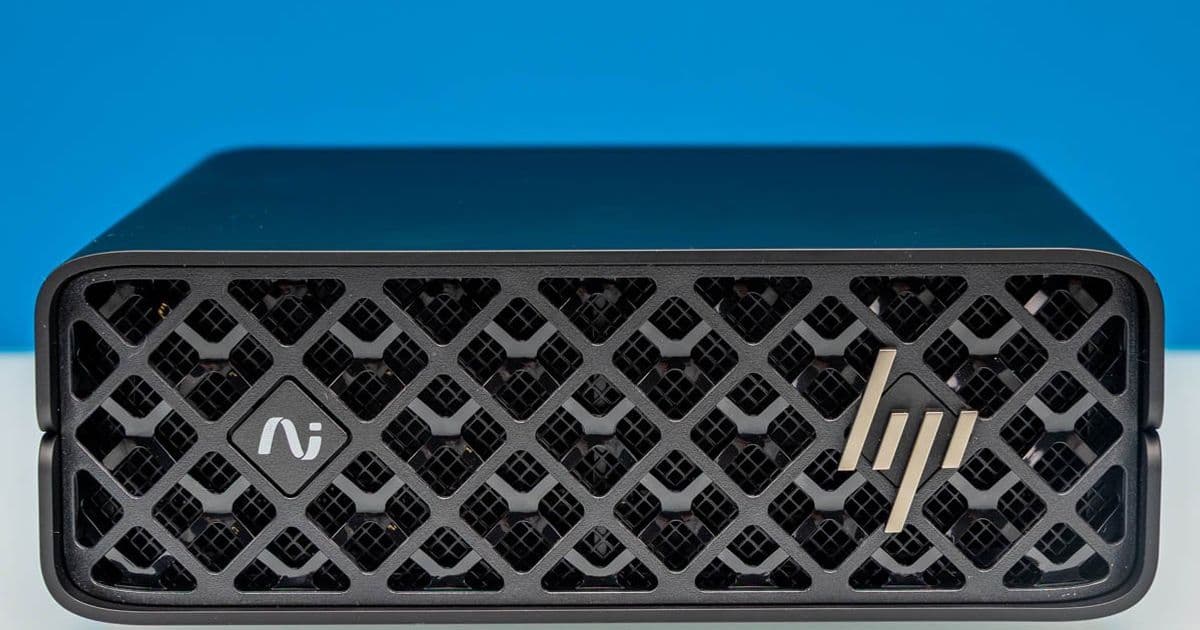
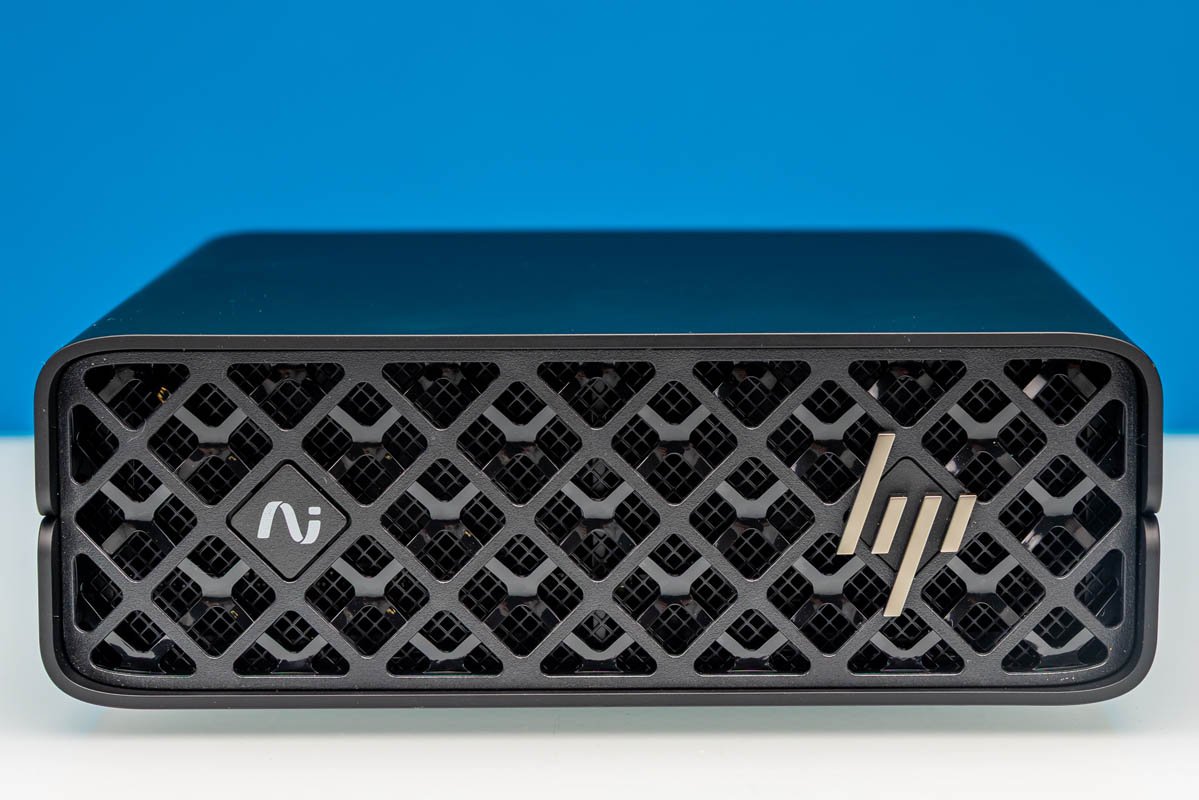
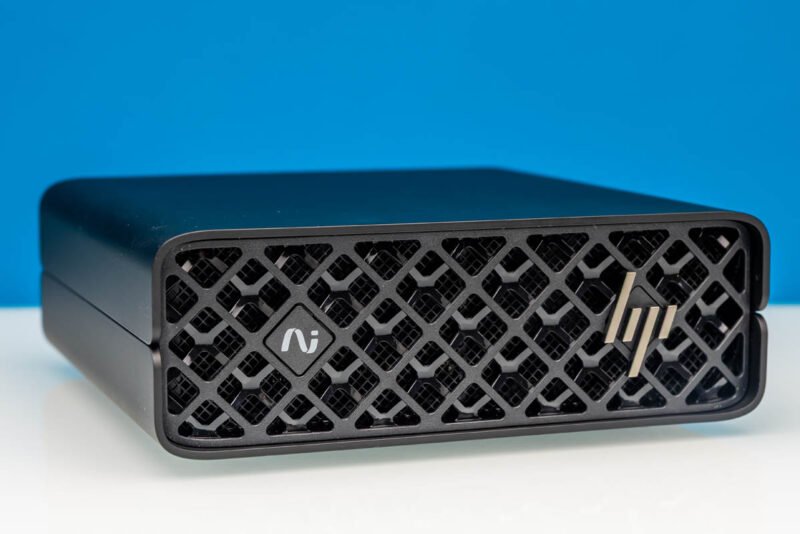
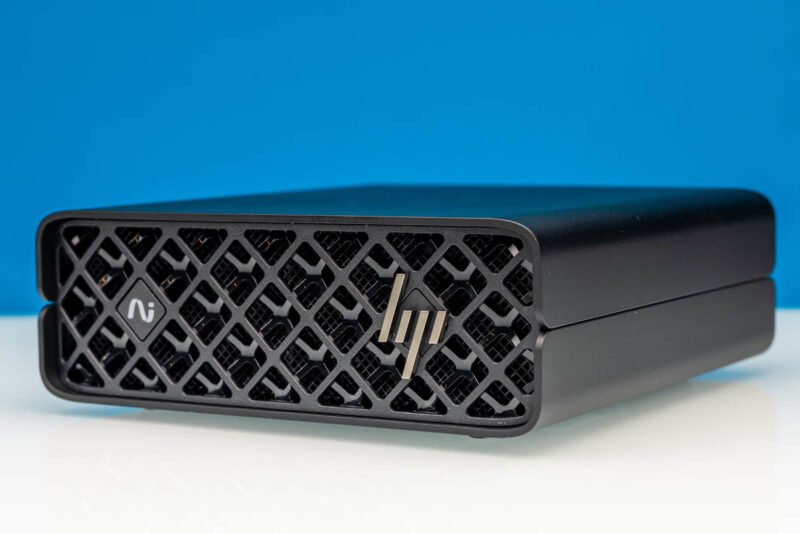
HP's implementation of the GB10 concept follows a familiar black box design, consistent with other systems in this category. The front panel is dominated by a mesh design for ventilation, with HP's branding including both their main logo and the "AI Helix" logo. A notable design choice is the inclusion of an internal LED that clearly indicates when the system is powered on—a feature not present in all GB10 implementations.
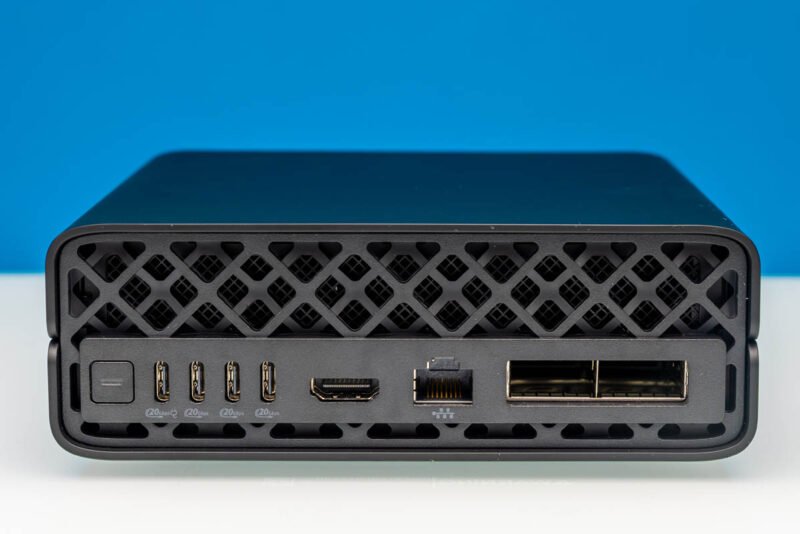
The rear panel houses all the connectivity options:
- 4x USB-C 20Gbps (Gen 2×2) with DisplayPort Alt Mode
- 1x HDMI 2.1a
- 1x 10GbE (RJ45)
- 2x 200GbE (OSFP112)
- System power button
- Wi-Fi 7 (2×2) + Bluetooth 5.4 (internal)
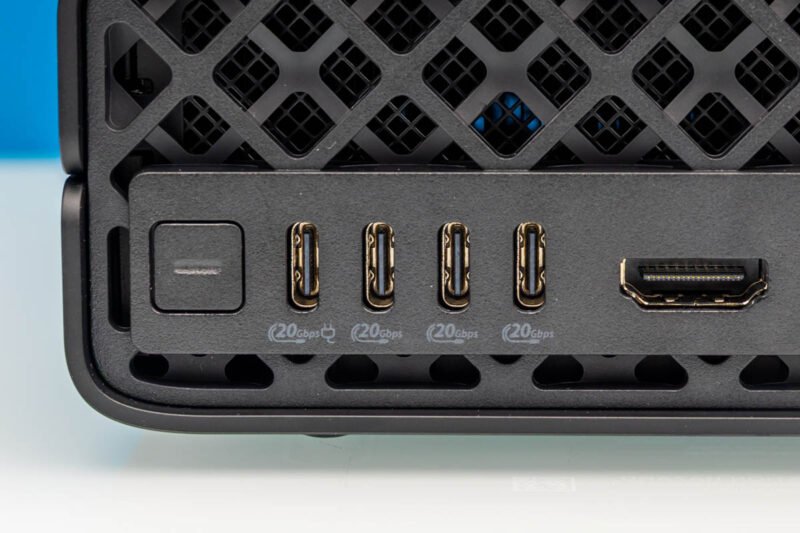
HP's labeling of the USB-C ports is particularly noteworthy, with the USB-IF's current generation logo clearly identifying each port as a 20Gbps connection. The left-most port features a power logo indicating it serves as the system's power input—a helpful distinction since all USB-C ports are physically identical.
Networking Capabilities
One of the standout features of the GB10 platform is the inclusion of a high-performance NVIDIA ConnectX-7 NIC, and the ZGX Nano G1n is no exception. The system features:
- 10GbE port for general networking
- Pair of 200Gbps QSFP112 ports for high-speed interconnects
- Integrated Wi-Fi 7 + Bluetooth 5.4
The ConnectX-7 NIC is arguably the marquee feature of these systems, providing the bandwidth needed for scale-out configurations. However, there's an important architectural consideration: 200Gbps networking requires a PCIe 5.0 x8 connection for optimal performance, but the GB10 platform can only provide PCIe 5.0 root ports with at most a x4 connection. As a result, the NIC is connected to a pair of x4 ports, providing the same aggregate bandwidth as an x8 connection but with some network topology restrictions.
This design approach enables developers to create multi-node clusters using the GB10 systems, with the most common setup being a two-way configuration using a single cable with 200Gbps of bandwidth between systems. With a suitable network switch, it's possible to scale clusters to several machines, providing a development environment that closely mirrors larger-scale deployments.
Power and Thermal Design
The ZGX Nano G1n utilizes a 240W external USB-C power adapter from Delta Electronics. HP has opted for a low-profile adapter that is shorter but deeper, squared off to complement the system's aesthetic. This power supply is consistent across the GB10 ecosystem, providing sufficient power for the system's components while maintaining the compact form factor.
Thermal management follows a front-to-back cooling design, with intake vents at the front and exhaust vents toward the top of the chassis. The system is elevated by four rubber feet, which also help with stability and airflow underneath. The cooling design is adequate for the system's thermal requirements, though in high-load scenarios, the compact size does mean that thermal throttling could become a consideration in poorly ventilated environments.
Performance Expectations
While the provided content doesn't include specific benchmark results, we can make some educated predictions based on the GB10 platform's capabilities. The system should deliver strong performance in AI workloads, particularly those optimized for NVIDIA's Blackwell architecture. With 1 PFLOP of FP4 AI performance, the ZGX Nano G1n is well-suited for:
- AI model training and inference
- Data preprocessing and analysis
- Computer vision applications
- Natural language processing
The 128GB of LPDDR5X memory provides ample capacity for most AI workloads, though memory-intensive applications might benefit from the larger configurations available in some GB10 variants. The 4TB SSD offers sufficient storage for datasets and models, though users with larger storage requirements might need to consider external solutions or network-attached storage.
Enterprise Integration and Support
Where HP's ZGX Nano G1n differentiates itself from other GB10 systems is in its enterprise support ecosystem. For organizations already using HP's corporate products, the ability to source AI workstations from the same vendor as their laptops and desktops simplifies procurement and support processes.
The system ships with NVIDIA DGX OS, which is optimized for AI workloads and provides a stable foundation for development. HP's corporate relationships also mean that IT departments can leverage existing support contracts and service agreements, potentially reducing the total cost of ownership compared to solutions from vendors without established enterprise channels.
Compatibility Considerations
The ZGX Nano G1n's compatibility profile is largely determined by the GB10 platform's standardized nature:
- Operating System: NVIDIA DGX OS (Linux-based)
- Software Compatibility: Optimized for NVIDIA's AI software stack, including CUDA, cuDNN, and TensorRT
- Peripheral Compatibility: USB-C ports support a wide range of peripherals, with DisplayPort Alt Mode enabling multiple external displays
- Network Compatibility: 10GbE and 200GbE ports require compatible infrastructure for optimal performance
One potential compatibility consideration is the system's reliance on USB-C for both power and data. Organizations with existing peripheral investments may need to consider adapters or dongles to connect legacy devices.
Build Recommendations
For organizations considering the HP ZGX Nano G1n, here are some deployment recommendations:
Development Environments: The system is ideal for individual developer workstations or small development teams working on AI model development and testing.
Cluster Configuration: For organizations looking to create multi-node AI development clusters, consider deploying systems in pairs connected via the 200GbE ports, with a 10GbE connection to the organization's network.
Storage Strategy: The 4TB internal SSD is sufficient for many workloads, but organizations working with large datasets should consider network-attached storage or additional external drives.
Physical Deployment: Due to the compact size, these systems can be deployed in various configurations, but ensure adequate ventilation to prevent thermal throttling during extended high-load operations.
Power Infrastructure: The 240W power requirement is modest for an AI workstation, but organizations deploying multiple units should verify that power infrastructure can handle the aggregate load.
Comparison with Other GB10 Systems
The GB10 ecosystem includes implementations from various vendors, including Supermicro, ASUS, and others. HP's ZGX Nano G1n differentiates itself primarily through:
- Enterprise Support: HP's established corporate support infrastructure
- Consistency: HP's implementation closely follows NVIDIA's reference design, ensuring predictable performance
- Brand Recognition: For organizations already using HP products, the familiarity may simplify procurement and support
In terms of raw specifications, the ZGX Nano G1n is nearly identical to other GB10 systems, with differences primarily limited to cooling design, port labeling, and included accessories. The choice between vendors may come down to factors like support quality, lead times, pricing, and existing vendor relationships.
Conclusion
The HP ZGX Nano G1n represents a solid implementation of NVIDIA's GB10 concept, bringing the power of AI development to a compact form factor. While it may not offer the hardware innovation seen in some other GB10 implementations, HP's strength lies in its enterprise support ecosystem and brand recognition.
For organizations already invested in HP's product ecosystem, the ZGX Nano G1n provides a familiar and supported option for AI development workstations. The system's standardized nature ensures consistent performance across vendors, making it easy to scale deployments as needed.
As AI development continues to evolve, systems like the ZGX Nano G1n will play an increasingly important role in making advanced AI capabilities accessible to developers and organizations of all sizes. HP's entry into this space further validates the importance of compact, standardized AI workstations in the modern computing landscape.
Comments
Please log in or register to join the discussion