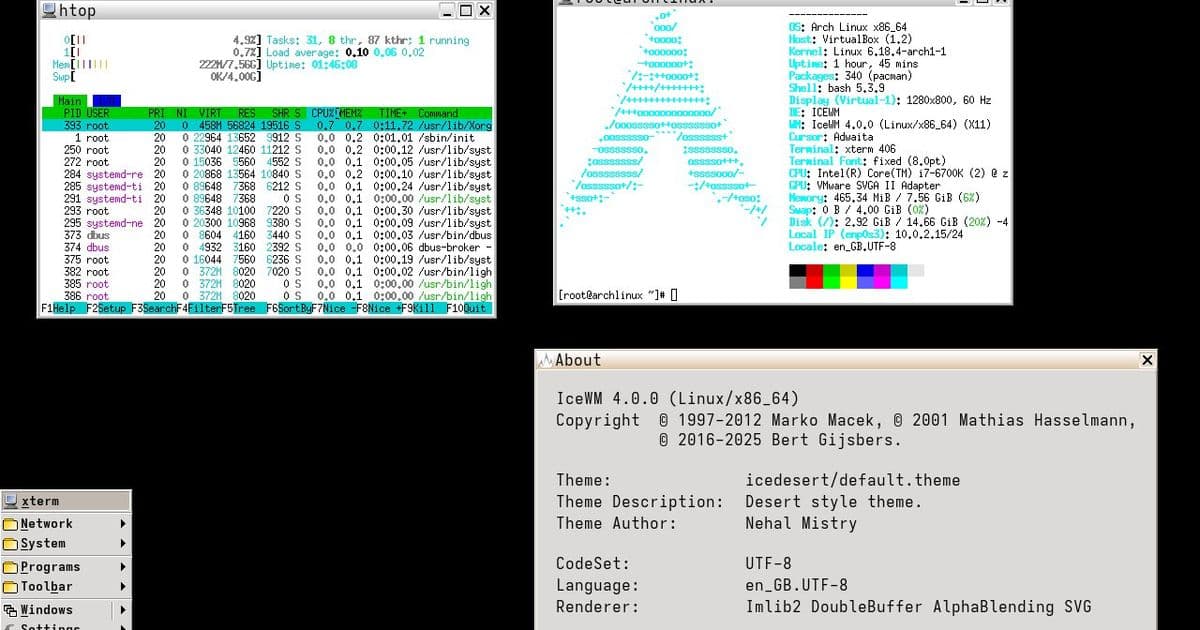
Two Linux desktop releases highlight the ongoing schism between legacy X11 support and the Wayland future, with a 30-year-old window manager gaining bug fixes while a modern desktop environment finally cuts ties with the old display server.
The Linux desktop world continues to evolve in two parallel directions this week, with the release of IceWM 4.0 and Budgie 10.10 representing opposite ends of the display server spectrum. While IceWM celebrates nearly three decades of X11 window management, Budgie has completed its long-planned migration to Wayland-native operations.
IceWM 4.0: Thirty Years of X11 Loyalty
First released in 1997, IceWM is approaching its 30th birthday—a remarkable lifespan in FOSS terms. Version 4.0, released on January 1, 2026, demonstrates that the project remains actively maintained despite its age. The version jump from 3.x to 4.0 appears to be more about numerical convention than a fundamental rewrite, as the changes focus on refinement rather than architectural overhaul.
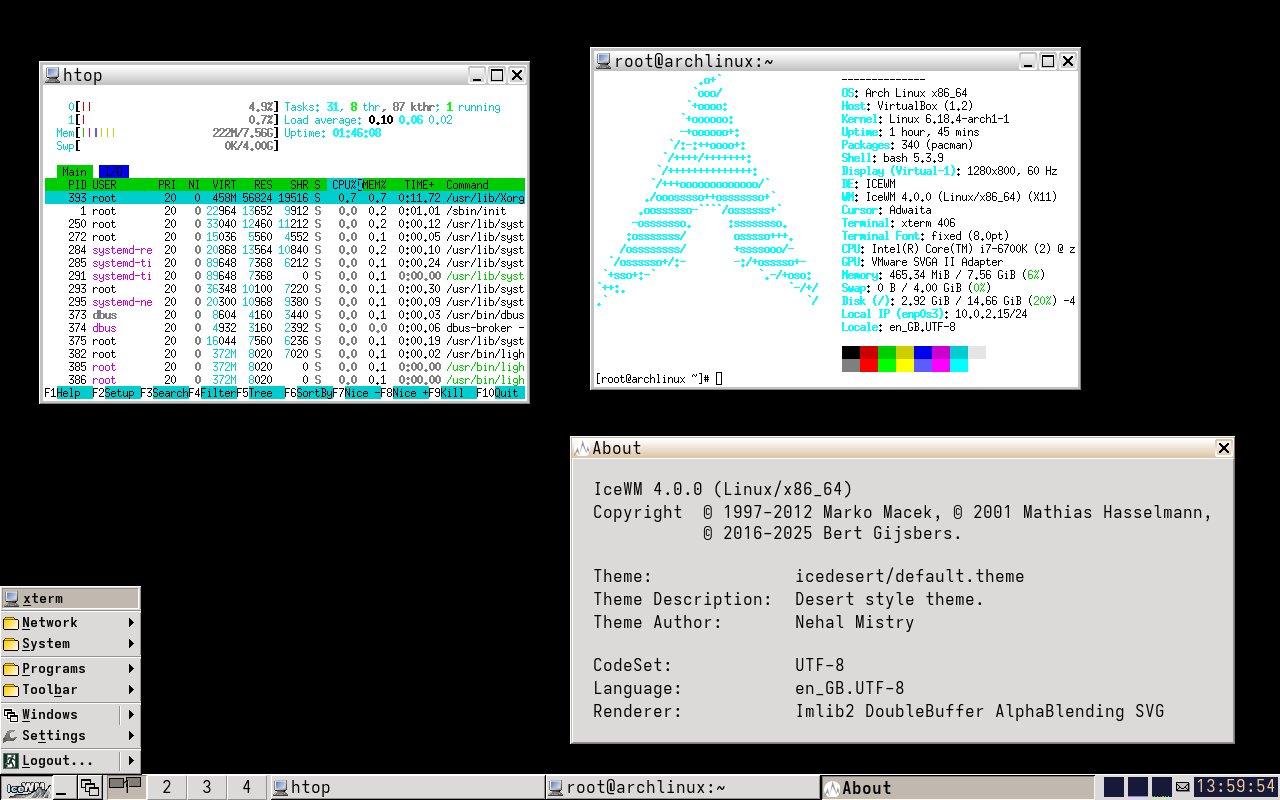
Key improvements in IceWM 4.0 include:
- Enhanced Alt-Tab window switching with better handling of application focus
- Default 32-bit RGBA color support for improved transparency rendering
- Bug fixes across the board, including specific patches for keyboard layout switching on OpenBSD
The OpenBSD fix is particularly noteworthy. While Linux dominates desktop discussions, the Unix-like ecosystem extends far beyond it. Mainframes without direct display output, embedded systems, and alternative operating systems all rely on X11 servers. IceWM's continued cross-platform support reinforces that X11 isn't disappearing anytime soon.
The X11 Persistence Problem
IceWM's longevity highlights a fundamental reality: X11 remains deeply embedded in the Unix-like ecosystem. Even as Wayland gains traction on mainstream Linux distributions, countless systems depend on X11 compatibility. The recent debut of Phoenix, an entirely new X11 server written in Zig, further proves this point.
Phoenix represents an interesting approach to X11 longevity. Rather than forking the existing X.org codebase, it's a from-scratch implementation in Zig—a modern systems language positioning itself as a C successor. The project's stated goal is simplicity: support only the subset of X11 protocol needed by applications from the last 20 years, dropping legacy cruft that complicates modern X.org.
This mirrors earlier attempts like X12, which aimed to create a cleaner X11 successor. Whether Phoenix can achieve meaningful adoption remains to be seen, but its existence signals that developers still see value in maintaining X11 infrastructure.
Budgie 10.10: Wayland Native at Last
While IceWM celebrates X11 continuity, Budgie has completed its two-year journey away from X11 dependency. Budgie 10.10, released on January 11, 2026, marks the first entirely Wayland-native version of the desktop environment.
The Migration Path
Budgie's Wayland transition has been methodical. The project first announced its intentions back in 2023, recognizing that remaining tied to X11 would limit future development. Version 10.10 represents the culmination of this effort, though it comes with important architectural changes.
The release drops several X11-specific components and instead integrates tools from other Wayland-native projects. For example:
- Wallpaper management now uses components borrowed from Sway
- Screenshot functionality pulls from Wayland-native utilities
- The new Budgie Desktop Services module orchestrates these components using Qt 6
The Qt 6 choice is intriguing given Budgie's origins in GNOME technologies. Originally a GNOME Shell fork, Budgie has now adopted the same toolkit that powers KDE Plasma 6 and LXQt 2. This represents a pragmatic shift toward whatever technology best serves the Wayland ecosystem.
Compositor Strategy
Rather than building its own Wayland compositor, Budgie 10.10 adopts a modular approach compatible with wlroots-based compositors. The team specifically recommends labwc, describing it as "modern, lightweight, and feature-rich"—the same compositor openSUSE Leap 16 uses for its Wayland-based Xfce implementation.
This strategy offers several advantages:
- Flexibility: Users can choose between different compositors based on their needs
- Maintenance: Budgie developers can focus on the desktop environment while compositor development happens separately
- Ecosystem integration: Leveraging existing wlroots work accelerates development
The Gentoo wiki lists ten wlroots-based compositors, giving users genuine choice rather than locking them into a single implementation.
What This Means for Users
Budgie 10.10 will ship in Fedora 44 and Ubuntu Budgie 26.04. However, the Ubuntu Budgie release won't be a five-year LTS version, suggesting the team expects further significant changes in Budgie 11.
In his post-release State of the Budgie report, project lead Joshua Strobl confirmed that version 10.10 concludes the 10.x series. The team is now focused entirely on Budgie 11, which will likely build upon these Wayland foundations.
The Great Divide: X11 vs Wayland in Practice
These two releases illustrate the ongoing tension in Linux desktop development. IceWM's continued X11 focus serves users who:
- Run legacy hardware or exotic platforms
- Need maximum stability and predictability
- Prefer the established X11 tool ecosystem
- Manage systems where Wayland support remains incomplete
Conversely, Budgie's Wayland migration targets users who:
- Want modern display technology benefits (better security, smoother graphics)
- Use mainstream hardware with good Wayland driver support
- Value features like fractional scaling and HDR that Wayland enables
- Accept the occasional rough edge as the ecosystem matures
The Long Tail of X11
What IceWM 4.0 and Phoenix demonstrate is that X11 will persist for decades more in specific niches. The protocol's ubiquity across Unix-like systems, from mainframes to embedded devices, creates a long tail of use cases that Wayland may never fully address.
Meanwhile, Budgie's careful, modular approach to Wayland adoption shows how desktop environments can migrate without abandoning users or requiring complete rewrites. By building on wlroots and integrating existing tools, Budgie achieves Wayland compatibility while maintaining its identity.
Looking Ahead
The Linux desktop landscape isn't moving monolithically toward Wayland—it's fracturing into specialized solutions. IceWM will likely keep serving X11 holdouts for years to come, while Budgie and similar projects push forward with Wayland-native architectures.
For users, this means more choice, not less. The question becomes which stack aligns with your hardware, workflow, and values. Whether that's a 30-year-old window manager or a freshly Wayland-native desktop environment depends on what you need your GUI to accomplish.
Both approaches have merit, and both will coexist for the foreseeable future. The real winner is the Linux ecosystem's ability to support parallel development paths without forcing premature obsolescence.
Related Links:
Comments
Please log in or register to join the discussion