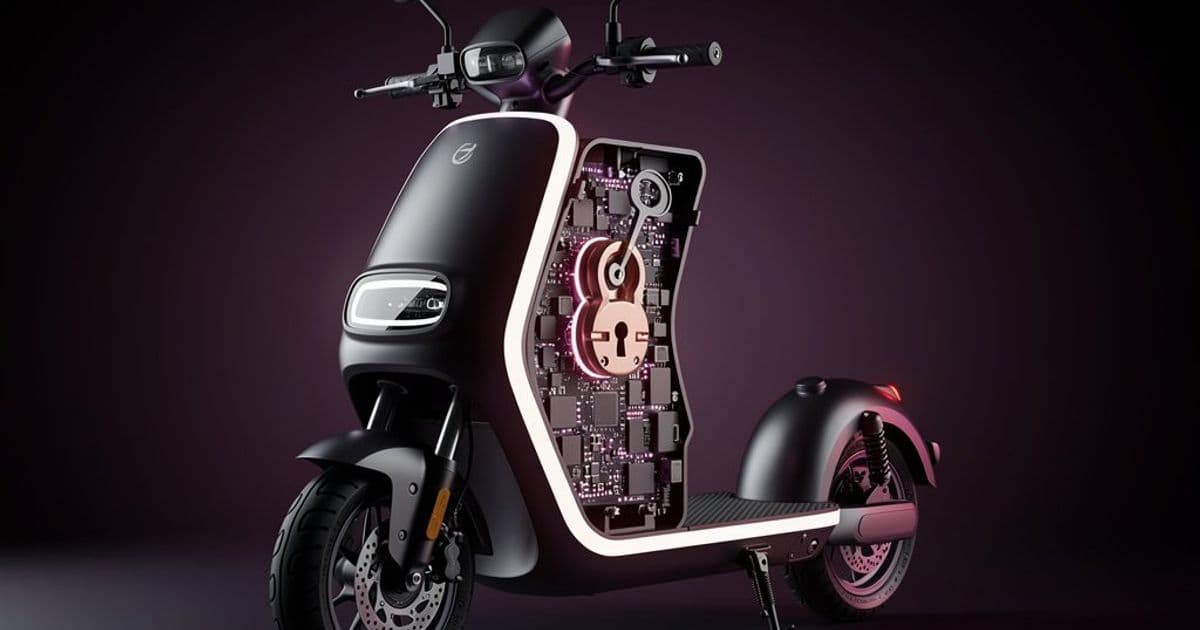
The discovery of a universal master key in bankrupt scooter manufacturer Äike's products underscores critical IoT security failures and regulatory compliance gaps in authentication systems.

A recent security analysis of defunct e-scooter manufacturer Äike's products reveals systemic authentication failures with significant implications for IoT security compliance. When the Estonian company filed for bankruptcy in 2025, owners were left with inoperable scooters dependent on defunct cloud services. Security researcher Rasmus Moorats reverse-engineered his device and discovered a fundamental security flaw: Instead of implementing unique cryptographic keys for each scooter as required by industry standards, Äike shipped all units with identical default credentials.
Regulatory Requirements for IoT Authentication
Multiple regulatory frameworks mandate robust authentication mechanisms for connected devices. The EU's Radio Equipment Directive (RED) Article 3(3) requires IoT devices to incorporate security safeguards against fraud. Similarly, the UK's Product Security and Telecommunications Infrastructure (PSTI) Act and California's IoT Security Law (SB-327) explicitly demand unique pre-programmed passwords or cryptographic keys. Äike's implementation violated these core principles by using a single hardcoded private key across all devices, enabling unauthorized access through simple Bluetooth commands.
Compliance Timeline and Implementation Requirements
Design Phase (Pre-production): Manufacturers must implement cryptographic modules generating unique keys during device manufacturing. NIST Special Publication 800-57 provides key management guidelines requiring key separation between devices.
Deployment Phase (Market Launch): Regulatory frameworks like the EU's Cyber Resilience Act mandate security-by-design documentation proving individualized authentication mechanisms before market entry. Compliance requires third-party validation of key generation processes.
End-of-Service Protocols: FTC guidelines on IoT security compel manufacturers to establish contingency plans for service discontinuation, including authentication fallback mechanisms or owner-reset capabilities unaffected by cloud dependencies.
Äike's bankruptcy exposed the cascading impact of ignoring these requirements. Moorats confirmed identical credentials across all scooters allowed complete control via basic scripts. While Äike's limited production scale prevented widespread exploitation, the case exemplifies systemic IoT security failures. Hardware suppliers referenced in Moorats' disclosure denied responsibility, highlighting liability gaps in fragmented manufacturing chains.
Regulators increasingly treat default credentials as compliance violations. The FCC's recent $2.8M fine against router manufacturers establishes precedent for penalizing credential mismanagement. For IoT developers, compliance necessitates:
- Implementing hardware security modules (HSMs) for cryptographic operations
- Maintaining auditable key generation logs
- Providing owner-accessible reset mechanisms
- Submitting security architecture documentation during product certification
This incident reinforces that authentication security isn't optional compliance checkbox but fundamental consumer protection. As regulatory scrutiny intensifies, manufacturers must validate key management systems against frameworks like ISO/IEC 27001 before deployment.
Comments
Please log in or register to join the discussion