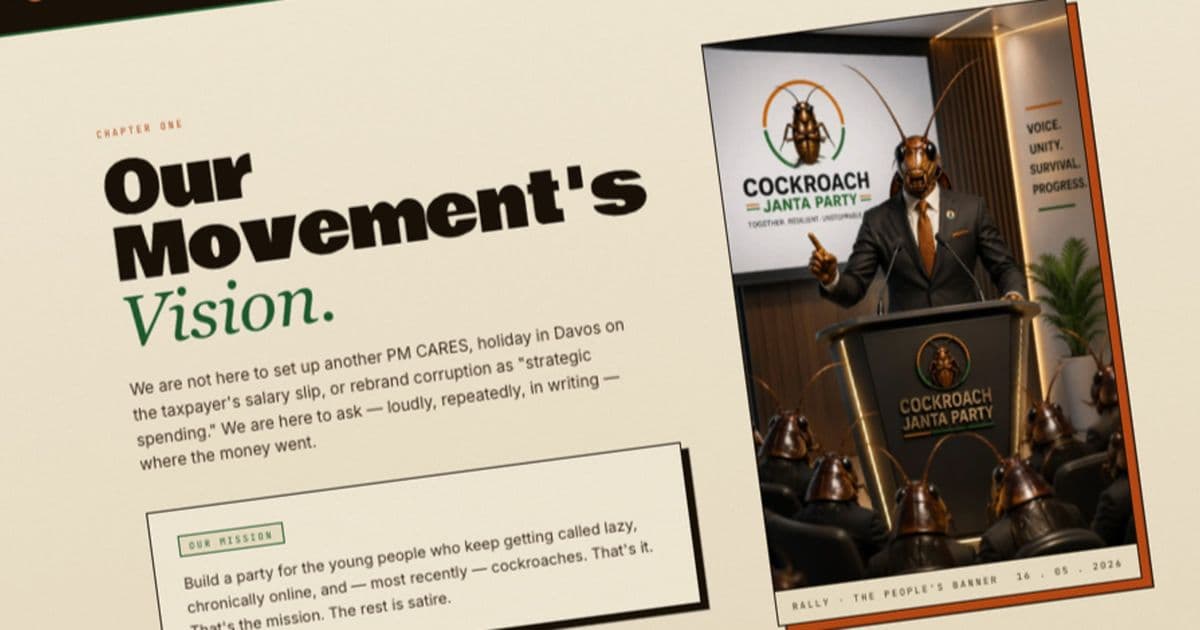
A Supreme Court judge’s disparaging comment sparked a wave of online activism among Indian youth, leading to the rapid growth of the parody Cockroach Janta Party. The movement highlights growing political disenchantment, potential regulatory backlash, and a new variable for brands targeting Gen‑Z in India.
Business news
New Delhi – After a Supreme Court Justice referred to a group of protest‑oriented youths as “parasites,” a wave of online backlash swept through India’s Gen‑Z community. Within days, a satirical website called Cockroach Janta Party (CJP) reported millions of unique visitors and a surge in social‑media sign‑ups, positioning the parody as a de‑facto outlet for political frustration among young Indians who feel conventional parties no longer represent them.
The site, which was taken offline by its own administrators on May 22 after a brief but intense traffic spike, featured tongue‑in‑cheek manifestos, mock candidate profiles, and a logo depicting a resilient cockroach – a symbol the creators say reflects the youth’s belief that they can survive any political upheaval.
Market context
- Youth demographics: India’s 18‑29 age cohort numbers roughly 340 million, accounting for 24 % of the nation’s population. This segment controls an estimated $150 billion in discretionary spending, a figure that has been growing at 9 % CAGR since 2020.
- Digital engagement: According to a June 2025 report by the Internet and Mobile Association of India (IAMAI), 78 % of Indian Gen‑Z users access the internet via smartphones, and 62 % participate in political discussions on platforms such as Twitter, Instagram, and regional forums.
- Regulatory climate: The Indian Ministry of Information and Broadcasting announced a draft amendment to the Information Technology (Intermediary Guidelines) Rules in March 2026, proposing stricter oversight of political satire and “misinformation” sites. Non‑compliance could trigger fines of up to ₹10 crore (≈ $1.2 million) per violation.
- Brand risk: A recent Kantar survey found that 48 % of Indian consumers aged 18‑30 would boycott a brand associated with political controversy, while 33 % said they would switch to competitors that demonstrate “social neutrality.”
What it means
Political engagement as a market force – The rapid rise of CJP demonstrates that political sentiment can translate into measurable digital traffic and community building. Brands that monitor these signals can anticipate shifts in consumer sentiment ahead of election cycles.
Regulatory headwinds for satire platforms – The government’s pending IT rules could force satirical sites to register as “political intermediaries,” imposing compliance costs that may deter new entrants. Existing platforms might face takedown requests, as seen with the CJP site’s self‑removal to avoid potential legal exposure.
Opportunity for youth‑focused media – Content creators and streaming services can tap into the appetite for irreverent political commentary. Partnerships with influencers who already critique the establishment could yield higher engagement rates than traditional news formats.
Risk management for advertisers – Companies with ad spend on platforms frequented by Gen‑Z must vet placement carefully. An inadvertent association with a controversial satire site could trigger consumer backlash, as the Kantar data suggests.
Long‑term political recalibration – While the Cockroach Janta Party is unlikely to win any seats, its popularity signals a widening gap between mainstream parties and younger voters. Analysts project that parties that fail to address issues like employment, climate, and digital rights may lose up to 5 % of the youth vote in the upcoming 2026 Lok Sabha elections, a swing that could be decisive in tightly contested states.
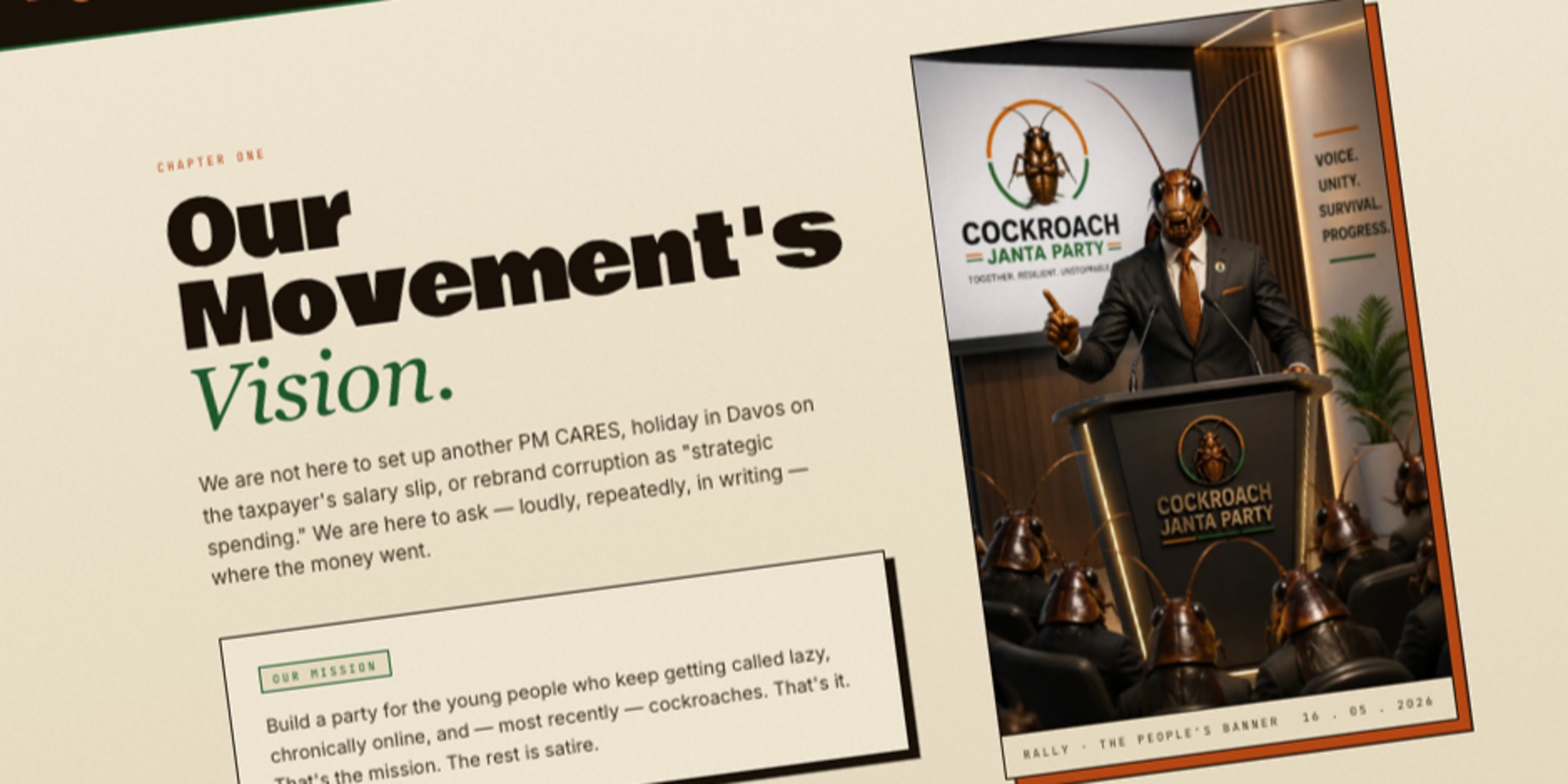
The screenshot of the Cockroach Janta Party website, taken before it was taken down, illustrates the blend of humor and political critique that resonated with millions of Indian youths.
Strategic takeaways
- Monitor sentiment dashboards: Incorporate real‑time social‑media analytics to detect spikes in politically charged hashtags among Gen‑Z.
- Diversify ad inventory: Shift a portion of youth‑targeted spend to platforms with clear content policies to mitigate brand safety concerns.
- Engage through cause‑based marketing: Align campaigns with issues that matter to young Indians—skill development, climate action, digital privacy—to build goodwill without overt political positioning.
The Cockroach Janta Party may have vanished from the web, but the underlying currents of disaffection and digital activism are set to shape India’s consumer market and political discourse for years to come.
Comments
Please log in or register to join the discussion