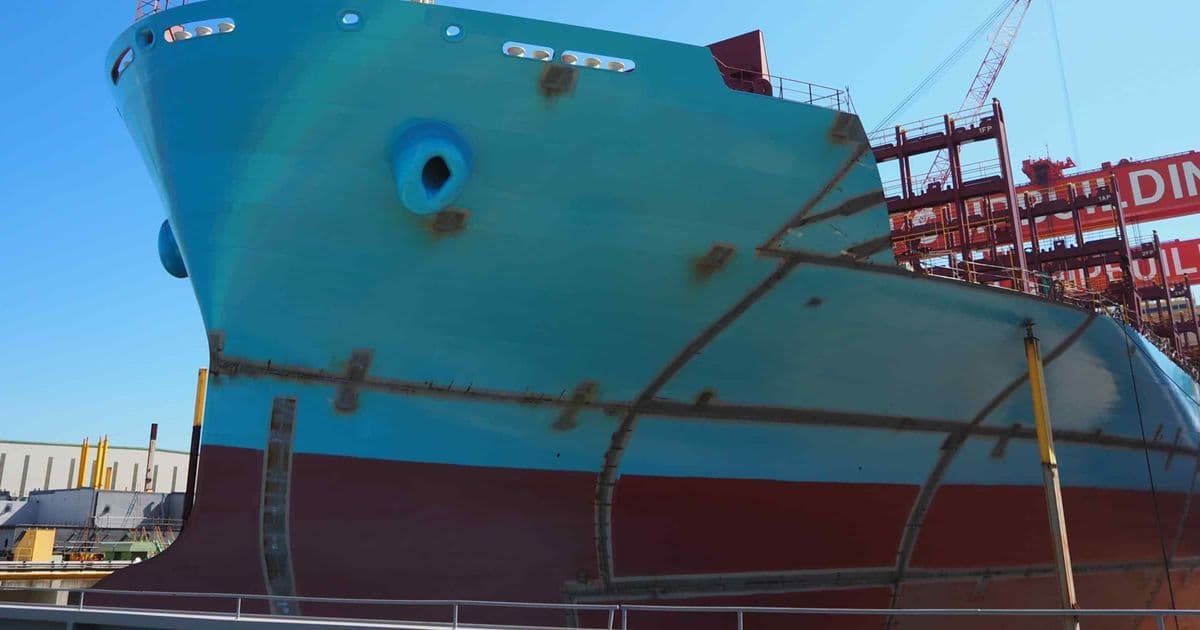
Japan’s Imabari shipyards are confronting a deepening labor shortage as order volumes rise. To sustain growth, firms are hiring overseas workers and piloting AI‑driven automation, while grappling with training, regulatory and cultural hurdles.
Business news
Japan’s western port city of Imabari, home to some of the country’s largest shipyards, is feeling the pressure of a tightening labor market. Ship orders have climbed 12% year‑on‑year, but the industry is short of skilled welders, pipefitters and engineers. In response, major players such as Imabari Shipbuilding and its subsidiary JMU are expanding recruitment of foreign technicians and testing AI‑powered tools to offset the shortfall.
Market context
The Japanese shipbuilding sector, once the world’s dominant producer, has been losing market share to South Korea and China. According to the Japan Shipbuilders Association, total orders fell 15% in 2025, yet domestic demand for new bulk carriers, LNG tankers and offshore support vessels is rebounding as global trade routes adjust to post‑pandemic supply‑chain realignments. The labor crunch is not limited to the shipyard floor; it extends through the supply chain, affecting steel‑fabrication shops, component suppliers and ship‑design firms.
Foreign workforce as a stop‑gap
Imabari’s shipyards have begun a structured hiring program targeting workers from the Philippines, Vietnam and Thailand. The initiative, overseen by the local government’s labor bureau, offers language training, on‑the‑job apprenticeships and a pathway to permanent residency after three years of service. Early data from Imabari Shipbuilding shows that foreign welders have filled 18% of the 2,400 open positions announced in the first quarter of 2026, reducing overtime costs by an estimated ¥1.2 billion ($8.5 million) compared with the previous year.
AI and robotics in the yard
Parallel to the recruitment drive, Kawasaki Heavy Industries, a key supplier to Imabari, has deployed a prototype AI‑guided welding robot on the assembly line for 30‑meter hull sections. The system combines computer‑vision inspection with adaptive torque control, allowing it to adjust to minor misalignments in real time. In pilot trials, the robot achieved a 22% faster weld cycle and a 15% reduction in re‑work rates, translating to a projected annual savings of ¥3.5 billion ($25 million) if scaled across the yard.
However, the rollout faces challenges. Operators must be trained to interpret the robot’s diagnostics, and the technology’s upfront cost—approximately ¥1 billion per unit—requires careful ROI analysis. Moreover, labor unions have raised concerns about job displacement, prompting shipyard management to position the robots as “assistive tools” that handle repetitive tasks while human workers focus on complex fit‑up and quality assurance.
What it means
Imabari’s dual strategy reflects a broader shift in Japan’s heavy‑industry sector: reliance on overseas talent to plug immediate skill gaps, coupled with a longer‑term push toward automation. If the foreign‑worker pipeline remains steady, shipyards could sustain a 10%‑plus increase in annual output without triggering a wage spiral that would erode profit margins. Successful integration of AI welding could also set a benchmark for other Japanese manufacturers facing similar demographic pressures.
For investors, the move signals potential upside for companies supplying shipbuilding automation—Kawasaki Heavy, FANUC and Mitsubishi Electric—while highlighting exposure to regulatory risk around immigration policy and labor‑union negotiations. Analysts will watch the next six months for data on productivity gains and any shift in order book composition as Imabari aims to double its vessel output by 2030.
Source: Nikkei Asia, May 23, 2026
Comments
Please log in or register to join the discussion