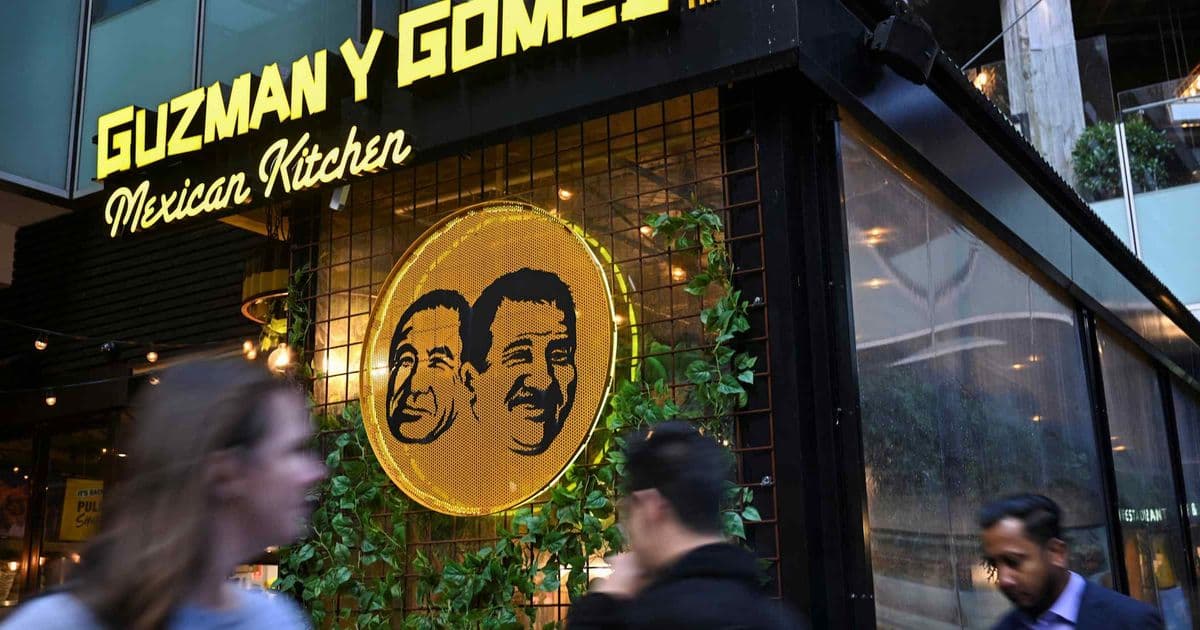
Australian Mexican‑fast‑food chain Guzman y Gomez will close its U.S. restaurants after three years of under‑performance, shifting capital to higher‑margin operations in Singapore and Japan. The move reflects broader challenges for niche fast‑food brands in the crowded American market and underscores the strategic value of Asia‑Pacific consumer spending.
Business news
Australian‑based Mexican fast‑food chain Guzman y Gomez (GYG) announced on May 23, 2026 that it will withdraw from the United States, citing “unacceptable” financial results. The company will shutter its eight U.S. locations – three in California, two in Texas, and three in the Pacific Northwest – by the end of the fiscal year. GYG will reallocate the associated capital to its Singapore and Japan businesses, which together generated A$78 million in revenue in FY 2025, representing a 22 % year‑on‑year increase.
Market context
U.S. fast‑food saturation
The United States hosts more than 200,000 fast‑food outlets, with the top five chains (McDonald’s, Starbucks, Burger King, Taco Bell, and Wendy’s) controlling roughly 45 % of total sales. New entrants typically need a minimum 12 % same‑store sales growth in the first 18 months to justify continued investment, according to a 2024 industry benchmark from Technomic. GYG’s U.S. same‑store sales fell 8 % year‑over‑year, while its average ticket size lagged the category average by A$1.20 per order.
Asia‑Pacific upside
In contrast, GYG’s Southeast Asian footprint is expanding rapidly. Singapore’s per‑capita fast‑food spend grew 6.3 % in 2025, reaching S$28 per person per month, while Japan’s “quick‑serve Mexican” segment recorded a 9.1 % CAGR from 2022‑2025. GYG’s Singapore stores now number 12, and Japan has 15 locations, each delivering an average A$9.5 million in annual revenue – well above the company’s global average of A$6.2 million per store.
Financial impact
Guzman y Gomez reported a A$42 million net loss for FY 2025, driven largely by U.S. operating deficits of A$18 million. The exit is projected to improve EBITDA margins from 3.2 % to 6.8 % by FY 2027, assuming the re‑investment in Asia‑Pacific yields the current growth trajectory. The company also expects to cut fixed costs by A$9 million annually through lease terminations and staff reductions in the U.S.
What it means
- Capital efficiency over brand ubiquity – GYG’s decision highlights a shift from geographic diversification to focusing on markets where its premium positioning and menu differentiation (e.g., stone‑grilled tacos, guacamole‑centric bowls) resonate with higher‑spending diners.
- Signal to niche fast‑food brands – Other specialty concepts eyeing U.S. expansion may reconsider aggressive roll‑outs without a clear path to scale. The data suggests that achieving break‑even in the U.S. often requires at least 30 % market share within a defined metropolitan area, a threshold many boutique chains cannot meet.
- Potential for strategic partnerships – By concentrating on Singapore and Japan, GYG could explore co‑branding or franchise agreements with local retail groups, leveraging their distribution networks to accelerate store openings without heavy capital outlay.
- Investor outlook – Analysts at Morgan Stanley have upgraded GYG’s FY 2026 earnings guidance, projecting A$85 million in net profit, driven by a 15 % rise in comparable store sales in Asia‑Pacific. The stock price, which fell 12 % after the U.S. exit announcement, stabilized and is now trading at A$2.45 per share, a modest premium to its 12‑month average.
The retreat from the United States underscores the growing importance of regional consumer dynamics in shaping fast‑food expansion strategies. For Guzman y Gomez, the gamble on Asia‑Pacific markets appears to be paying off, turning a costly U.S. experiment into a catalyst for stronger, more profitable growth.
Comments
Please log in or register to join the discussion